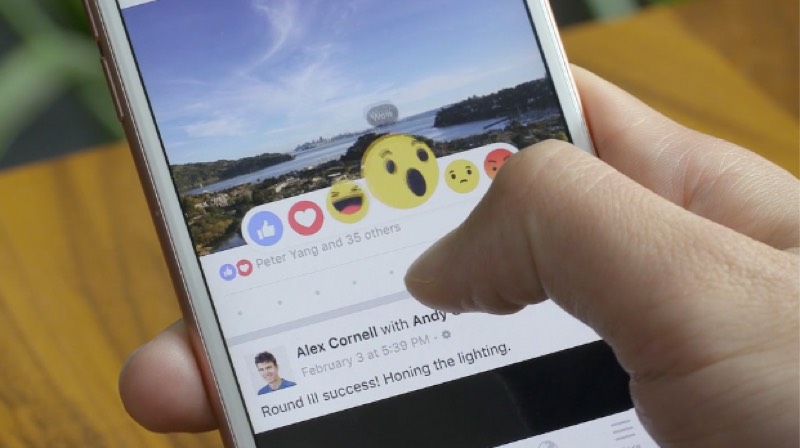







Social networking giant Facebook, Inc. has begun to roll out a new “reactions” option that allows users to respond to items in their news feed with more than its traditional, and simple “like.”
Under the new reactions options, users are able to hold down the existing like button to obtain six new options: Like, Love, Haha, Wow, Sad or Angry, all represented naturally in an emoji form as expected from the trial of the service back in October 2015.
Like an annoying Barbra Streisand and Julio Iglesias duet, the change is said by Facebook to be all about users expressing their “feelings,” or more specifically according to Facebook Product Manager Sammi Krug:
We’ve been listening to people and know that there should be more ways to easily and quickly express how something you see in News Feed makes you feel. That’s why today we are launching Reactions, an extension of the Like button, to give you more ways to share your reaction to a post in a quick and easy way.
Interestingly, not all of the reaction emoji’s tested have made the final cut, with “yay” and “confused” being purged; according to The Verge both failed to be used regularly in the test period, with users gravitating towards “love” over “yay” in particular.
The move by Facebook to expand the like option into various other options (reactions in Facebook-speak) was probably one of the more simple decisions ever undertaken by a tech company; sure, the counter argument runs that the “like” button is simple and clean, but likewise, sometimes you want to show support for something in your Facebook feed but expressing a “like” for it isn’t appropriate.
As noted back in October:
It doesn’t always happen, but many Facebook users would have experienced times where they wanted to support someone on Facebook but at the same time expressing “like” to it was inappropriate, one example being someone with cancer undergoing chemotherapy; yes, you want the treatment to be successful but it’s hardly appropriate to like the fact they’re undergoing chemo versus wishing to express support that the treatment is successful.
What isn’t clear from the announcement is exactly what the timeframe is for the rollout: at the time of writing the humble writer of this article has access to it on a laptop nor Android phone, so if you’re wondering why you don’t have it either, you’re not alone; presumably it will become available with a soon-to-be-released update via Google Play.
Support our mission to keep content open and free by engaging with theCUBE community. Join theCUBE’s Alumni Trust Network, where technology leaders connect, share intelligence and create opportunities.
Founded by tech visionaries John Furrier and Dave Vellante, SiliconANGLE Media has built a dynamic ecosystem of industry-leading digital media brands that reach 15+ million elite tech professionals. Our new proprietary theCUBE AI Video Cloud is breaking ground in audience interaction, leveraging theCUBEai.com neural network to help technology companies make data-driven decisions and stay at the forefront of industry conversations.





