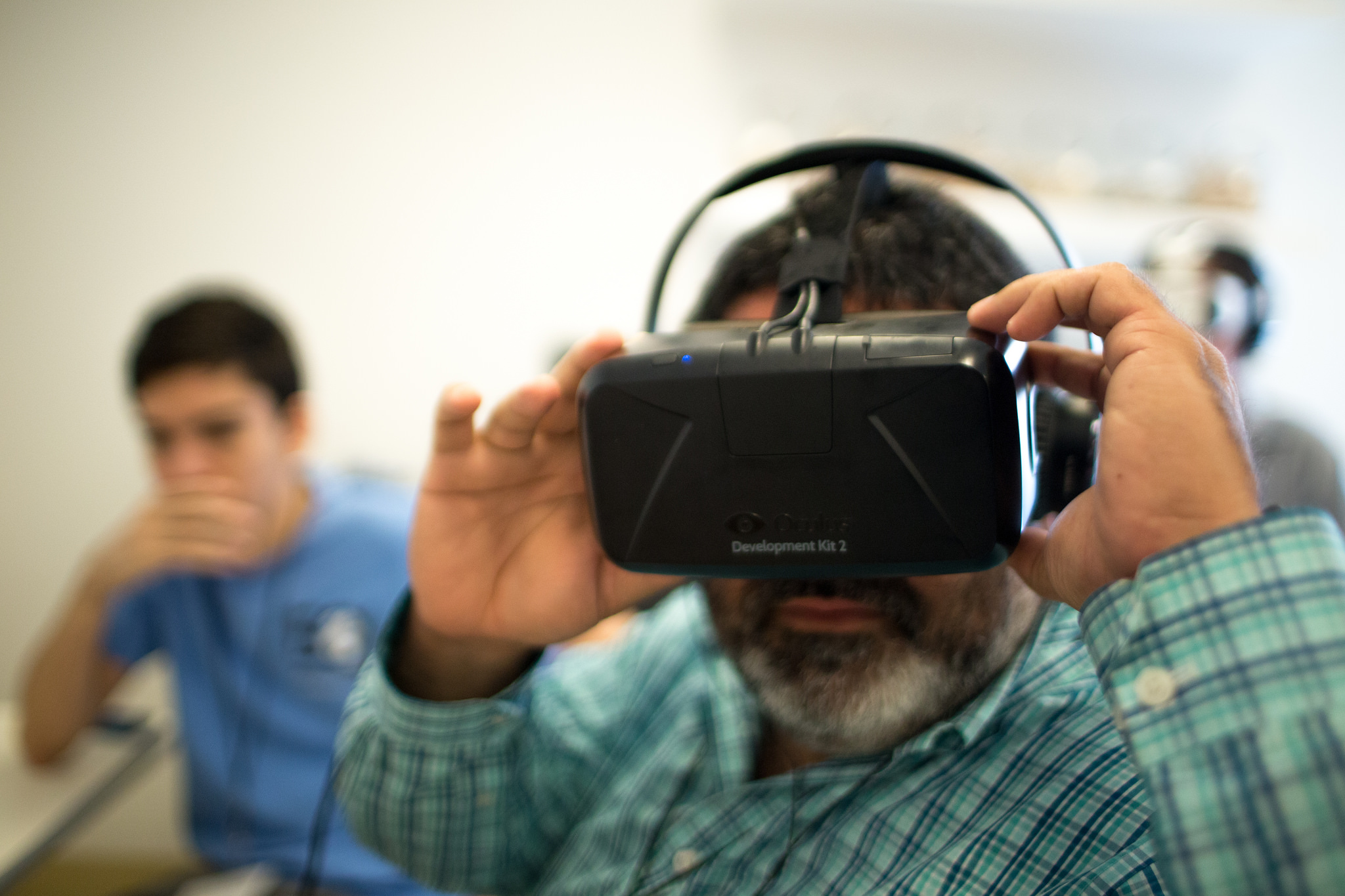







The rise of virtual reality (VR) isn’t exactly meteoric, but it’s certainly well beyond anything people can simply call hype – something that happened when VR first started being talked about many moons ago. The Oculus Rift is finally out there for consumers to play with; Google recently announced it’s making its own virtual reality headset; while more companies are bringing out VR workspaces and other ways we might make use of this alternative reality.
In our virtual environment we can work, play, watch films, and of course get up close to some of our favorite porn stars. The problem right now though, and it’s a biggy, is not many people can afford to take part in the VR phenomenon. Let’s take the Oculus Rift; it’s not only fairly expensive ($599) in itself, but needs to be hooked-up to a powerful, expensive PC (at least a $1000 machine). The same goes for the HTC Vive ($799).
You have the Samsung Gear VR, which doesn’t require a powerful PC and doesn’t cost too much at $99. The catch: you need an expensive phone and the experience is graphically limited.
So how will your average consumer get to slay dragons, open his desktop, or experience a raunchy night in with a virtual lover anytime soon given these prices? Microsoft thinks it has the answer.
It’s called Flashback, explained here in a paper titled: FlashBack: Immersive Virtual Reality on Mobile Devices via Rendering Memoization. The research project is underway, in collaboration with Rice University.
According to the paper, in short, Microsoft says it has found a way to ensure high quality VR can play on low-end mobile devices. Using Flashback, according to the paper, would offer, “A 8x improvement in framerate, 97x reduction in energy consumption per frame, and 15x latency reduction compared to a locally-rendered mobile VR setup”. The paper also states that, “Flashback even delivers better framerates and responsiveness than a tethered HMD configuration on graphically complex scenes.”
How it works is slightly complicated and we suggest you read the full paper, but a watered down explanation is that Flashback takes out the need for a device to render real-time frames in a virtual environment, but uses cached pre-rendered frames accorded to what the user does. The device will only render what the viewer is looking at, taking out unneeded surroundings.
It’s still in the works, and has limitations concerning how many objects can appear in the same view field. Microsoft provides a video demonstration here.
Support our mission to keep content open and free by engaging with theCUBE community. Join theCUBE’s Alumni Trust Network, where technology leaders connect, share intelligence and create opportunities.
Founded by tech visionaries John Furrier and Dave Vellante, SiliconANGLE Media has built a dynamic ecosystem of industry-leading digital media brands that reach 15+ million elite tech professionals. Our new proprietary theCUBE AI Video Cloud is breaking ground in audience interaction, leveraging theCUBEai.com neural network to help technology companies make data-driven decisions and stay at the forefront of industry conversations.





