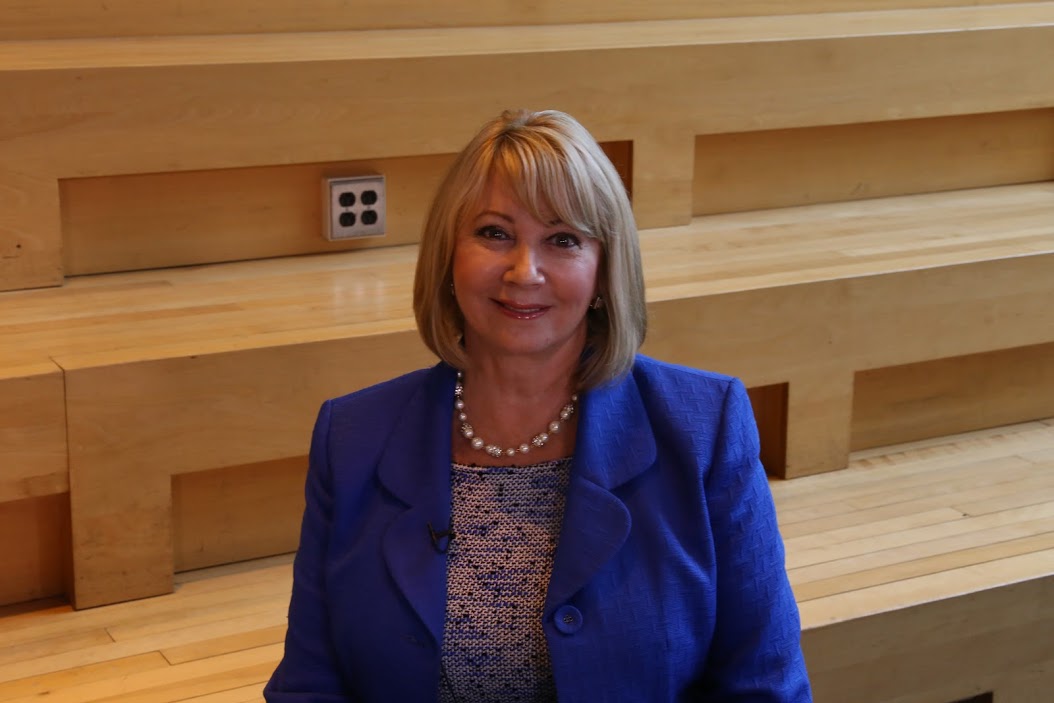







Today’s Chief Data Officer (CDO) needs buy-in from top management if they are to succeed, according to EMC’s own chief data governance officer, Barbara Latulippe. Promoting ownership and access to data, Latulippe shared best practices and EMC’s tried-and-true methods for trawling the data lake.
Latulippe spoke with Stu Miniman (@stu) and Paul Gillin (@pgillin), cohosts of theCUBE, from the SiliconANGLE Media team, during MIT’s annual conference for data officers, MITCDOIQ.
Governance was among the first issues detailed during Latulippe’s segment, as she credited EMC’s history for establishing her team’s maturity in data management. Establishing a framework for tagging and cataloging data in the lake is the first step in governance.
Fortunately, Latulippe’s team is “very passionate about metadata,” and that passion is shared with EMC customers using its tools for managing their data lake. Latulippe explained that EMC effectively crowdsources information on how businesses use data in the lake, following their formal process to facilitate proper cataloging. She also pointed out the role of the technical IT team in initiating the provisioning experience, also contributing to the task of data governance and ownership.
In fact, ownership was another important topic discussed during Latulippe’s segment, as it breeds accountability for those managing and interacting with the data lake. When asked flat out who owns the data, Latulippe replied that it’s businesses that own the data.
“As well as governance, I’d say we’re focused on data quality and ownership,” she said. “We’re mobilizing the data stewards … shifting to information value and even rebranding as an information office. We have a data governance office, but the actual, tactical operations still reside in the business. We connect the right people to take care of business.”
From governance to ownership, the data lake must ultimately prove a worthy business investment. This is another area Latulippe addresses from her department as she oversees the cataloging and mobilizing of data. To this end, her team is looking at algorithms to weigh data value and its impact on business.
“Which datasets are the most commonly used? We can try to govern those and make sure their available,” Latulippe explained. “We’re tackling this from two perspectives — the algorithms and also looking at what a business governs. We want to focus on the critical data elements, what we consider high value data sets.”
But is this value something a business can take to the bank? Latulippe certainly hopes so — beyond just relative value within a business’ objectives for Big Data, her team wants to show the dollar value of the data lake.
“We’re trying to drive an actual dollar valuation,” she said. In governing the data lake, her team asks, “Can you place a dollar value on data, and how can it relate back to the business strategy?”
Drawing value from properly governed data also faces the challenge of maintaining its security controls while also promoting accessibility for those within the business needing meaningful connections to the right data. Latulippe insisted this is a challenge for any group managing data, especially in a data lake.
“We have a lot of Big Data coming in,” she said, citing the burgeoning Internet of Things market and Twitter as two major sources of data currently of interest for customers. “From a customer experience, we want to know how they feel,” Latulippe added, revisiting the methods of tagging and cataloging for reaching a balance in security and accessibility. “Governance has a nice blend of legal and security, and we can tag those toward business processes.”
Another step toward balancing security and accessibility, aligning with all the other objectives in managing the data lake, is assigning a trustee to a data set. This is particularly helpful for businesses hesitant to share their data and ultimately want to have say in who accesses it. “That’s why we move toward the idea of a trustee, to align who has access and who’s leveraging that data to drive ownership,” Latulippe explained.
Watch the complete video interview below, and be sure to check out more of SiliconANGLE and theCUBE’s coverage of the MIT CDOIQ Symposium.
Support our mission to keep content open and free by engaging with theCUBE community. Join theCUBE’s Alumni Trust Network, where technology leaders connect, share intelligence and create opportunities.
Founded by tech visionaries John Furrier and Dave Vellante, SiliconANGLE Media has built a dynamic ecosystem of industry-leading digital media brands that reach 15+ million elite tech professionals. Our new proprietary theCUBE AI Video Cloud is breaking ground in audience interaction, leveraging theCUBEai.com neural network to help technology companies make data-driven decisions and stay at the forefront of industry conversations.





