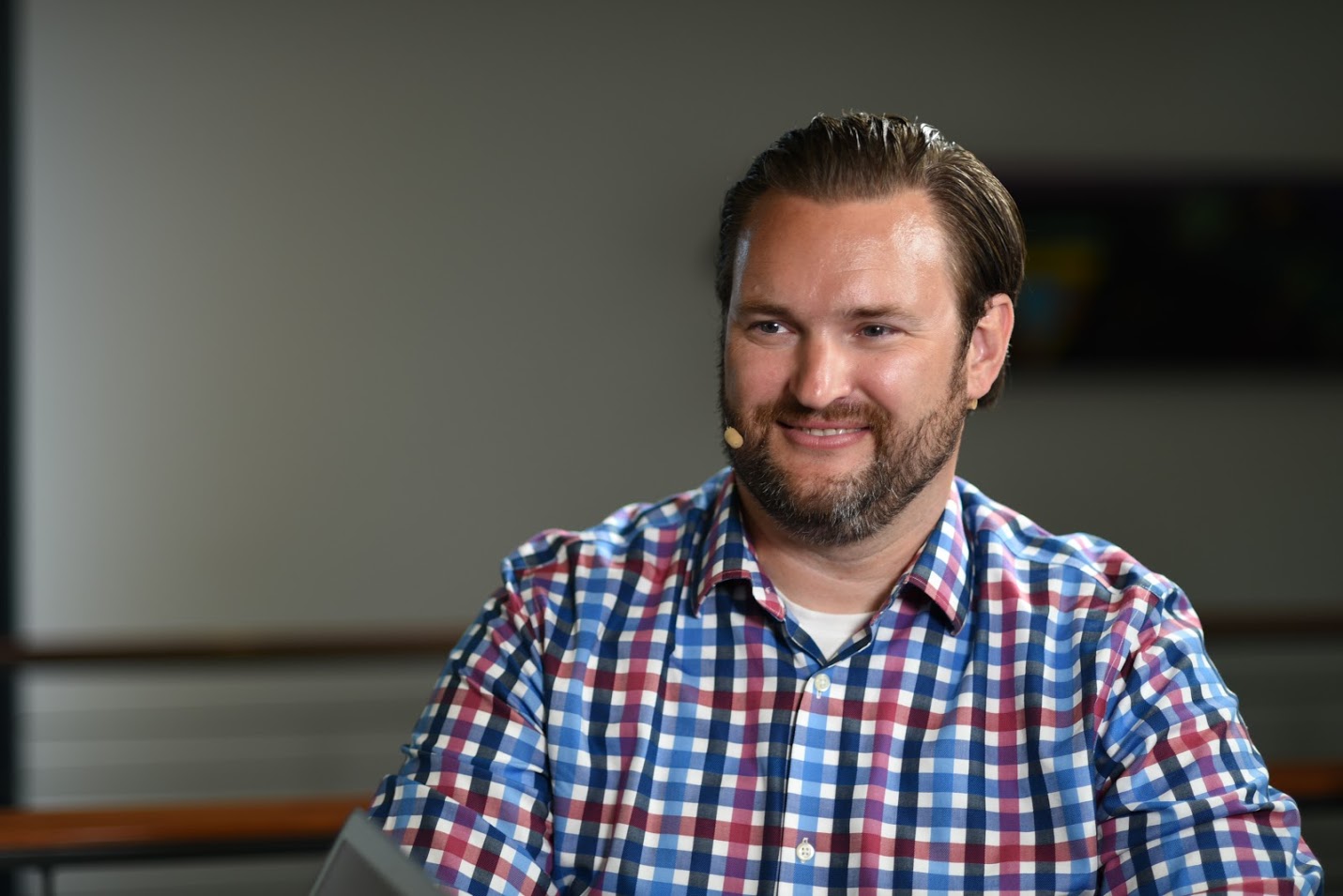







Containerization, Kubernetes, the Solomon-Kelsey Tweetstorm and the Holy Grail of stateful storage are some of the topics discussed when entrepreneur and Kubernetes expert Patrick Reilly, who visited theCUBE, from the SiliconANGLE Media team during OpenStack Days: Silicon Valley 2016. Reilly spoke to John Furrier (@furrier) and Lisa Martin (@luccazara), cohosts of theCUBE, from the SiliconANGLE Media team, during the event at the Computer History Museum in Mountain View, CA.
An open-source container cluster manager originally designed by Google and donated to the Cloud Native Computing Foundation (CNCF), Kubernetes allows automating deployment, scaling and management of containerized applications. As a Governing Board Member for CNCF, Reilly gave theCUBE hosts his perspective on containerization and current issues being discussed within the community.
Reilly sees Virtual Machines (VM) as an insurance policy for containers, eliminating the need to choose between one or another. Enterprises want Kubernetes, OpenStack and Bare Metal all together, he said, pointing out that you can’t just magically containerize legacy apps or put them into VMs.
Asked by Martin what he sees as the future of complexity, Reilly talked about the need for a choke point — a place where things start and are managed. “The future of CNCF and Kubernetes is that we have the federated control plane where people can trust that this is the system that is going to orchestrate everything and make sure that your container services are running,” he said.
He uses Bank of America as an example of a large company that has tens of thousands of apps running, many of which are old and complicated and require specialized attention, and he said that in these situations it’s about looking at overall cluster health.
Talking about how the community is chasing the so-called Holy Grail of stateful storage, Reilly sees the need to keep both old and new working independently but working together.
When Furrier asked Reilly his opinion on the recent Tweetstorm between Solomon Hykes, founder and CTO of Docker, and developer advocate Kelsey Hightower, Reilly gives the pragmatic advice that the community would do better to talk face to face than discuss issues on Twitter.
“Don’t forget that at the end of the day we’re only trying to keep applications running,” concluded Reilly.
Watch the full interview below, and be sure to check out more of SiliconANGLE and theCUBE’s coverage of the OpenStack Days: Silicon Valley 2016.
Support our mission to keep content open and free by engaging with theCUBE community. Join theCUBE’s Alumni Trust Network, where technology leaders connect, share intelligence and create opportunities.
Founded by tech visionaries John Furrier and Dave Vellante, SiliconANGLE Media has built a dynamic ecosystem of industry-leading digital media brands that reach 15+ million elite tech professionals. Our new proprietary theCUBE AI Video Cloud is breaking ground in audience interaction, leveraging theCUBEai.com neural network to help technology companies make data-driven decisions and stay at the forefront of industry conversations.





