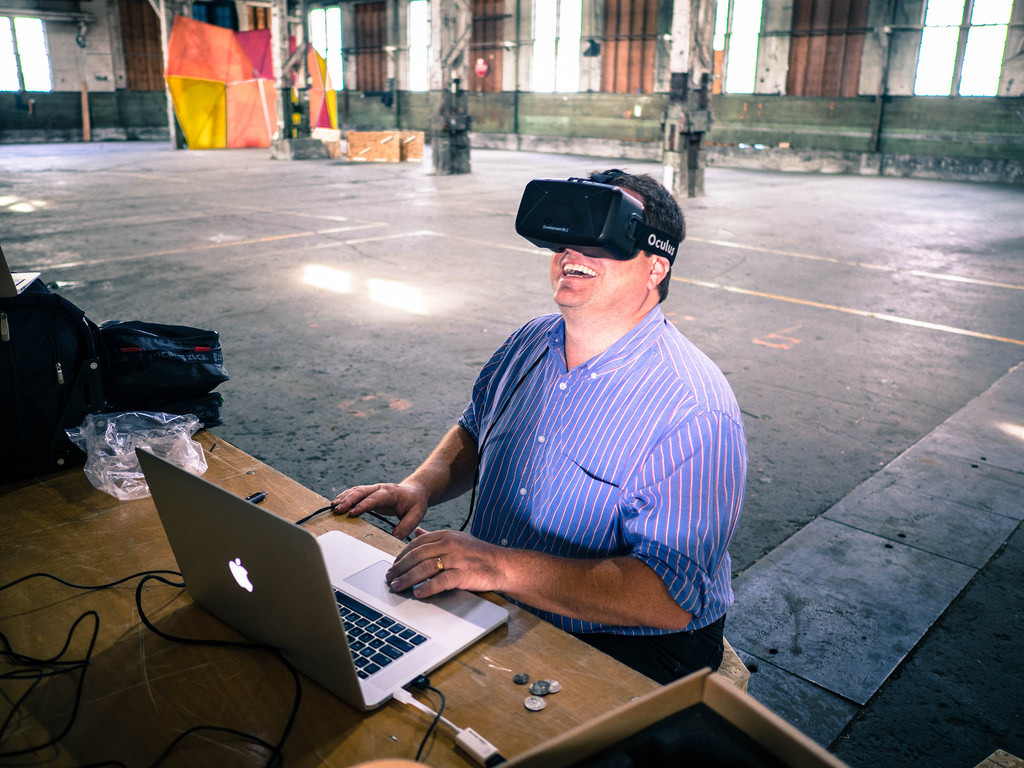







A new report by the International Data Corporation (IDC) claims that virtual and augmented reality will be a $162 billion market within four years, and the company says this would represent an incredible 181.3 percent compound annual growth rate.
It is no secret that VR and AR are two of the most talked about trends in tech today thanks to high profile success stories like Pokemon Go and the release of impressive VR devices like Oculus Rift and HTC Vive.
According to the report, the popularity of VR with gamers will drive the demand for interactive content, but it will take a bit longer for non-gaming VR entertainment to catch on. Meanwhile, Chris Chute, vice president of Customer Insights and Analysis at IDC, says that the growth of the VR/AR market is being driven not only my consumer content, but also by the business sector.
“For many years augmented and virtual reality were the stuff of science fiction,” Chute said. “Now with powerful smartphones powering inexpensive VR headsets, the consumer market is primed for new paid and user generated content-driven experiences. Recent developments in healthcare demonstrated the powerful impact augmented reality headsets can have at the industry level, and over the next five years we expect to see that promise become realized in other fields like education, logistics, and manufacturing.”
There are already multiple examples of forward-thinking businesses taking advantage of VR and AR devices. For example, BMW recently began using a combination of HTC Vive headsets and Unreal Engine 4 to create and test vehicle designs in virtual reality.
While high end VR devices like Oculus Rift and HTC Vive are a bit out of the average consumer’s price range, with price tags of $599 and $799, respectively, there are a number of other less expensive options, such as mobile VR devices like Samsung Gear VR or Google Cardboard. According to IDC, these lower priced options will help drive the industry forward, as developers will rush to fulfill the demand for more content.
“The rise of new, less expensive hardware will put virtual and augmented reality technology within the grasp of a growing numbers of companies and individuals,” said Tom Mainelli, vice president of Devices & AR/VR at IDC. “But, as always, what people can do with that hardware will depend upon the applications and services that power it. In the coming years, we expect developers to create a wide range of new experiences for these devices that will fundamentally change the way many of us do work.”
Of course, developers are more likely to flock to the system with the most users, and users will generally flock to the system with the best content. This chicken and egg scenario has played out across the tech industry multiple times over the years, such as the fight between VHS and Betamax, and it is one of the biggest problems facing companies like Oculus VR.
Support our mission to keep content open and free by engaging with theCUBE community. Join theCUBE’s Alumni Trust Network, where technology leaders connect, share intelligence and create opportunities.
Founded by tech visionaries John Furrier and Dave Vellante, SiliconANGLE Media has built a dynamic ecosystem of industry-leading digital media brands that reach 15+ million elite tech professionals. Our new proprietary theCUBE AI Video Cloud is breaking ground in audience interaction, leveraging theCUBEai.com neural network to help technology companies make data-driven decisions and stay at the forefront of industry conversations.





