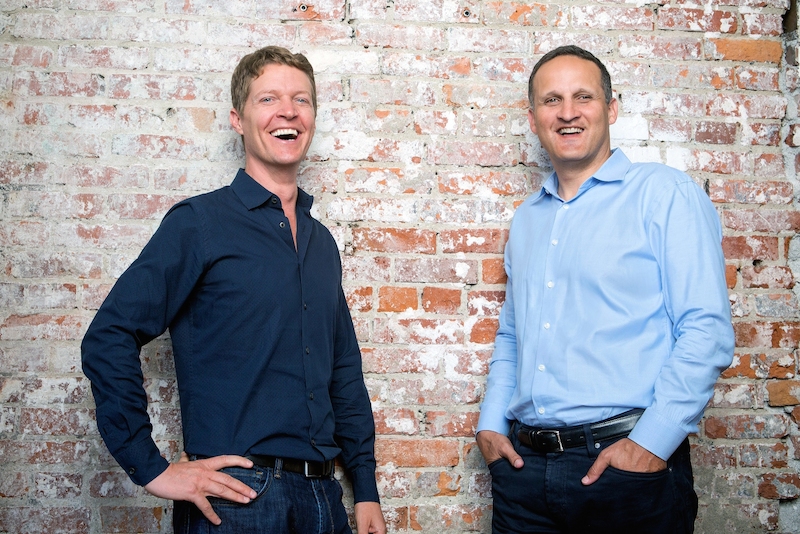







Struggling with slowing revenue growth and sparse profits, Tableau Software Inc. today appointed a new president and chief executive: former Amazon Web Services executive Adam Selipsky.
Selipsky (above right), who recently left his job as vice president of marketing, sales and support for AWS after more than a decade with Amazon.com’s cloud computing unit, will replace Tableau co-founder Christian Chabot (above left), who was CEO since 2003, on Sept. 16. Chabot will remain chairman and stay involved in “long-term strategy and customer evangelism.”
The move comes a few weeks after the visual analytics company reported second-quarter earnings that met Wall Street revenue estimates on revenues but fell short on profits, which were less than one cent a share. As a result, its shares fell more than 9 percent on Aug. 3. They had fallen by 50 percent back in February when the company reduced earnings estimates.
Tableau positioned the move as a natural transition. “Bringing Adam on board will lead Tableau into the next stage of growth,” John McAdam, lead independent director and chair of the nominating and governance committee of Tableau’s board of directors, said in a statement.
“We’re just getting started in our journey,” Chabot said. “Adam is going to take Tableau to the next level. Tableau has the capability to become the standard for how people work with data, and in doing so to grow into a globally recognized technology brand.”
In particular, the move signals Tableau’s focus on its cloud service Tableau Online. But while Chabot had signaled an intention to bring in a president, his stepping aside as CEO was not expected. Investors cheered the news, as shares moved up 6 percent in after-hours trading.
On the Aug. 2 earnings call, Chief Financial Officer Tom Walker had attributed the earnings shortfall chiefly to higher expenses than planned, partly from underestimating the cost of compensation expenses, higher sales commissions from closing more deals than expected, and a company-wide meeting in Seattle where Tableau spent a lot on staff development and training for the launch of its latest software version.
Although he said those costs wouldn’t be repeated, investors clearly have grown restive since the start of the year. Amid widespread discounting in its market, the company has struggled to meet high expectations. It cut back hiring plans by half early this year.
Barclays Capital Inc. analyst Raimo Lenschow said in a note to clients that Selipsky’s experience should help Tableau deal with growth challenges. “Going forward there needs to be a greater focus on the cloud, both from a product perspective but also from a business model perspective,” he wrote.
In addition, he attributed the “sharp deceleration of license growth in recent quarters” to an outdated sales approach in which it cut sales territories and hired more sales representatives to sell to smaller companies. “Tableau now needs an enterprise focus that will include larger contract sizes and different pricing models,” he wrote.
As it happens, AWS’s QuickSight, a business intelligence service currently available in a developer preview, is due to debut commercially next month. Global Equities Research analyst Trip Chowdhry said that could provide heavy competition for Tableau. In a report today, he said that regardless of the new CEO, QuickSight could take 10 percent of Tableau’s business, adding that “the remaining business is going to see serious pricing pressure.”
Before AWS, Selipsky was an executive at RealNetworks in charge of the video subscription and media player division. Before that, he was a principal at Mercer Management Consulting.
Tableau said Chris Stolte, co-founder and chief development officer, will become a technical advisor. Andrew Beers will become chief development officer, and Francois Ajenstat will become chief product officer, a new position reporting to Beers.
Support our mission to keep content open and free by engaging with theCUBE community. Join theCUBE’s Alumni Trust Network, where technology leaders connect, share intelligence and create opportunities.
Founded by tech visionaries John Furrier and Dave Vellante, SiliconANGLE Media has built a dynamic ecosystem of industry-leading digital media brands that reach 15+ million elite tech professionals. Our new proprietary theCUBE AI Video Cloud is breaking ground in audience interaction, leveraging theCUBEai.com neural network to help technology companies make data-driven decisions and stay at the forefront of industry conversations.





