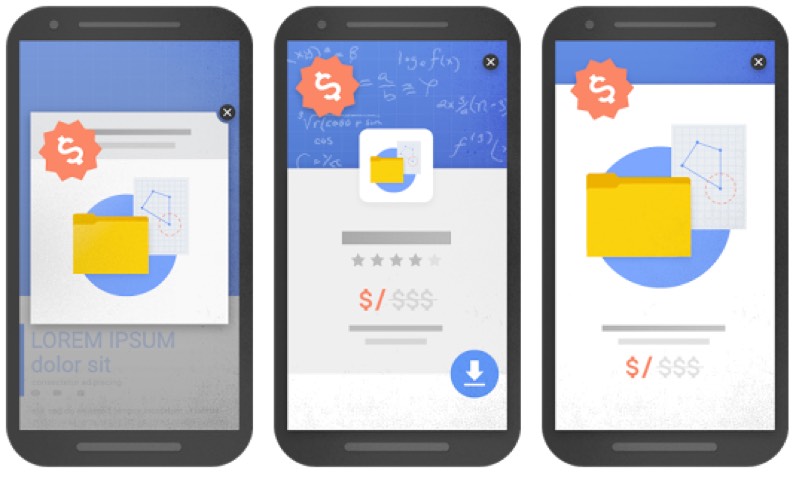







Search giant Google has announced that it will punish the mobile rankings of sites that use interstitial pop-ups, starting in January 2017.
If you’re not familiar with the term, an interstitial is traditionally a page displayed before or after an expected content page. In the case of mobile sites, they’re displayed as pop-up overlays that block access to the original content.
“Although the majority of pages now have text and content on the page that is readable without zooming, we’ve recently seen many examples where these pages show intrusive interstitials to users,” Google Product Manager Dn explained on the Google Webmaster Central blog. “While the underlying content is present on the page and available to be indexed by Google, content may be visually obscured by an interstitial. This can frustrate users because they are unable to easily access the content that they were expecting when they tapped on the search result.”
“Pages that show intrusive interstitials provide a poorer experience to users than other pages where content is immediately accessible. This can be problematic on mobile devices where screens are often smaller,” he added. “To improve the mobile search experience, after January 10, 2017, pages where content is not easily accessible to a user on the transition from the mobile search results may not rank as highly.”
Not all interstitial pop-ups will be treated the same, however, with popups that present a legitimate purpose, such as accepting cookies, site login or a small pop-up at the top of the screen that doesn’t block content being acceptable, versus pop-ups that cover the main content, display an ad forcing a user to dismiss it before accessing the main content, or ones that use a layout where the above the fold portion of the page appear to be similar to a standalone interstitial being the forms being targeted by this change.
If you’ve ever browsed the web on a smartphone before you’ll know roughly exactly what Google is talking about here: sites that force you to try to close a pop-up that dominates the whole screen before accessing content, or in some cases even have multiple pop-ups that have to be gotten through to get to the page you actually want to read.
Proverbially using U.K. slang, many publishers have been “taking the piss” in terms of the way they present their content to readers by delivering sometimes appallingly bad experiences. It’s fair to note that publishers are entitled to show ads against their content and earn money from them, but likewise far too many sites pile them on too much, with interstitial pop-ups being the worse of the lot.
As for the news, hallelujah and thank you again, Google, for taking a stand on the issue.
Support our mission to keep content open and free by engaging with theCUBE community. Join theCUBE’s Alumni Trust Network, where technology leaders connect, share intelligence and create opportunities.
Founded by tech visionaries John Furrier and Dave Vellante, SiliconANGLE Media has built a dynamic ecosystem of industry-leading digital media brands that reach 15+ million elite tech professionals. Our new proprietary theCUBE AI Video Cloud is breaking ground in audience interaction, leveraging theCUBEai.com neural network to help technology companies make data-driven decisions and stay at the forefront of industry conversations.





