






Intel Corp. reported third-quarter earnings that beat expectations, but investors appeared underwhelmed by the results despite Chief Executive Brian Krzanich’s characterization of the quarterly performance as “outstanding.”
The chipmaker reported third-quarter revenues of $15.78 billion and earnings per share of 80 cents. Both figures beat Wall Street consensus estimates of $15.58 billion in revenue and 73 cents per share in earnings.
But Intel said it expects fourth-quarter revenues to come in at about $15.7 billion, which is below consensus estimates of $15.87 billion. It also increased its estimate of restructuring charges by $700 million to a total of $2.3 billion, with the majority of those charges expected to come between now and the middle of 2017. In after-hours trading immediately following Intel’s earning announcement, investors knocked shares down more than 3 percent.
Investors have been a tough crowd to please. Ever since the personal computer market began its eight-quarter-long decline in shipments in late 2015, Intel has been scrambling to diversify its business into data center and Internet of things applications. The company reported a 49 percent drop in profits in July on charges incurred by a 12,000-person workforce reduction that was initiated in April as part of a broad restructuring plan.
Intel appears to be making good progress in reducing its reliance on PCs. Data Center Group revenue was up 13 percent sequentially and 10 percent year-over-year to $4.5 billion. Internet of Things Group revenue was up 20 percent sequentially and 19 percent year-over-year. Sales to cloud service providers grew 37 percent.
However, enterprise revenue was down 3 percent, below Intel’s forecast of flat results. “This quarter, we expected the enterprise segment to go from a low single-digit decline to flat and it hasn’t worked out that way,” Krzanich said.
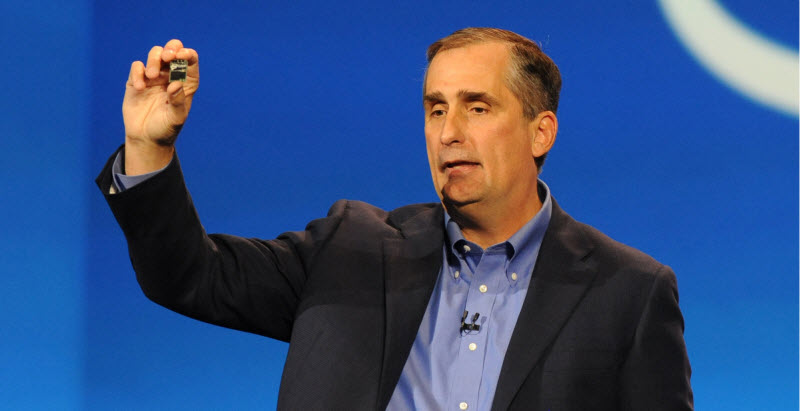
The decline in enterprise sales was mildly surprising, but executives said results are in line with long-term trends. “It doesn’t really matter to us whether applications go to the cloud or stay in the enterprise,” said Krzanich (pictured above). “That said, we are in talks with several enterprises that want to grow their own private clouds and are looking at how best to do that. The customer feedback we’re getting gives us some confidence that enterprises, with their own private clouds, will continue to see some improvement. It’s not likely to be a growth area, though,” he added.
While growth in data center revenues technically matched Intel’s vow to grow by double-digit percentages in that sector this year, results barely met that promise. The Data Center Group’s operating profit was down slightly due to higher investments, said Chief Financial Officer Stacy J. Smith. Trip Chowdhry, an analyst with Global Equities Research wrote in a note to clients that Intel’s strength supplying “super clouds” such as Amazon Web Services and Microsoft Azure, may be “somewhat offset by weakness within the Enterprise Datacenter.”
Intel’s reliance on PC chips – which are still its largest source of revenue – is a handicap. The initially raised financial guidance for the third quarter based upon speculation by some analyst firms that PC sales might be due for a turnaround on the strength of Microsoft’s Windows 10 operating system. However, Gartner Inc. last week backtracked and forecast a 5.7 percent decline in PC shipments in the third quarter, continuing a two-year trend.
Intel executives were upbeat on the earning call. “What we saw was very strong growth rates in the cloud, very strong growth rates in networking and storage as users are virtualizing, and some weakness in enterprise in Q3 that we are expecting to continue in Q4,” Smith said. Krzanich added that consumer spending is still slow. “An increase in what’s been strong in the past is what drove growth for this quarter,” he said.
Support our mission to keep content open and free by engaging with theCUBE community. Join theCUBE’s Alumni Trust Network, where technology leaders connect, share intelligence and create opportunities.
Founded by tech visionaries John Furrier and Dave Vellante, SiliconANGLE Media has built a dynamic ecosystem of industry-leading digital media brands that reach 15+ million elite tech professionals. Our new proprietary theCUBE AI Video Cloud is breaking ground in audience interaction, leveraging theCUBEai.com neural network to help technology companies make data-driven decisions and stay at the forefront of industry conversations.





