 EMERGING TECH
EMERGING TECH
EMERGING TECH






EMERGING TECH

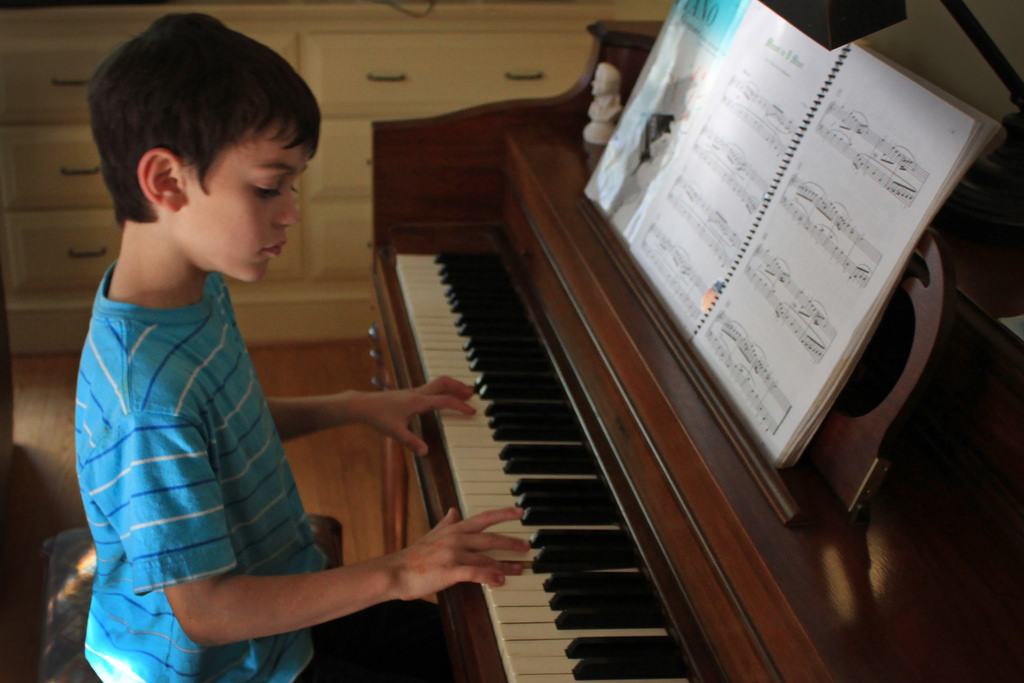
First artificial intelligence conquered board games. Now, it’s going after classical music.
In yet another example that no job is safe from automation, Gaetan Hadjeres and Francois Pachet from the Sony Computer Science Laboratories in Paris say they have trained an artificial intelligence agent named “DeepBach,” which can compose songs in the style of 17th-century German composer Johann Sebastian Bach.
Hadjeres and Pachet explained that they trained the AI using data from over 400 of Bach’s chorale compositions. Using neural networks, DeepBach can not only compose its own music, but also can take existing songs and re-harmonize them in Bach’s style. DeepBach can apparently do that so quickly that the researchers say it can actually be used in interactive music compositions, changing up music on the fly as needed.
“After being trained on the chorale harmonizations by Johann Sebastian Bach, our model is capable of generating highly convincing chorales in the style of Bach,” the researchers said in a Cornell University Library arXiv.org paper.
The researchers tested the success of their program by playing DeepBach compositions and asking listeners whether or not the piece was genuine. According to Hadjeres and Pachet, DeepBach had a roughly 50 percent success rate for this test, and they noted that the percentage for actual Bach compositions was only 75 percent. While there is clearly room for improvement, the researchers believe that DeepBach demonstrates the possibilities for AI-generated music, and they hope to apply the same technique to other composers and music genres.
“This method is not only applicable to Bach chorales but embraces a wide range of polyphonic chorale music, from Palestrina to Take 6,” said Hadjeres and Pachet.
Sony is not the only company looking into AI-generated music. Earlier this year, the Google Brain team unveiled a new TensorFlow project called Magenta, which can take a very short melody and expand it into a full-length song. Magenta has yet to write any chart-toppers, but Google hopes that the project will open new avenues of AI research and build a community of artists and developers.
You can listen to one of DeepBach’s compositions:
Support our mission to keep content open and free by engaging with theCUBE community. Join theCUBE’s Alumni Trust Network, where technology leaders connect, share intelligence and create opportunities.
Founded by tech visionaries John Furrier and Dave Vellante, SiliconANGLE Media has built a dynamic ecosystem of industry-leading digital media brands that reach 15+ million elite tech professionals. Our new proprietary theCUBE AI Video Cloud is breaking ground in audience interaction, leveraging theCUBEai.com neural network to help technology companies make data-driven decisions and stay at the forefront of industry conversations.





