







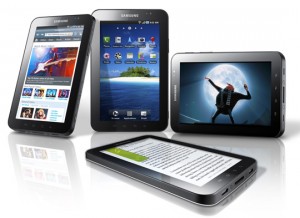
 In just few weeks after Galaxy Tab’s launch, Samsung reports sales of 600,000 pieces worldwide. Targeting iPad users and other potential tablet customers, the initial figures indicate a good welcoming from the market. A few things have to be mentioned: Samsung did not market the Galaxy Tab nearly as aggressively as Apple did with the iPad, and it is cheaper than its Apple counterpart, making its sales relatively good. The predictions for next year are more encouraging. The Android tablet is managing the competition well, and it also fills in some gaps left by iPad.
As good is the sales reports are for Samsung’s Galaxy Tab, an odd rumor has already raised questions surrounding Samsung’s intentions for Android-powered devices moving forward. is Samsung may be focusing more on Microsoft’s operating system than on Android next year. From reported sources, it is being said that Samsung will use Windows Phone 7 on the majority of his smartphones, more specifically, around 63%. The remaining percentage will be Android at 32%, and then Bada with 6%.
The question puzzling the market watchers is why Samsung would invest more in Windows Phone 7, while it was not yet a repudiated success, and particularly if Android-powered devices that it produces have such a good market appreciation. Microsoft has a big marketing push around all its updated projects, especially Windows Phone 7, and has landed a number of development partners, but several manufacturers, including Samsung and Motorola, have seen soaring success due to Android’s distribution in the past year.
Samsung’s recent success in handset’s field led to a shortage of Galaxy S smartphones. Reported to be sold in more than 3 million soon after its release, the key point was considered to be the Android OS that it incorporates.
Support our mission to keep content open and free by engaging with theCUBE community. Join theCUBE’s Alumni Trust Network, where technology leaders connect, share intelligence and create opportunities.
Founded by tech visionaries John Furrier and Dave Vellante, SiliconANGLE Media has built a dynamic ecosystem of industry-leading digital media brands that reach 15+ million elite tech professionals. Our new proprietary theCUBE AI Video Cloud is breaking ground in audience interaction, leveraging theCUBEai.com neural network to help technology companies make data-driven decisions and stay at the forefront of industry conversations.




