 EMERGING TECH
EMERGING TECH
EMERGING TECH






EMERGING TECH

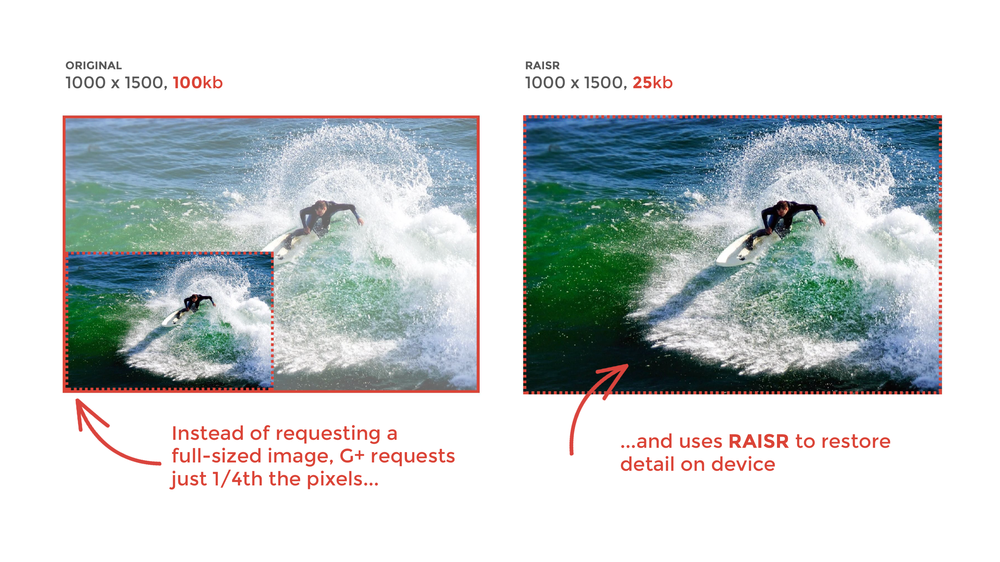
Google Inc. has rolled out a new imaging technique that cuts down on bandwidth required to view an image by 75 percent.
For now, the technique, called Rapid and Accurate Image Super Resolution, or RAISR for short, is being used only on the little-used Google+ social sharing service. But Google signaled that it will be rolled out over time to other Google services.
The method takes a small snapshot of an image and “upscales” it — that is, it produces an image of larger size with more pixels and higher image quality from a lower-quality image. RAISR differs from traditional upscaling techniques that deliver blurry images, in that it uses machine learning to make an image look like a high-quality equivalent.
According to a paper released by Google last November, it does this by using “a set of pre-learned filters on the image patches, chosen by an efficient hashing mechanism,” then blending the originally upscaled image with the filtered version. Those filters are based on trained “edge” features, such as brightness or textures, found in small patches of images.
Google claims that RAISR can deliver results that are comparable or better than other upscaling methods and do it between 10 to 100 times faster, allowing it be run on a mobile device in real time.
“Super-resolution technology, using one or many frames, has come a long way,” Google Research Scientist Peyman Milanfar said in a blog post. “Today, the use of machine learning, in tandem with decades of advances in imaging technology, has enabled progress in image processing that yields many potential benefits. For example, in addition to improving digital ‘pinch to zoom’ on your phone, one could capture, save, or transmit images at lower resolution and super-resolve on demand without any visible degradation in quality, all while utilizing less of mobile data and storage plans.”
The point made by Milanfar is worth repeating because this is the biggest advantage of the RAISR platform: Smaller images load more quickly and use less data and storage, increasingly valuable in an age where unlimited data plans are becoming more rare.
Although relatively few people use Google+, Google said it plans “to roll this technology out more broadly” in the coming weeks. Google wasn’t specific about where, but obvious potential applications include YouTube stills, Google Photos and even search results.
Support our mission to keep content open and free by engaging with theCUBE community. Join theCUBE’s Alumni Trust Network, where technology leaders connect, share intelligence and create opportunities.
Founded by tech visionaries John Furrier and Dave Vellante, SiliconANGLE Media has built a dynamic ecosystem of industry-leading digital media brands that reach 15+ million elite tech professionals. Our new proprietary theCUBE AI Video Cloud is breaking ground in audience interaction, leveraging theCUBEai.com neural network to help technology companies make data-driven decisions and stay at the forefront of industry conversations.





