 CLOUD
CLOUD
CLOUD
CLOUD







CLOUD

Last week’s Amazon Web Service S3 storage service outage sent jitters through IT departments — if this could happen at Amazon, it could happen anywhere. Many are wondering which cloud vendors they can depend on and if a multi-cloud strategy might help protect data.
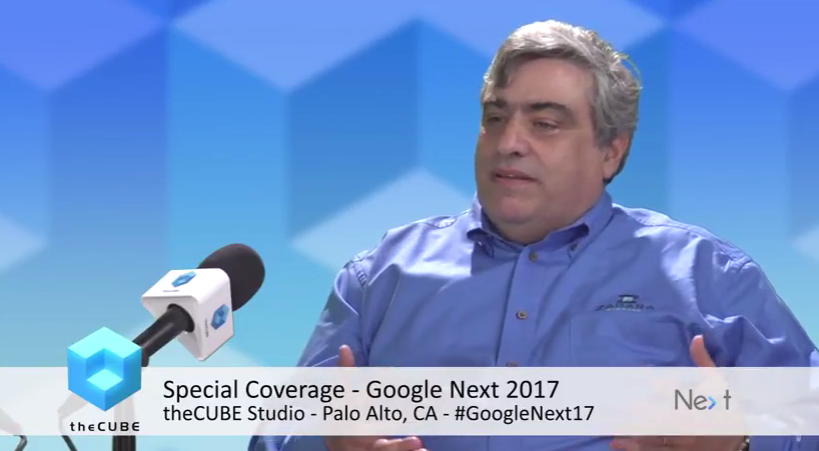
Nelson Nahum (pictured), co-founder and chief executive officer at Zadara Storage Inc., doesn’t think Amazon was particularly at fault. “I think what is important here isn’t the outage,” he said. “What is important is people will start recognizing that you need to have the data in two locations in order to be safe.”
Nahum spoke to John Furrier (@furrier), host of theCUBE, SiliconANGLE Media’s mobile live streaming studio, at SiliconANGLE’s Palo Alto, CA, studio to discuss cloud in the enterprise, as well as news from the Google Cloud Next event. (*Disclosure below.)
A multi-cloud environment can help enterprises survive disasters, provided they choose a proper storage solution, Nahum pointed out. “[Zadara] can provide storage that can be accessible at the same time concurrently from Amazon and from Google and Azure and others,” he said.
Since Zadara’s customers (even the ones using Amazon cloud) weren’t dependent on S3 for access to their data, they were not impacted by the outage, he explained.
The benefits of multi-cloud don’t stop there, according to Nahum. “People want to use the best cloud for the particular application they have, and they have multiple applications so they use multiple clouds,” he said.
For example, Microsoft Azure may be best for Windows applications, while if you run Oracle infrastructure, perhaps Oracle Cloud is the best, he said. Zadara looks to fill the gaps across major cloud vendors, supporting a range of directory file types. Where Google Cloud doesn’t yet have a comparable product for Amazon’s Elastic File System for scalable storage, Zadara plugs into EFS, Network File Systems and Common Internet File Systems, to name a few.
Watch the complete video interview below, and be sure to check out more of SiliconANGLE’s and theCUBE’s coverage of Google Cloud Next 2017. (*Disclosure: Some segments on SiliconANGLE Media’s theCUBE are sponsored. Sponsors have no editorial control over content on theCUBE or SiliconANGLE.)
Support our mission to keep content open and free by engaging with theCUBE community. Join theCUBE’s Alumni Trust Network, where technology leaders connect, share intelligence and create opportunities.
Founded by tech visionaries John Furrier and Dave Vellante, SiliconANGLE Media has built a dynamic ecosystem of industry-leading digital media brands that reach 15+ million elite tech professionals. Our new proprietary theCUBE AI Video Cloud is breaking ground in audience interaction, leveraging theCUBEai.com neural network to help technology companies make data-driven decisions and stay at the forefront of industry conversations.





