 APPS
APPS
APPS
APPS







APPS

The debate over whether legacy applications should go into containers is on, with some saying virtual machines are a better fit than the more modular method of containing software. Others argue that businesses benefit from containerizing all applications in ways they may not yet expect.
Managed service provider KMicro Tech Inc. was tasked with modernizing a legacy application for a customer, which led them to container automation platform appLariat Corp.
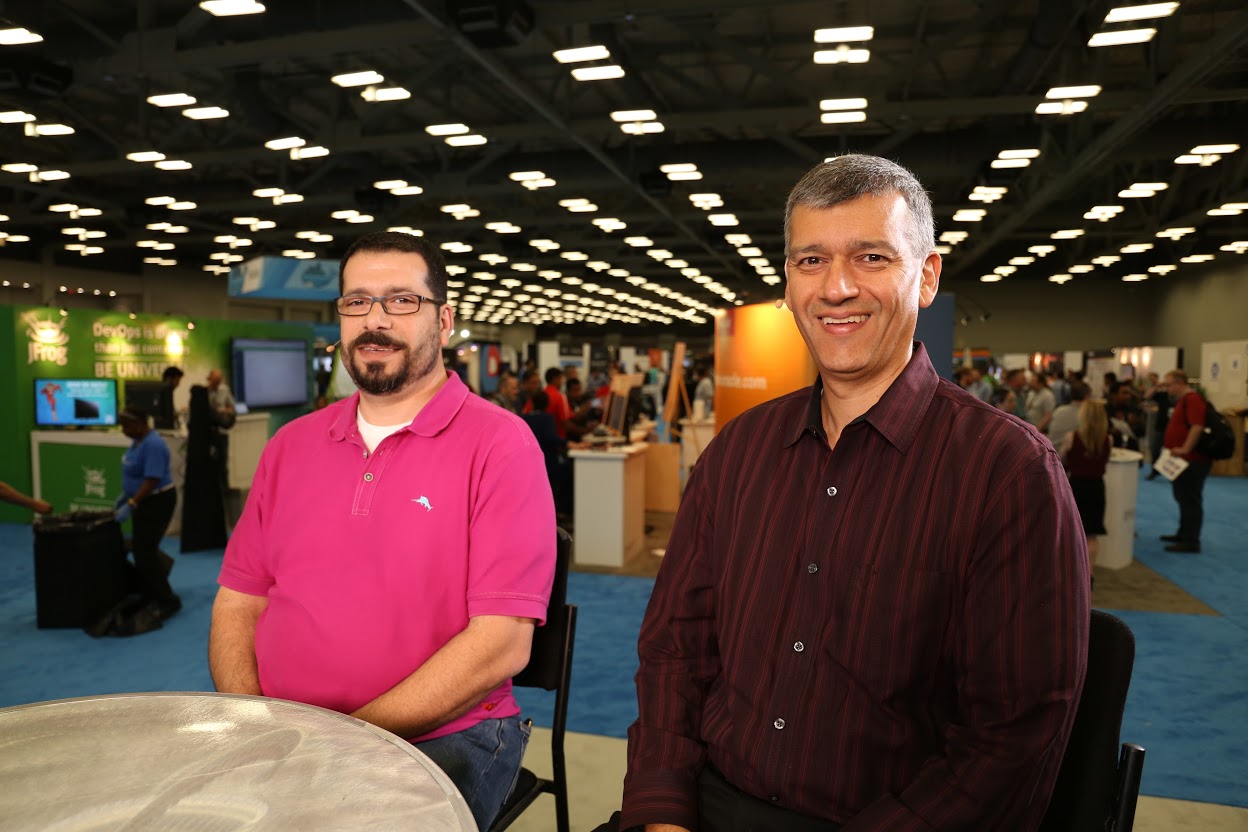
“We were looking for a solution for them that would help them modernize the application and at the same time stay up to date with the latest technologies,” said founder Thomas Chamtie (pictured, left).
That solution turned out to be Docker containers, Chamtie told Stu Miniman (@stu), host of theCUBE, SiliconANGLE Media’s mobile live streaming studio, during DockerCon17 in Austin, Texas. (*Disclosure below.)
To containerize the customer’s legacy application, KMicro began collaborating with appLariat.
The real problems and opportunities presented by containers are with existing applications, according to Mazda Marvasti (pictured), chief executive officer of appLariat Corp. “How do you get those applications the same kinds of capabilities that you’re trying to give brand new applications being done with microservices?”
It takes automation, uniformity and consistency to reliably move a slew of applications into containers, he said. To orchestrate them, appLariat uses container manager Kubernetes on the back end. Kubernetes is an open-source system for automating deployment, scaling and management of containerized applications.
Beyond cloud-native-like performance, there are positive side effects to containerizing legacy apps, said Marvasti. It turned out customers were spending a ton of money testing applications in Amazon Web Services using Virtual Machines.
“Once we put the AWS under a Kubernetes cluster, we were able to manage the cluster size based on usage and availability,” he said, adding that this results in a 50-percent reduction of their AWS bills.
Containerization also has potential for efficient disaster recovery methods that appLariat and KMicro Tech are working on. “If you have your applications already containerized, you can snapshot it anywhere, and once it’s snapshotted, it can come up and go down very quickly,” Marvasti said.
Watch the complete video interview below, and be sure to check out more of SiliconANGLE’s and theCUBE’s coverage of DockerCon US 2017 Austin. (*Disclosure: appLariat Corp. sponsors some DockerCon segments on SiliconANGLE Media’s theCUBE. Neither appLariat nor other sponsors have editorial control over content on theCUBE or SiliconANGLE.)
Support our mission to keep content open and free by engaging with theCUBE community. Join theCUBE’s Alumni Trust Network, where technology leaders connect, share intelligence and create opportunities.
Founded by tech visionaries John Furrier and Dave Vellante, SiliconANGLE Media has built a dynamic ecosystem of industry-leading digital media brands that reach 15+ million elite tech professionals. Our new proprietary theCUBE AI Video Cloud is breaking ground in audience interaction, leveraging theCUBEai.com neural network to help technology companies make data-driven decisions and stay at the forefront of industry conversations.





