 CLOUD
CLOUD
CLOUD
CLOUD







CLOUD

Lennon and McCartney; Warhol and Basquiat; F. Scott and Zelda Fitzgerald — history’s filled with famous creative duos, and new technology could create more by knocking down collaborative barriers of time and locality.
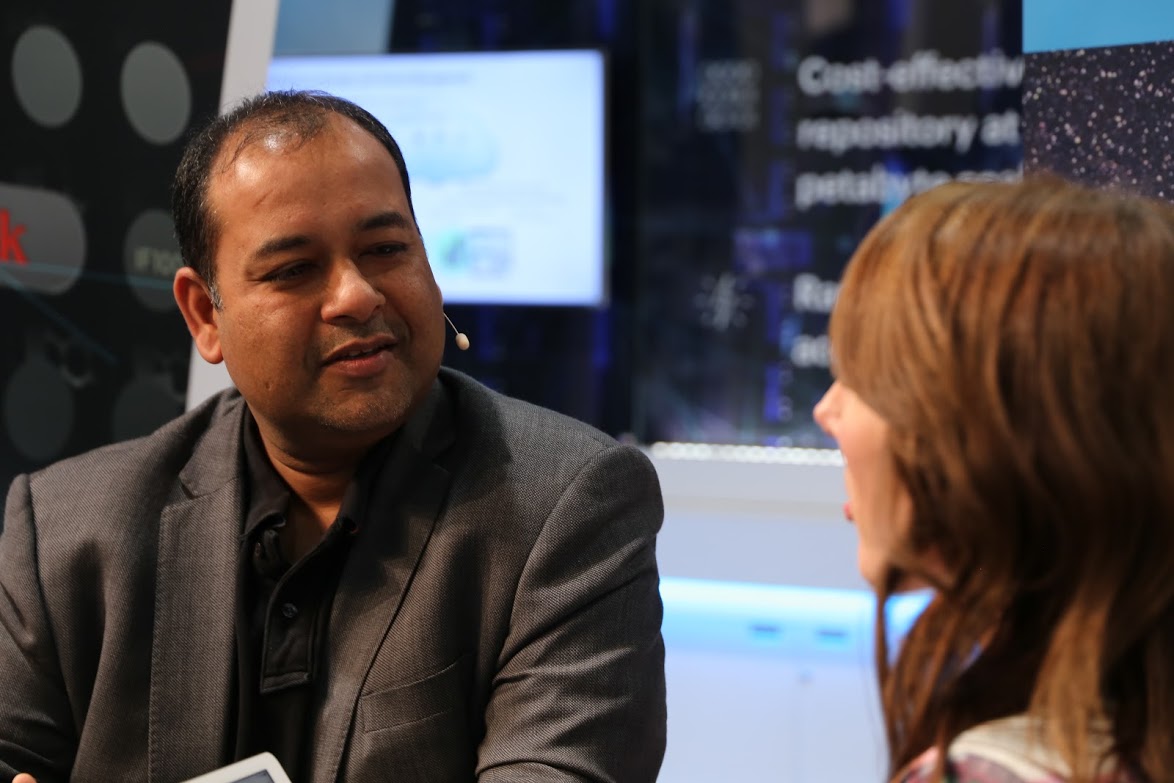
“You don’t want to be restricted by geography in finding the person you want to collaborate with,” said Shailendra Mathur (pictured), vice president/chief architect at Avid Technology Inc. Artists are finding that digital tech and cloud, in particular, give them more co-creative choices than ever before, he added.
Mathur spoke with Lisa Martin (@Luccazara), host of theCUBE, SiliconANGLE Media’s mobile live streaming studio, during the NAB Show in Las Vegas, Nevada, this week. (*Disclosure below.)
What does cloud deliver? “That one centralized location where you can exchange information, exchange your creativity” wherever one is in the world, said Mathur.
This is more than correspondence — it mirrors in-person human synergy with real-time exchange of ideas, words, images or piano notes. “When you are interacting with a surface controller, a mixer — that’s tactile information that’s right there,” Mathur said. However, the music created can be experienced remotely, and all computations can be performed in the cloud with all musicians present.
This same seamless collaboration is possible in visual arts. “Instead of having a workstation on premise, you actually have it in the cloud,” Mathur explained. Advances in virtual display technology now allow advanced visual and graphic technology to work in the cloud.
“Things like GPU-based computing that’s appearing on the cloud providers — that’s allowing your cloud back-end to drive your displays now, remotely,” he stated.
Journalists can also take advantage of real-time computing to collaborate, not just with other journalists, but with citizens via Twitter and other social feeds. “I’ll confess, some of my news in the morning is not by the newspaper — I’m checking my Facebook,” Mathur said.
These feeds will not replace professional reporters. “You still need the skills of making sure that you can craft it all together,” he said. The social feeds can serve as micro sources, purveying the word on the street and providing exposure to diverse views.
Watch the complete video interview below, and be sure to check out more of SiliconANGLE’s and theCUBE’s independent editorial coverage of the NAB Show. (*Disclosure: Western Digital is sponsoring theCUBE’s coverage at the show. Neither Western Digital nor other sponsors have editorial influence on content on theCUBE or SiliconANGLE.)
Support our mission to keep content open and free by engaging with theCUBE community. Join theCUBE’s Alumni Trust Network, where technology leaders connect, share intelligence and create opportunities.
Founded by tech visionaries John Furrier and Dave Vellante, SiliconANGLE Media has built a dynamic ecosystem of industry-leading digital media brands that reach 15+ million elite tech professionals. Our new proprietary theCUBE AI Video Cloud is breaking ground in audience interaction, leveraging theCUBEai.com neural network to help technology companies make data-driven decisions and stay at the forefront of industry conversations.





