 EMERGING TECH
EMERGING TECH
EMERGING TECH






EMERGING TECH

While Uber Technologies Inc. is fighting for the survival of its self-driving car initiative in court, the ride-hailing company is still looking to expand its program, and today Uber announced that it will be taking its research outside of the U.S. for the first time by opening a new branch of its Advanced Technologies Group in Toronto, Ontario.
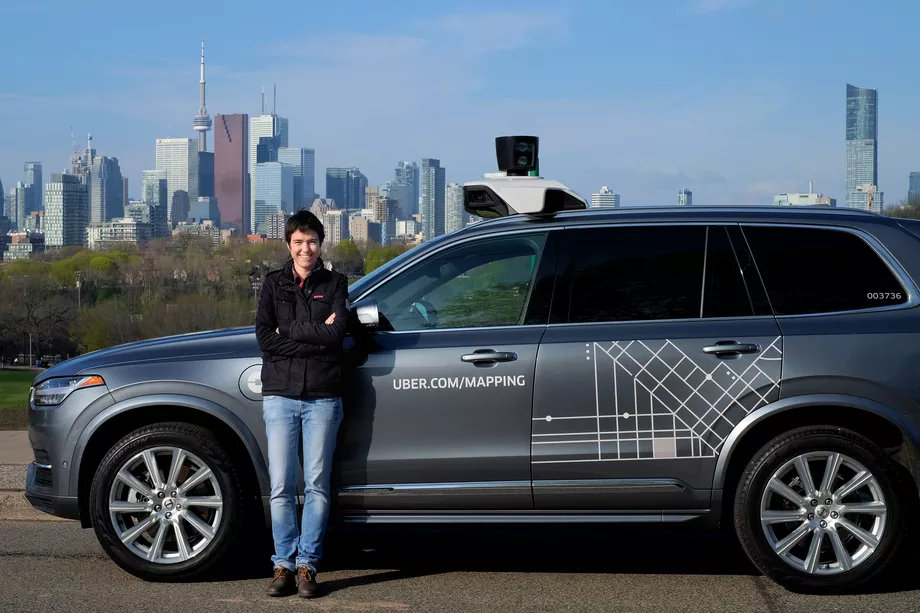
To lead the new branch, Uber has hired Raquel Urtasun (pictured), an associate professor at the University of Toronto who specializes in machine perception and artificial intelligence.
Urtasun’s team will be based out of Toronto’s MaRS Discovery District, a not-for-profit urban innovation district that brings together private companies, entrepreneurs, investors and academics under one roof. Urtasun’s team will focus on developing technology that allows Uber’s self-driving cars to see the world around them and navigate around objects.
Uber Chief Executive Travis Kalanick said in a statement that Toronto is the perfect city to further Uber’s autonomous vehicle research, and he said the Uber will be investing heavily in the local ecosystem.
“By setting up shop at the MaRS Discovery District, we hope to draw from the region’s impressive talent pool as we grow, helping the dozens of researchers we plan to hire stay connected to the Toronto-Waterloo Corridor,” Kalanick said. “With support from the Ontario and federal governments, Toronto has emerged as an important hub of artificial intelligence research, which is critical to the future of transportation. That’s why we’re also making a significant multi-year financial commitment as a platinum sponsor of the Vector Institute, which Raquel helped to set up as a co-founder.”
Kalanick said Urtasun’s team will collaborate with Uber’s self-driving car teams in San Francisco and Pittsburgh, and their work will also complement the research being done by Uber AI Labs. “Self-driving technology promises to make our roads safer, our environment healthier and our cities more livable,” Kalanick said. “While there’s still a lot of work to be done, we believe that the combination of our global ridesharing network with the cutting-edge software and hardware being built by our teams will make this vision a reality.”
Uber has been investing heavily in developing self-driving car technology over the last year, paying more than $680 million to acquire autonomous truck startup Otto in August. Self-driving cars would allow Uber to move away from its sharing economy business model, potentially allowing it to eliminate the need for drivers at all.
Support our mission to keep content open and free by engaging with theCUBE community. Join theCUBE’s Alumni Trust Network, where technology leaders connect, share intelligence and create opportunities.
Founded by tech visionaries John Furrier and Dave Vellante, SiliconANGLE Media has built a dynamic ecosystem of industry-leading digital media brands that reach 15+ million elite tech professionals. Our new proprietary theCUBE AI Video Cloud is breaking ground in audience interaction, leveraging theCUBEai.com neural network to help technology companies make data-driven decisions and stay at the forefront of industry conversations.





