







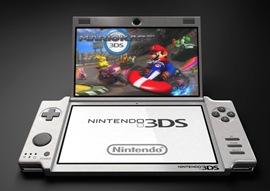
 Young children, those under the age of six, may suffer developmental issues with their eyes if they play too many 3D games, warns Nintendo Co. in a recent statement. This caution comes along with the development of their Nintendo 3DS handheld game console.
The Wall Street Journal has picked up on the disclaimer,
"For children under the age of six, looking at 3-D images for a long time could possibly have a negative impact on the growth of their eyes," Nintendo said on its Japanese-language site for the event. The company also warned that users should take breaks every 30 minutes when playing games in 3-D and stop playing immediately if they feel ill.
The warning is similar to those made by other makers of 3-D consumer-electronics products. Samsung Electronics Co., Sony Corp. and Panasonic Corp. all provide warnings on their websites about the possible risks of viewing 3-D images for children younger than six.
The Nintendo 3DS handheld would take up the same space as the current DS in the market but provide the capability for users to adjust the level of “3D” being displayed during play. Presented originally at E3, the device the most anticipated product from Nintendo next year and may rival the Nintendo Wii in overall hype. The device at the time looked like it would be quite expensive, but it’s hard not to like the idea of three dimensions in a handheld.
Since the audience for this sort of device varies a lot and includes young children, the company has decided to take the moral route and warn about how it might affect young children. Seems extremely wise to me.
Video games have long been cited as potentially causing developmental problems due to the small and close screens. It’s not uncommon to hear folklore about not watching TV or playing video games in the dark, squinting at tiny screens cannot do much good for developing eye muscles, and so forth. Also, coming out of Japan, we’ve seen an incidence of photosensitive epileptic seizures being triggered by bright flashes and patterns from video games.
Public awareness of issues that might arise from extremely popular gaming systems helps humanize giant corporations like Nintendo; especially in the face of the fact that their audience mixes between parents and young children. They cannot afford to alienate giant segments of their consumer base simply because their product may have adverse effects on a small portion.
None of the warnings cite research or what knowledge they’re basing the warnings on, but it seems to fit common sense and the caution includes “if you feel ill” which is a good starter to stop any activity anyway.
Support our mission to keep content open and free by engaging with theCUBE community. Join theCUBE’s Alumni Trust Network, where technology leaders connect, share intelligence and create opportunities.
Founded by tech visionaries John Furrier and Dave Vellante, SiliconANGLE Media has built a dynamic ecosystem of industry-leading digital media brands that reach 15+ million elite tech professionals. Our new proprietary theCUBE AI Video Cloud is breaking ground in audience interaction, leveraging theCUBEai.com neural network to help technology companies make data-driven decisions and stay at the forefront of industry conversations.




