 APPS
APPS
APPS
APPS







APPS

Perhaps one of the most intriguing ideas in cloud computing is the model of an Open Cloud Exchange, where many stakeholders, rather than a single provider, can participate in implementing and operating the cloud. Based on a partnership between academia, industry, nonprofits and government, The Massachusetts Open Cloud was created to develop an open, production-quality cloud computing system, enabling research across enterprises and among peers.
A unique opportunity arose when the Massachusetts Green High Performance Computing Center became available. With 15 megawatts, it has more than half the capacity of one of Google’s data centers, and it was built right next to a hydro dam, according to Orran Krieger, director of the cloud computing initiative at the Hariri Institute at Boston University.
“The thought was, why not create a cloud there?” Krieger said.
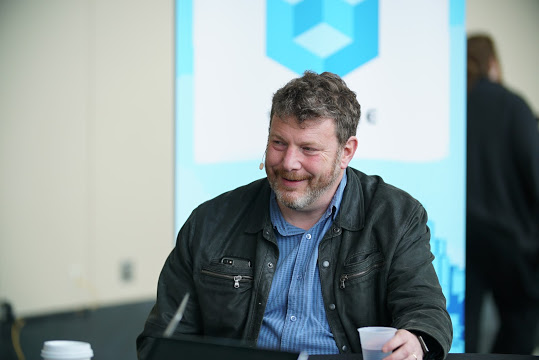
To talk about how MOC provides services to its users, as well as to how it inspires other organizations, Krieger spoke to host Stu Miniman (@stu) and guest host John Troyer (@jtroyer) of theCUBE, SiliconANGLE Media’s mobile livestreaming studio, during this year’s OpenStack Summit in Boston, Massachusetts. (* Disclosure below.)
“We started off with OpenStack, because OpenStack already had the right architecture,” Krieger said.
As the organization designed a series of different services — each one of which could be scaled independently and each one that had its own well-defined Application Program Interface — it seemed natural that they could be composed together, according to Krieger. However, each of the projects inside OpenStack, such as object storage (Swift), virtual machines/compute (Nova), or block storage (Cinder), is not necessarily stood up by the same administrative entity. After realizing that presumption was incorrect, and after three iterations, OpenStack is running great for MOC, Krieger stated.
He believes that many organizations do not want to see the public cloud dominated by a small number of vendors. Therefore, the idea of creating an “open mall” of cloud like MOC is very appealing to them. Many other academic institutions have talked to MOC about setting up sister organizations and replicating the model.
This model still has to be proven by the test of time, Krieger pointed out. “It’s still at a very early stage,” he said.
Watch the complete video interview below, and be sure to check out more of SiliconANGLE’s and theCUBE’s coverage of OpenStack Summit 2017 Boston. (* Disclosure: The OpenStack Foundation sponsored this OpenStack Summit segment on SiliconANGLE Media’s theCUBE. Neither the OpenStack Foundation nor other sponsors have editorial control over content on theCUBE or SiliconANGLE.)
Support our mission to keep content open and free by engaging with theCUBE community. Join theCUBE’s Alumni Trust Network, where technology leaders connect, share intelligence and create opportunities.
Founded by tech visionaries John Furrier and Dave Vellante, SiliconANGLE Media has built a dynamic ecosystem of industry-leading digital media brands that reach 15+ million elite tech professionals. Our new proprietary theCUBE AI Video Cloud is breaking ground in audience interaction, leveraging theCUBEai.com neural network to help technology companies make data-driven decisions and stay at the forefront of industry conversations.





