 BIG DATA
BIG DATA
BIG DATA







BIG DATA

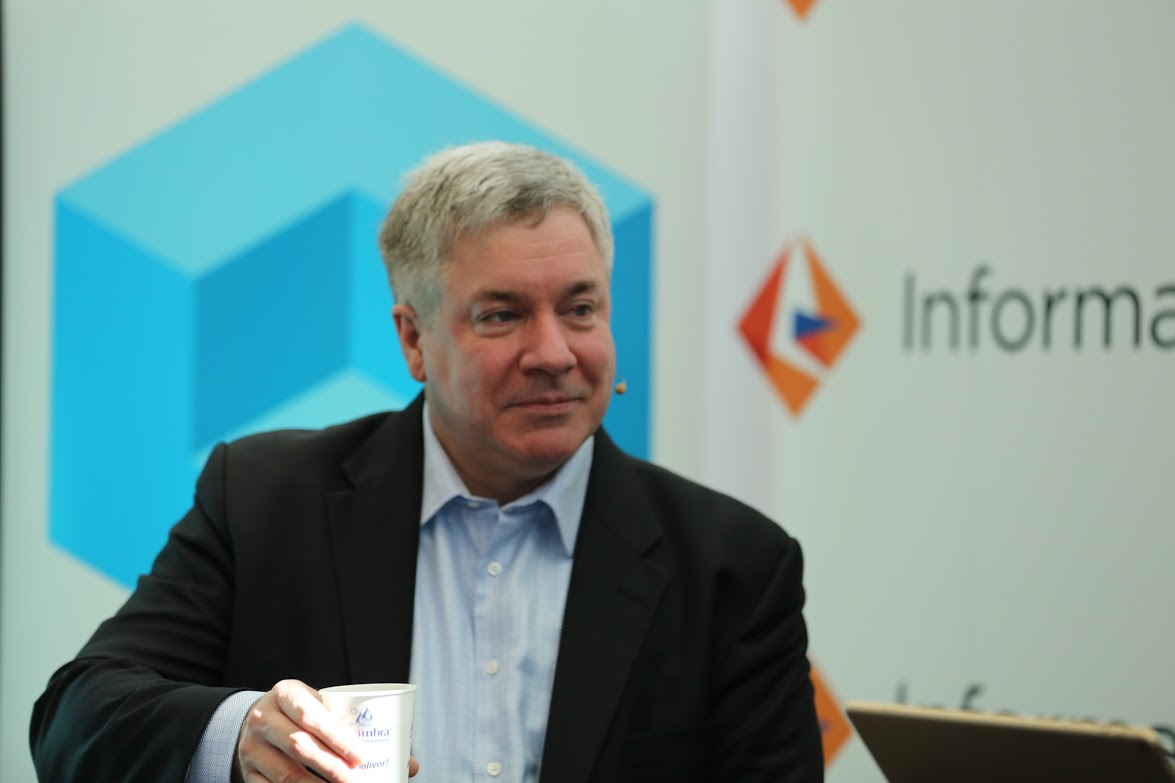
Despite dampened hopes for data lakes, AKA “data swamps,” businesses — especially in healthcare — can’t return to locking carefully curated data under governance by a select few, according to Richard Cramer (pictured), chief healthcare strategist at Informatica LLC.
“Little secret is that it takes too long, costs too much and it’s not agile,” Cramer said of that traditional schema.
The data lake has fallen into disrepute because businesses have not rearranged their order of operations to take advantage of it, he told John Furrier (@furrier) and Peter Burris (@plburris), co-hosts of theCUBE, SiliconANGLE Media’s mobile live streaming studio, during Informatica World in San Francisco, California. (* Disclosure below.)
This demands a radical shift that basically turns the old system inside out: “Apply effort at query time only to the data that you care about,” Cramer stated. To be clear, he said that Informatica is not saying that a centralized repository of data under tight control is not good. But businesses need a second place and method for data that is decentralized and not under so much control, something more democratized for quicker insights.
However, a second, and perhaps more powerful decentralized approach is needed along side that, he said, adding that healthcare pros are perhaps unequaled in hand-wringing around data governance.
Healthcare customers unanimously agree that managing data as an asset in a decentralized fashion with customer self-service is the future, Cramer explained. And then the game of 20 questions begins, boiling down to “how do we control this?” he added.
The first step is to catalog the data. “If you don’t know where your data assets are and who’s using them, you cannot manage data as an asset,” Cramer said. This creates value from data, which is why, “There’s somebody in every room that says, ‘Oh, that value represents risk,'” he added.
Risk can be mitigated with a tool such as Secure@Source, Informatica’s data security intelligence software, which can tell healthcare workers, “Here’s the risk profile for all those data sources for HIPAA and protected health information,” Cramer explained.
Tools like these can help solve the data swamp and data governance problems without limiting data’s growth just when things are getting interesting, he stated. “And that’s really the revolution that’s represented by data 3.0 — we finally can afford to save data, huge amounts of data, that we don’t know we care about. Because somebody may care about it in the future,” Cramer concluded.
Watch the complete video interview below, and be sure to check out more of SiliconANGLE’s and theCUBE’s independent editorial coverage of Informatica World 2017. (* Disclosure: TheCUBE is a paid media partner for Informatica World. Neither Informatica Corp. nor other sponsors have editorial influence on theCUBE or SiliconANGLE.)
Support our mission to keep content open and free by engaging with theCUBE community. Join theCUBE’s Alumni Trust Network, where technology leaders connect, share intelligence and create opportunities.
Founded by tech visionaries John Furrier and Dave Vellante, SiliconANGLE Media has built a dynamic ecosystem of industry-leading digital media brands that reach 15+ million elite tech professionals. Our new proprietary theCUBE AI Video Cloud is breaking ground in audience interaction, leveraging theCUBEai.com neural network to help technology companies make data-driven decisions and stay at the forefront of industry conversations.





