 INFRA
INFRA
INFRA
INFRA







INFRA

Network as a service isn’t new, and programmable infrastructure has been a buzzword for years. So what is the inaugural Cisco DevNet Create event in San Francisco, California, inaugurating besides an excuse for techies to take off work for two days?
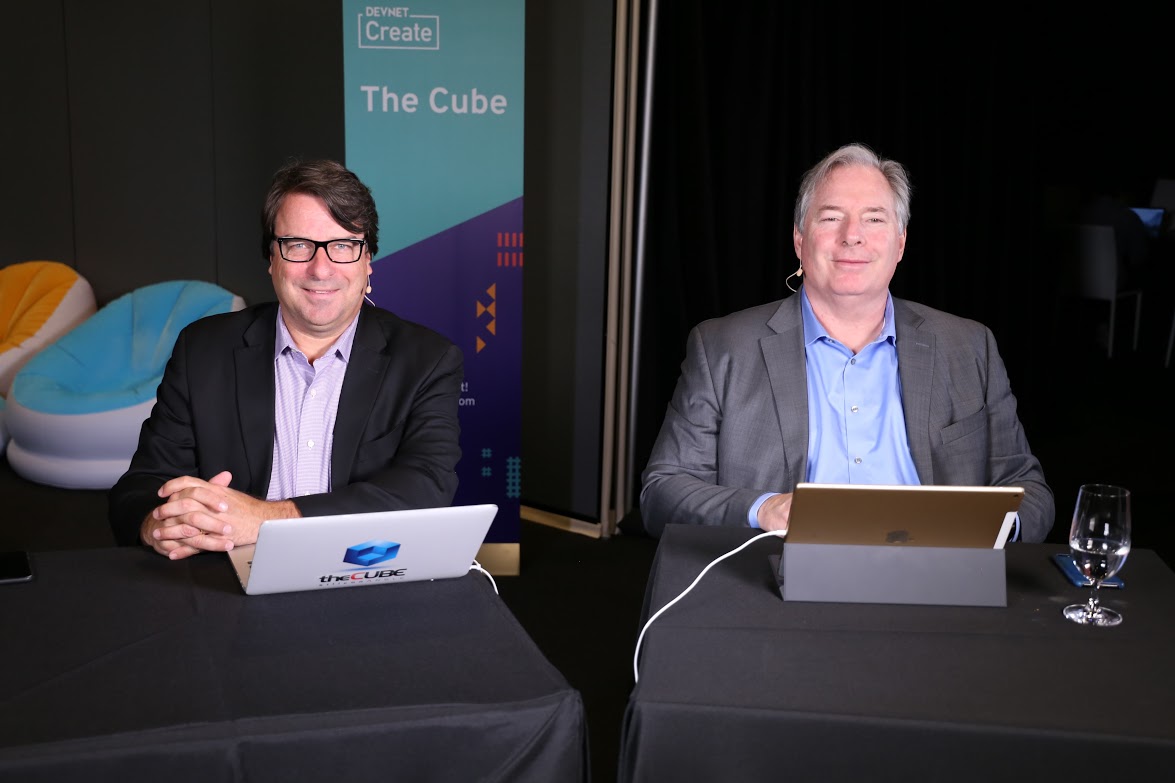
The answer might be high availability of programmable networking as-a-service, particularly to developers, Peter Burris (@plburris) (pictured, right), co-host of theCUBE, SiliconANGLE Media’s mobile live streaming studio.
Burris and co-host John Furrier (@furrier) (pictured, left), asked the tough questions at this week’s DevNet Create event. (* Disclosure below.)
“Programmable infrastructure is becoming very real,” Burris said, noting the rise of programmable servers, for example. “What we’re talking about is stepping it up and having it be available to developers in new and different ways,” he added.
The phrase “data-defined infrastructure” fits aptly in this discussion; data is becoming the guiding principle for the entire stack, and everything below it — including the network — is only as good as its service to data, Burris explained.
The network need not be placed squarely in developers’ hands, he stated. “But it has to be intelligent enough so that it can provide new capabilities, new service levels, new security levels, etc., in a response to the way that services are invoked and the patterns of operation,” he explained.
Potentially helping Cisco Systems Inc. realize this, its new acquisition AppDynamics Inc. application performance management software captures metrics about application performance on networks. “Being able to surface that kind of data is going to be really, really crucial to setting up the next round of conventions,” he said.
If and when this highly available, programmable network takes hold, it could make major waves, even changing the makeup of open-source projects, generally, Furrier stated.
“If you believe that the network is programmable and that the cloud is one big computer operating system, then you have to believe that’s going to be a new domino that drops and falls,” he said.
The horizontal slant to Cisco’s new network projects suggests that the company is gunning for a wide range of participants, Furrier noted.
At the event, for instance, “Cisco-washing” is remarkably absent. “Ninety percent of the sessions are not Cisco at all — it’s all community based,” he concluded.
Watch the complete video interview below, and be sure to check out more of SiliconANGLE’s and theCUBE’s independent editorial coverage of Cisco DevNet Create 2017. (* Disclosure: TheCUBE is a paid media partner for Cisco DevNet Create. Neither Cisco DevNet nor other sponsors have editorial influence on theCUBE or SiliconANGLE.)
Support our mission to keep content open and free by engaging with theCUBE community. Join theCUBE’s Alumni Trust Network, where technology leaders connect, share intelligence and create opportunities.
Founded by tech visionaries John Furrier and Dave Vellante, SiliconANGLE Media has built a dynamic ecosystem of industry-leading digital media brands that reach 15+ million elite tech professionals. Our new proprietary theCUBE AI Video Cloud is breaking ground in audience interaction, leveraging theCUBEai.com neural network to help technology companies make data-driven decisions and stay at the forefront of industry conversations.





