 INFRA
INFRA
INFRA
INFRA







INFRA

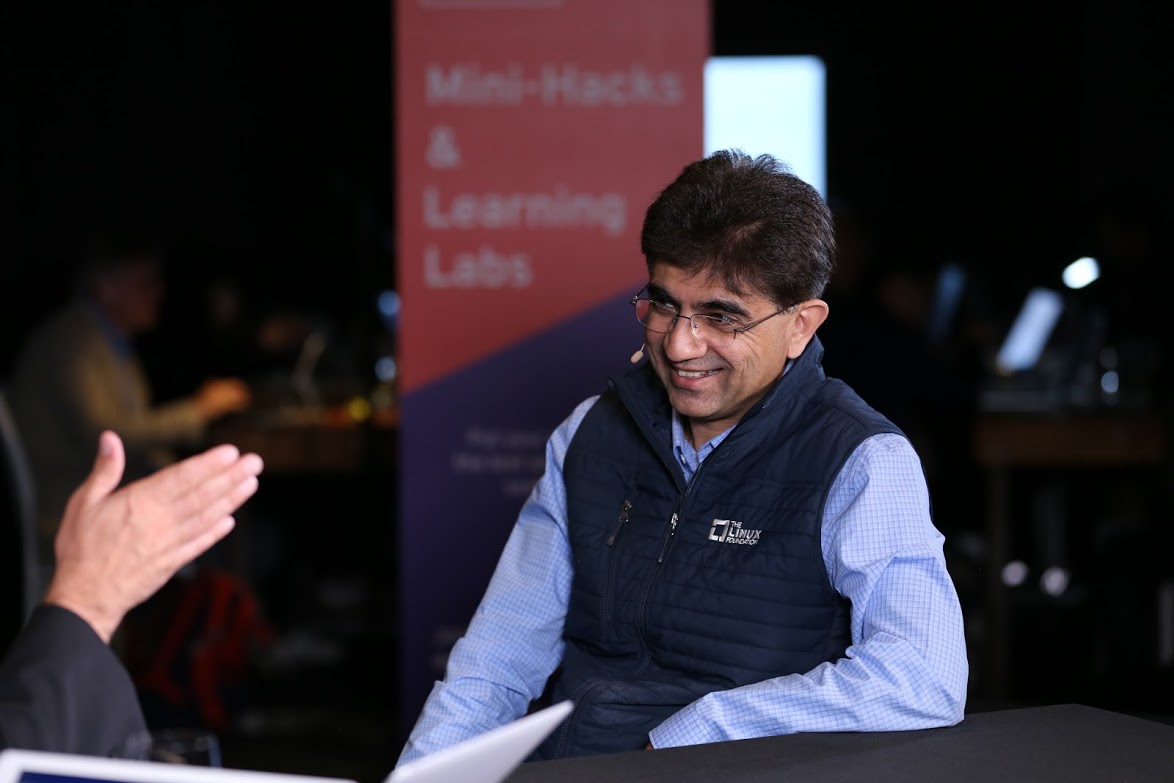
Software-Defined Networking disrupted the network into many fragments. Now, the open-source community must package for real-world users, according to Arpit Joshipura (pictured), general manager of networking and orchestration at The Linux Foundation.
It is hard to believe that just five years ago the network was basically a black box, Joshipura said during the Cisco DevNet Create event in San Francisco.
“We took it, blew it up, fragmented it, disaggregated it, and we got tremendous innovation out of each of these layers. Now it’s time to put it into a production ready-solution,” he told John Furrier (@furrier) and Peter Burris (@plburris), co-hosts of theCUBE, SiliconANGLE Media’s mobile live streaming studio. (* Disclosure below.)
Today The Linux Foundation has more than 11 open-source networking projects of varying kinds, Joshipura stated. These include Open Network Automation Platform, Open Platform for Network Function Virtualization and Open DayLight, an SDN platform. Projects outside of Linux, such as the OpenStack cloud operating system, also help flesh out certain capabilities, he added.
How does Linux turn this salad of acronyms into single solutions for end-users?
“The end-user use-cases are explicitly defined for the community — the architecture is laid out and, in that framework, The Linux Foundation facilitates the development, the infrastructure, the DevOps, the agile model to come and create this technology in this area,” Joshipura explained.
Often developers are daunted at first by the number of components in a project or kit, but this melts away as they begin to understand each piece and how they harmonize, Joshipura stated.
Open-source networking is entering the solutions market because users demand it, he added. “It’s not a technology disruption; it’s an end-user disruption,” he said, explaining that carriers, enterprises and cloud service providers desire the open-source ecosystem and access to source code.
Watch the complete video interview below, and be sure to check out more of SiliconANGLE’s and theCUBE’s independent editorial coverage of Cisco DevNet Create 2017. (* Disclosure: TheCUBE is a paid media partner for Cisco DevNet Create. Neither Cisco DevNet nor other sponsors have editorial influence on theCUBE or SiliconANGLE.)
Support our mission to keep content open and free by engaging with theCUBE community. Join theCUBE’s Alumni Trust Network, where technology leaders connect, share intelligence and create opportunities.
Founded by tech visionaries John Furrier and Dave Vellante, SiliconANGLE Media has built a dynamic ecosystem of industry-leading digital media brands that reach 15+ million elite tech professionals. Our new proprietary theCUBE AI Video Cloud is breaking ground in audience interaction, leveraging theCUBEai.com neural network to help technology companies make data-driven decisions and stay at the forefront of industry conversations.





