 EMERGING TECH
EMERGING TECH
EMERGING TECH







EMERGING TECH

Debate over machine learning models and intellectual property may scare some away from data sharing, while some strategists even allege that companies under-report big data Return On Investment to avoid tipping off competitors.
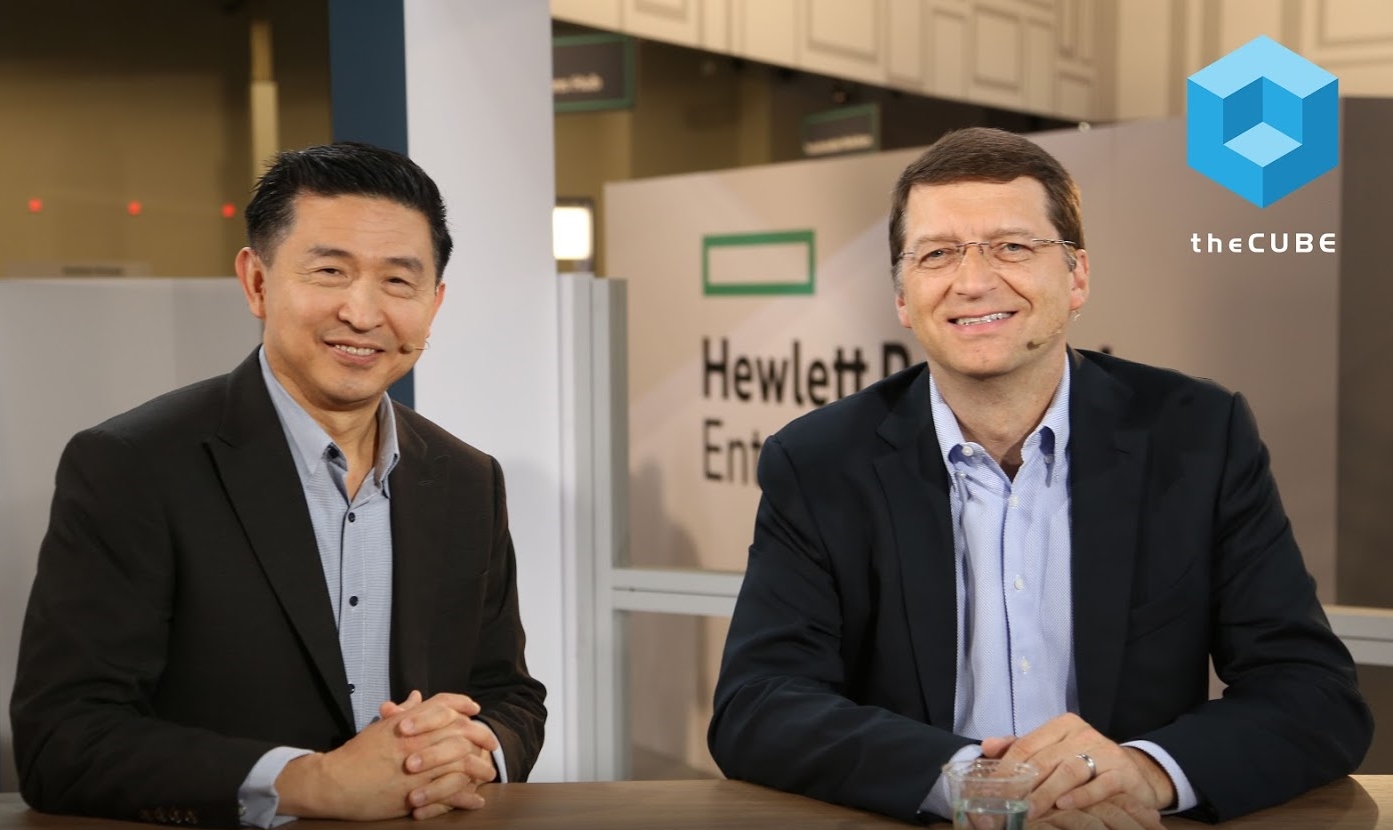
If an organization’s best efforts might still result in incomplete or misleading data, algorithms must account for this, according to Tuomas Sandholm (pictured, right), professor of computer science and director of the Electronic Marketplaces Lab at Carnegie Mellon University.
“Even if I could tell you all of my strategic information, I wouldn’t want to,” Sandholm said. This is bad news for artificial intelligence algorithms since they can’t perform on unknown information — or can they?
CMU developed an AI program called Libratus that beat humans in a real-life poker game in which the computer did not know its opponents’ cards.
Sandholm, along with Eng Lim Goh (@EngLimGoh) (pictured, left), vice president and Silicon Graphics International Corp. chief technical officer at Hewlett Packard Enterprise Co., spoke to John Furrier (@furrier) and Dave Vellante (@dvellante), co-hosts of theCUBE, SiliconANGLE Media’s mobile live streaming studio, during HPE Discover in Las Vegas Nevada. (* Disclosure below.)
The Pittsburgh Supercomputing Center’s Bridges computer’s mega data processing capabilities powered Libratus’ poker skills. (It employed augmented and artificial intelligence; the former fills in unknowns, whereas the later, generally speaking, does not.)
Augmented intelligence in high-performance computers is useful for big data projects often likened to seeking a needle in a haystack, explained Goh, who is a technologist at HPE’s recent supercomputing acquisition, SGI.
“When the data gets so big and the needles get so many, you end up with a haystack of needles. So you need some augmentation to help you to deal with it,” Goh said.
AI extends beyond poker to real-world business and commercial face-offs where one or more parties are less than forthcoming, according to Sandholm.
“You need totally different kinds of algorithms to deal with this imperfect information […] like negotiation or strategic pricing, where you have to think about the opponent’s responses in advance,” he said.
Watch the complete video interview below, and be sure to check out more of SiliconANGLE’s and theCUBE’s independent editorial coverage of HPE Discover US 2017. (* Disclosure: TheCUBE is a paid media partner for HPE Discover US 2017. Neither Hewlett Packard Enterprise Co. nor other sponsors have editorial control on theCUBE or SiliconANGLE.)
Support our mission to keep content open and free by engaging with theCUBE community. Join theCUBE’s Alumni Trust Network, where technology leaders connect, share intelligence and create opportunities.
Founded by tech visionaries John Furrier and Dave Vellante, SiliconANGLE Media has built a dynamic ecosystem of industry-leading digital media brands that reach 15+ million elite tech professionals. Our new proprietary theCUBE AI Video Cloud is breaking ground in audience interaction, leveraging theCUBEai.com neural network to help technology companies make data-driven decisions and stay at the forefront of industry conversations.





