 CLOUD
CLOUD
CLOUD
CLOUD







CLOUD

Pivotal Software Inc.’s open-source development platform Cloud Foundry might be more enterprise-ready than Docker Inc.‘s virtualized container method for running distributed applications. But do its extra parts make it harder to assimilate?
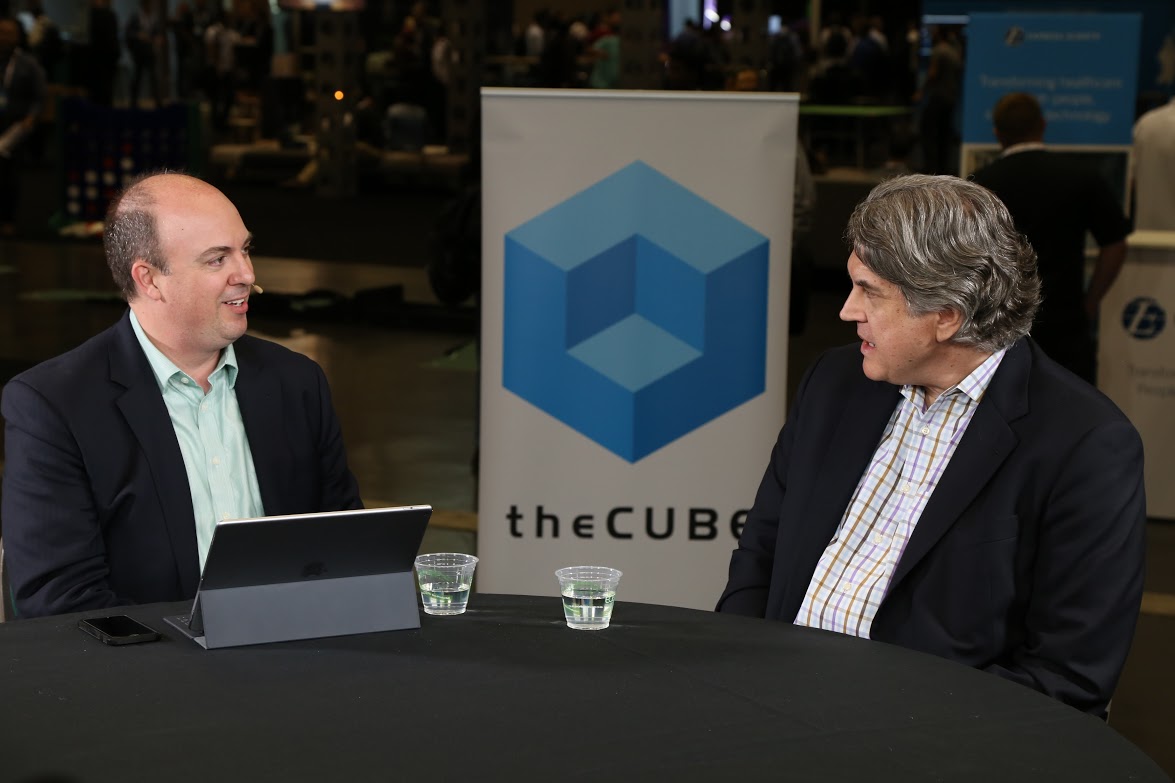
“I’m struck again by some similar messaging about developer experience and agile,” John Troyer (@jtroyer) (pictured, right) told Stu Miniman (@stu) (pictured, left), as the co-hosts of theCUBE, SiliconANGLE Media’s mobile live streaming studio, compared the two companies.
Both Docker and Cloud Foundry resonate with agile development efforts in an era where every company must become a software company, Troyer said during Cloud Foundry Summit in Santa Clara, California.
“I think here, though, the message is much more enterprise-ready — the scalability, the management, the kind of business digital transformation was much more the conversation that’s going on this week,” as opposed to the talk at DockerCon in Austin, Texas, last April, Troyer explained.
Docker (and containers in general) is more of a bottom-up tool for a single developer working in a pipeline, Floyer stated. “This is more about: What does your business need to do to move faster?” he said.
Cloud Foundry’s greater readiness to materialize enterprise goals is due in part to its ecosystem of contributors in open source, according to Troyer. “You can’t look at this stuff in isolation just for the foundation or the project or just Pivotal — the other companies have their own journeys,” he said, noting partnerships with Microsoft Azure and Google Cloud.
“Google and Microsoft Azure — they want to be the best cloud platform for everything. They don’t want to silo anything. They are welcoming, and so that’s an example of them coming in and welcoming Cloud Foundry as one of the services that run great on their platform,” Troyer said.
Cloud Foundry’s many parts and dependencies may make it an awkward fit for some, according to Miniman.
“This is not a simple, shrinkwrapped software,” he said. Some full-service cloud providers may offer the same development capabilities, he added, noting that Pivotal in fact started Cloud Foundry on Amazon Web Services.
“Amazon is always the elephant in the room, if you will, when we’re talking about cloud,” he concluded.
Watch the complete video interview below, and be sure to check out more of SiliconANGLE’s and theCUBE’s independent editorial coverage of Cloud Foundry Summit.
Support our mission to keep content open and free by engaging with theCUBE community. Join theCUBE’s Alumni Trust Network, where technology leaders connect, share intelligence and create opportunities.
Founded by tech visionaries John Furrier and Dave Vellante, SiliconANGLE Media has built a dynamic ecosystem of industry-leading digital media brands that reach 15+ million elite tech professionals. Our new proprietary theCUBE AI Video Cloud is breaking ground in audience interaction, leveraging theCUBEai.com neural network to help technology companies make data-driven decisions and stay at the forefront of industry conversations.





