 BIG DATA
BIG DATA
BIG DATA







BIG DATA

It’s one thing to apply deep learning and artificial intelligence tools to data. It’s another to realize meaningful results that can make a real difference in your business. Teradata Corp. is seeking to address the value proposition by focusing on use cases and solutions that get to the core of a company’s mission and customers.
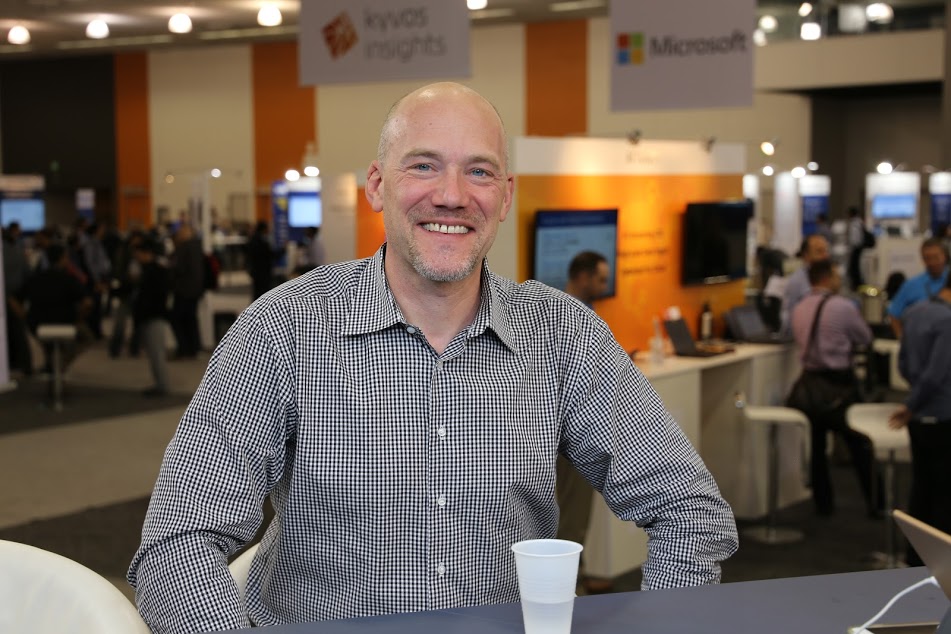
“Anybody that wants to be a winner in this new digital era and have processes that take advantage of artificial intelligence is going to have to use data as a competitive advantage,” said Ron Bodkin (pictured), vice president and general manager, AI, at Teradata.
Bodkin stopped by theCUBE, SiliconANGLE’s mobile livestreaming studio, and answered questions from hosts Lisa Martin (@Luccazara) and George Gilbert (@ggilbert41) during the DataWorks Summit in San Jose, California. They discussed how businesses are focused on use cases from data science ecosystems built around the Hadoop platform — open-source-based software used for storing, processing and analyzing big data — and price-performance predictions for deep learning. (* Disclosure below.)
Bodkin, previously the founder of Think Big Analytics, came to Teradata when his company was acquired in 2014. He described how he’s witnessed a shift in customers’ thinking as they came to better understand their data and look for how to make it benefit their business.
“A lot of them have backed off from their initial ambitions that they bought a little too much of the hype around all that Hadoop might do,” Bodkin said. “I see the conversation moving from the technology to the use cases.”
Those use cases include areas such as preventative maintenance, anti-fraud applications for banks and e-commerce recommendations, according to Bodkin. “A lot of customers are excited about use cases for artificial intelligence,” he said.
Recent advances in hardware and AI technologies, such as breakthroughs announced recently by Nvidia Corp. and Google Inc., will make the data science process more efficient and less expensive. “It’s quite reasonable to expect that you’ll have 10,000 times the price-performance for deep learning in five years,” Bodkin concluded.
Watch the complete video interview below, and be sure to check out more of SiliconANGLE’s and theCUBE’s independent editorial coverage of DataWorks Summit. (* Disclosure: Teradata Corp. sponsored this DataWorks Summit segment on SiliconANGLE Media’s theCUBE. Neither Teradata nor other sponsors have editorial control over content on theCUBE or SiliconANGLE.)
Support our mission to keep content open and free by engaging with theCUBE community. Join theCUBE’s Alumni Trust Network, where technology leaders connect, share intelligence and create opportunities.
Founded by tech visionaries John Furrier and Dave Vellante, SiliconANGLE Media has built a dynamic ecosystem of industry-leading digital media brands that reach 15+ million elite tech professionals. Our new proprietary theCUBE AI Video Cloud is breaking ground in audience interaction, leveraging theCUBEai.com neural network to help technology companies make data-driven decisions and stay at the forefront of industry conversations.





