 INFRA
INFRA
INFRA
INFRA







INFRA

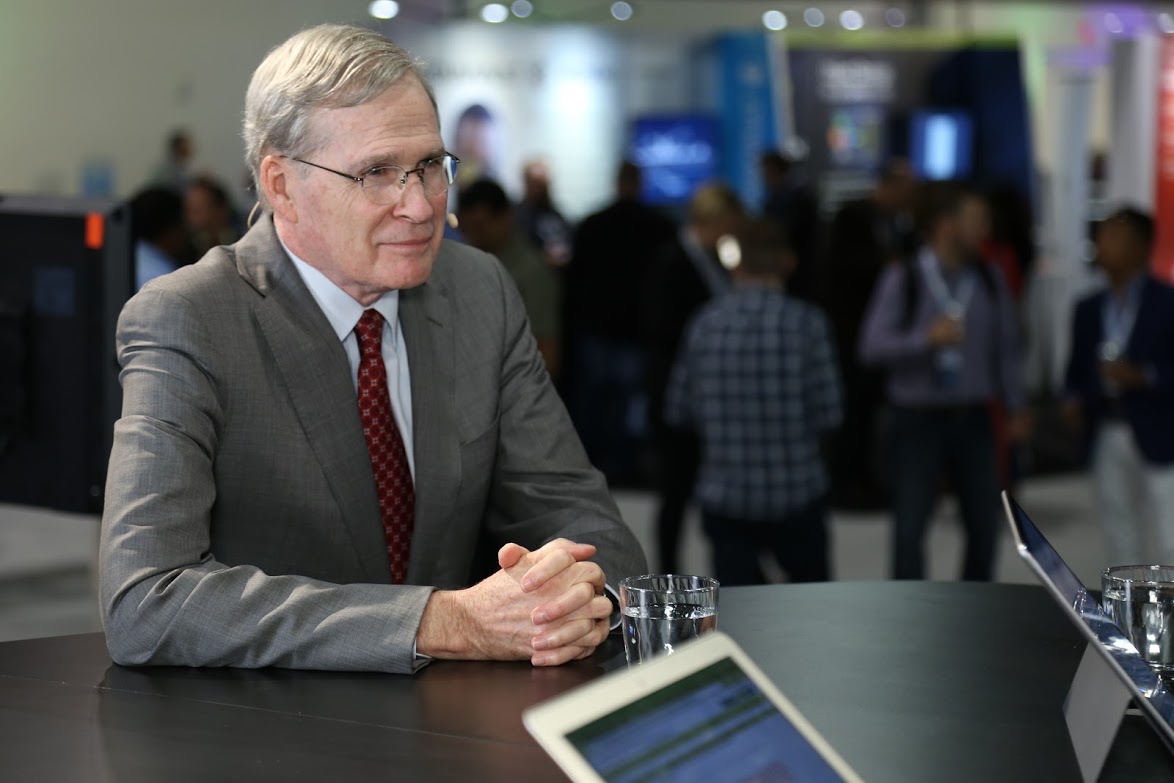
Don’t wait for the government to solve the cybersecurity problem, said Stephen Hadley (pictured), former U.S. National Security adviser, principal of RHG Strategic Consulting Firm and adviser to Nutanix Inc.
“I think the [technology] industry needs to define the solutions,” Hadley told Dave Vellante (@dvellante) and Stu Miniman (@stu), co-hosts of theCUBE, SiliconANGLE Media’s mobile livestreaming studio. (* Disclosure below.)
Government agents lack the nuanced understanding of technology and how individuals and companies rely on it, Hadley said during the Nutanix .NEXT event in Washington, D.C. Even worse, some of the world’s more oppressive political regimes would love to use security as an excuse to shut down citizens’ rights to free information exchange, he added.
However, the tech industry’s power to bring cybercriminals to justice is limited, acknowledged Hadley. It is highly difficult to attribute a cyberattack to a specific person or persons, so cybersecurity is a defense without a deterrent, which leaves hackers unafraid of getting caught.
“There’s been a discussion in the literature: Should companies have the ability to go on offense and to respond to cyberattacks by trying to reach out and hurt the attacker?” Hadley said. Cyberattacks themselves illustrate the impracticality of this. Simply look at the Stuxnet ransomware attacks of recent weeks. A single attack launched on the Ukraine wound up affecting people in 150 countries, Hadley stated.
If security officers can rarely attribute an attack, what are their chances of micro-targeting retaliation with no collateral damage? “The industry needs to lead on defense; the government needs to think about offensive responses,” is Hadley’s prescription.
We must be on the lookout for authoritarian governments trying to police citizens’ internet access for the wrong reasons, according to Hadley. “It would be a tragedy if individual countries start to Balkanize the internet and start to make them national systems,” he said.
Watch the complete video interview below, and be sure to check out more of SiliconANGLE’s and theCUBE’s coverage of the Nutanix .NEXT US 2017 event. (* Disclosure: TheCUBE is a paid media partner for Nutanix .NEXT US. Neither Nutanix Inc. nor other sponsors have editorial control over content on theCUBE or SiliconANGLE.)
Support our mission to keep content open and free by engaging with theCUBE community. Join theCUBE’s Alumni Trust Network, where technology leaders connect, share intelligence and create opportunities.
Founded by tech visionaries John Furrier and Dave Vellante, SiliconANGLE Media has built a dynamic ecosystem of industry-leading digital media brands that reach 15+ million elite tech professionals. Our new proprietary theCUBE AI Video Cloud is breaking ground in audience interaction, leveraging theCUBEai.com neural network to help technology companies make data-driven decisions and stay at the forefront of industry conversations.





