 APPS
APPS
APPS
APPS







APPS

The fast pace of technology innovation forces companies of all types to constantly shift their strategies and roadmaps in anticipation of market needs. The proliferation of autonomous vehicles has had this effect on a number of players across industries from computing, to data storage, to software and connectivity companies.
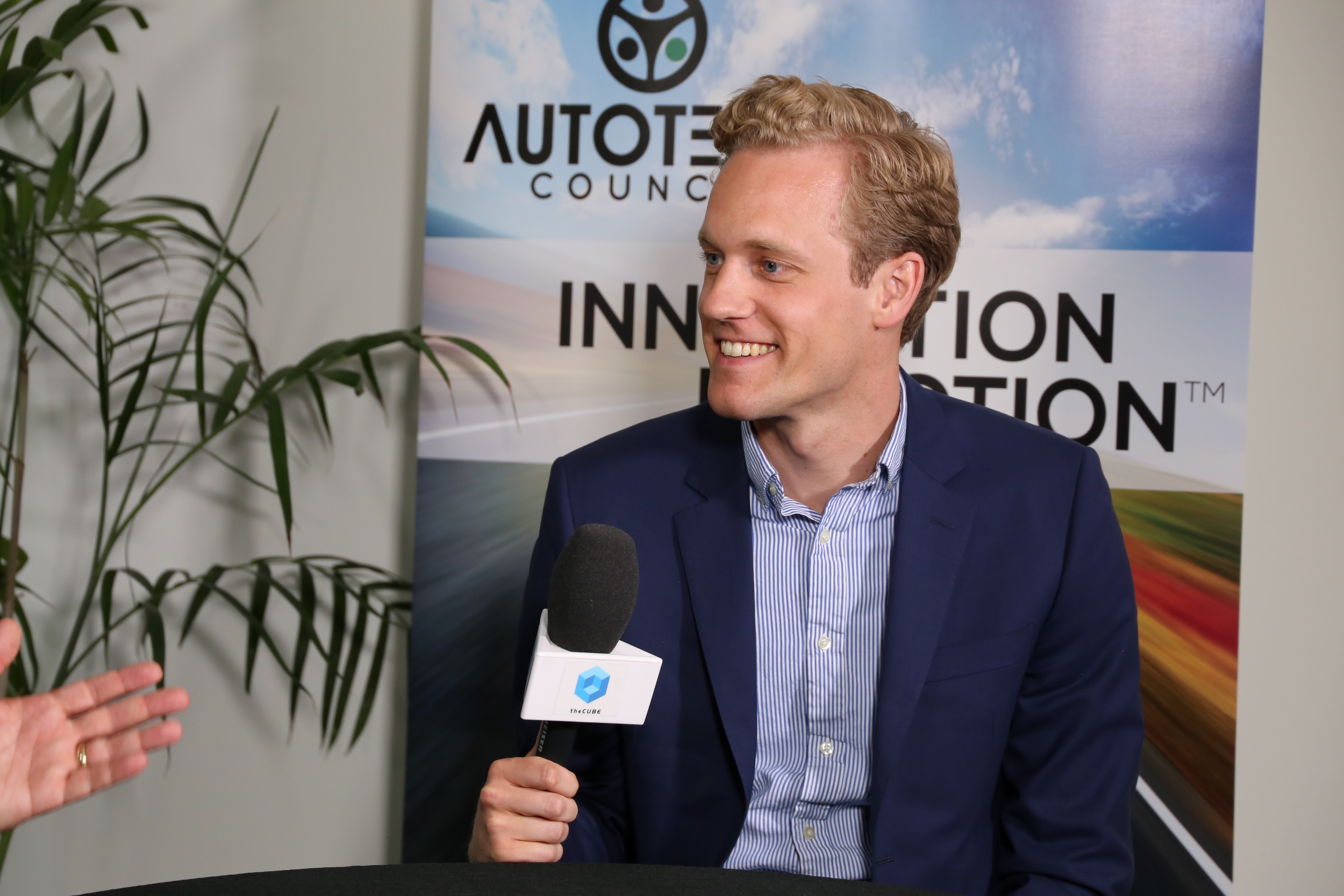
During this year’s Autotech Council – Innovation in Motion event in Milpitas, California, Arnold Meijer (pictured), strategic marketing manager at TomTom Maps, the veteran mapping and navigation software company, shared how his company is staying up to date with the latest auto tech trends.
“We acknowledge the fact that we need more information from vehicles, so we were one of the first to start collecting information from communities of drivers on the road,” Meijer told Jeff Frick (@JeffFrick), host of theCUBE, SiliconANGLE Media’s mobile livestreaming studio. (* Disclosure below.)
“Most recently, we’re also adapting to the change in the industry toward autonomous driving; we’re adapting our map data and our software products to support those use cases,” Meijer added.
The traditional notion of a map as a visual interface is changing for autonomous vehicle control into, essentially, a database of geographically relevant information, according to Meijer.
“Maps have traditionally been used by humans to interpret where you are by navigation systems to visually present how to adapt a route. … We’re going from maps to location information; the whole visual element is out of the discussion into something that adds to sensors,” Meijer said.
Moving beyond building the initial location information database, TomTom has plans to expand its coverage into new regions and new sensor inputs into its mapping system.
“Increasing the number of layers and partners that we work with, we’re looking to expand that. Also scalability for mapping … expanding that map database to more regions. Expanding that HD map footprint to multiple regions is something we see for the next six to twelve months,” Meijer concluded.
Watch the complete video interview below, and be sure to check out more of SiliconANGLE’s and theCUBE’s coverage of Auto Tech Council – Innovation in Motion. (* Disclosure: TheCUBE is a paid media partner for Auto Tech Council – Innovation in Motion. Neither Western Digital Corp., the event sponsor, nor other sponsors have editorial influence on theCUBE or SiliconANGLE.)
Support our mission to keep content open and free by engaging with theCUBE community. Join theCUBE’s Alumni Trust Network, where technology leaders connect, share intelligence and create opportunities.
Founded by tech visionaries John Furrier and Dave Vellante, SiliconANGLE Media has built a dynamic ecosystem of industry-leading digital media brands that reach 15+ million elite tech professionals. Our new proprietary theCUBE AI Video Cloud is breaking ground in audience interaction, leveraging theCUBEai.com neural network to help technology companies make data-driven decisions and stay at the forefront of industry conversations.





