 APPS
APPS
APPS
APPS







APPS

The success of open-source communities like Node.js — a JavaScript runtime based on Chrome’s V8 engine — is completely dependent on contributions from a rich pool of organizations working toward the common goal of building a robust development framework.
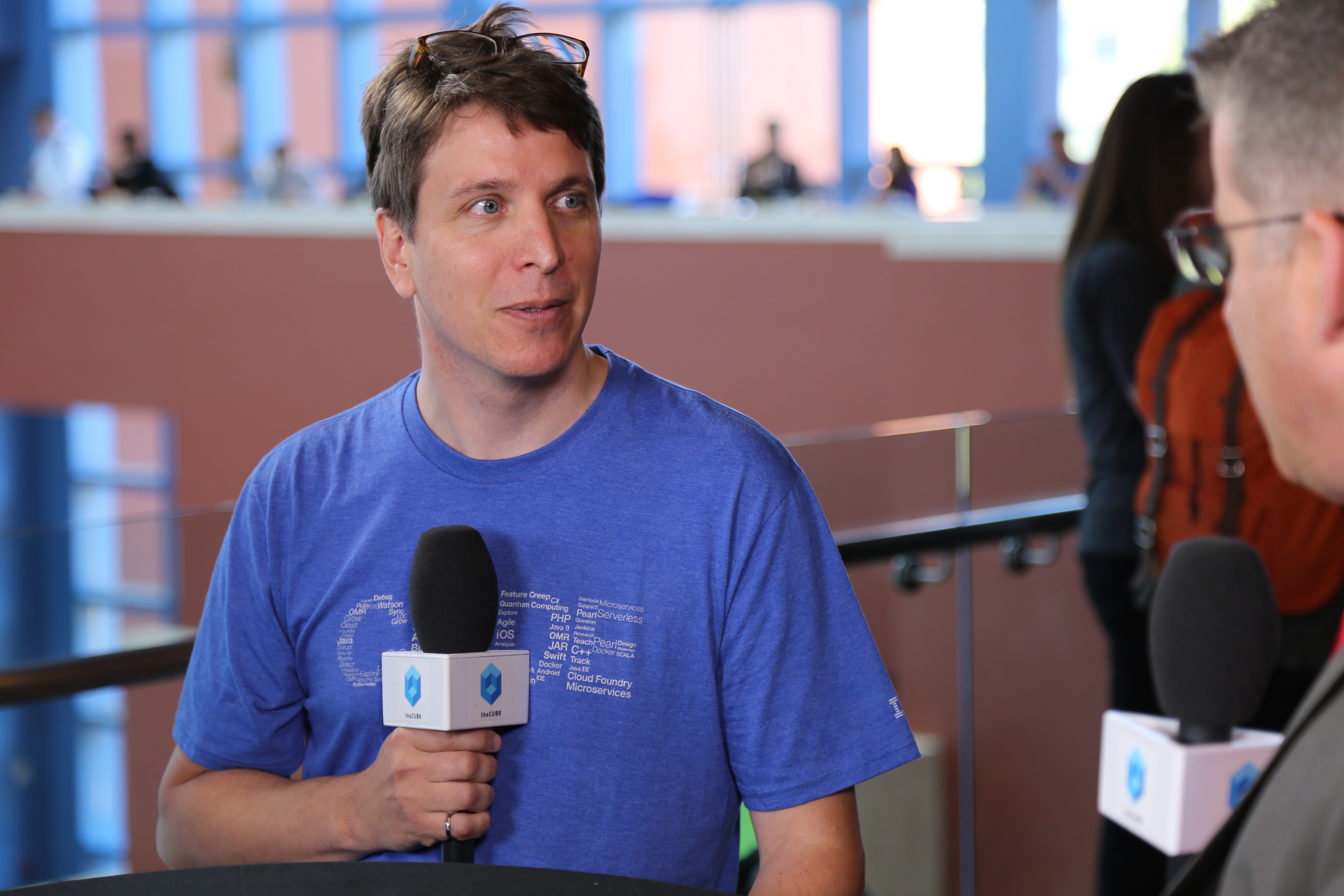
Michael Dawson (pictured), digital transformation leader at IBM Corp., is responsible for Big Blue’s contributions to the Node.js source code. He explained his level of involvement within the community, including his role leading a Node benchmarking workgroup.
“If a particular product needs some sort of feature, we’ll go out and work in the community to do that, and then pull that back in to use it,” Dawson said. “So my role is really to sort of bridge the community work that we do there to our internal needs and consumers as well.”
Dawson spoke with Jeff Frick (@JeffFrick), host of theCUBE, SiliconANGLE Media’s mobile livestreaming studio, during Node Summit in San Francisco, California.
As an active member in the Node community, Dawson kicked off the benchmarking working group a few years ago.
“The approach that we’re following is we want to document the key use cases for node, as well as the key attributes of the runtime … as well as the key use cases like a web front-end or back-end services for mobile, and then fill in that matrix with important benchmarks,” Dawson said.
Dawson explained that while other languages have a more established set of benchmarks, his objective is to encourage people to write benchmarks for the good of the community.
“Having the benchmarks in place should be an enabler, in that if we can easily find out the impact of a change positive or negative, that’ll help things move forward. … The focus of the working group has been on a framework for regression testing and letting us make the right decision and not competition,” Dawson explained.
Watch the complete video interview below, and be sure to check out more of SiliconANGLE’s and theCUBE’s coverage of Node Summit 2017.
Support our mission to keep content open and free by engaging with theCUBE community. Join theCUBE’s Alumni Trust Network, where technology leaders connect, share intelligence and create opportunities.
Founded by tech visionaries John Furrier and Dave Vellante, SiliconANGLE Media has built a dynamic ecosystem of industry-leading digital media brands that reach 15+ million elite tech professionals. Our new proprietary theCUBE AI Video Cloud is breaking ground in audience interaction, leveraging theCUBEai.com neural network to help technology companies make data-driven decisions and stay at the forefront of industry conversations.





