 CLOUD
CLOUD
CLOUD
CLOUD






CLOUD

In a continuing effort to beef up its cloud computing platform, Oracle Corp. today announced that it’s making the power of its Exadata database hardware and cloud service available on its next-generation cloud computing platform.
The Exadata Database Machine combines computing and storage into a system made for Oracle Database software. The machine was launched in 2008 as the first of a family of “engineered systems.” It was made available as a cloud service two years ago and in February Oracle added another option, to run the cloud version of the machine on-premises in corporate data centers.
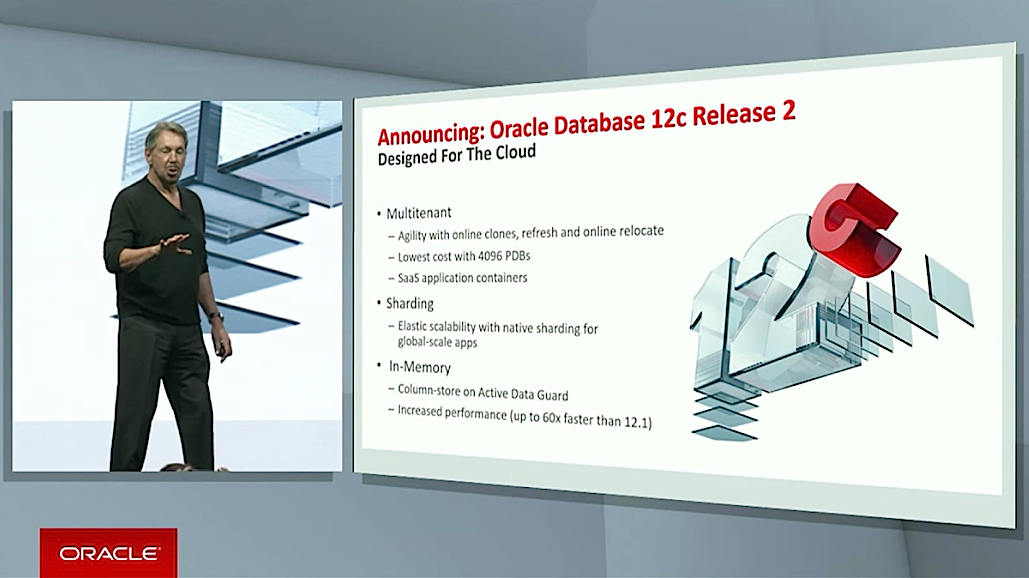
This new version runs on the next-generation cloud platform that Oracle Chairman Larry Ellison introduced last September at its Open World conference (pictured). In particular, the Exadata service can run on so-called “bare metal” compute and storage services so it can run much faster.
That also means that while the Oracle Database has traditionally been mainly for storing customer records and the like, rather than serving as a real-time database, it now can be used to store and make available Internet of Things, social and other data that are now stored in other data management systems, said Leo Leung, an Oracle director of product management.
Leung told SiliconANGLE that one of the main uncertainties large Oracle Database users have, which is whether the cloud is fast enough to run applications such as FICO’s real-time fraud and risk management software that taps into the database. “For these enterprise applications, performance is the No. 1 requirement,” Leung said. “Essentially we’re giving them an offering that equals or exceeds that they can do on-premises.”
Since the offering is optimized specifically for the Oracle Database, Carl Olofson, a research vice president at International Data Corp., told SiliconANGLE, it appears more aimed at cementing the purpose of Exadata, which has been to migrate existing Oracle Database customers to the Oracle cloud.
“Other public cloud providers offer support and functional environments in support of Oracle Database and other RDBMSs, but are not specifically optimized for Oracle,” he said. “It is imperative to Oracle that they migrate as many current customers as possible to their cloud. This is a key customer retention strategy.”
Support our mission to keep content open and free by engaging with theCUBE community. Join theCUBE’s Alumni Trust Network, where technology leaders connect, share intelligence and create opportunities.
Founded by tech visionaries John Furrier and Dave Vellante, SiliconANGLE Media has built a dynamic ecosystem of industry-leading digital media brands that reach 15+ million elite tech professionals. Our new proprietary theCUBE AI Video Cloud is breaking ground in audience interaction, leveraging theCUBEai.com neural network to help technology companies make data-driven decisions and stay at the forefront of industry conversations.





