 WOMEN IN TECH
WOMEN IN TECH
WOMEN IN TECH







WOMEN IN TECH

Serverless computing buzz has steadily grown in the last couple of years, now eclipsing even containers, according to some tech analysts. Based on cloud computing, it takes the infrastructure abstraction and application-focus of cloud even further. But what does “serverless” really mean? Is it more than a marketing label stickered on a bunch of different cloud platforms? Are there really no servers?
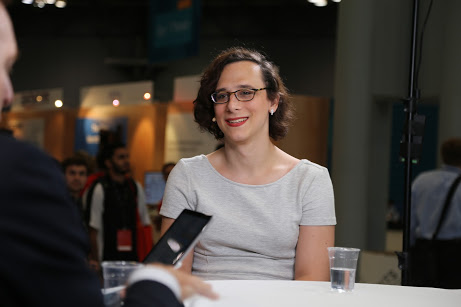
“Yes, there are servers,” said Erica Windisch (pictured), founder and chief technical officer of IOpipe Inc. It’s called “serverless” because it takes servers and their provisioning off operation and development’s pane of glass, Windisch explained in an interview during this week’s AWS Summit in New York City. It’s “serverless” in the sense that “servers are not my concern as a developer. I am not worrying about what the server looks like or operating the servers,” she said.
Windisch should know; IOpipe was built with serverless architecture. The startup specializes in assisting users of Amazon Web Services Inc.’s Lambda serverless compute platform. IOpipe announced on Monday that it received $2.5 million from several investors, including Underscore VC Management Co. LLC, New Enterprise Associates and Madrona Venture Group LLC. IOpipe also announced its 1.0 release, which extends its existing services.
Organizations may adopt serverless for various reasons, Windisch told Stu Miniman (@stu) and John Walls (@JohnWalls21), co-hosts of theCUBE, SiliconANGLE Media’s mobile livestreaming studio. Two common reasons are perceived cost savings and developer demand, she said. (* Disclosure below.)
This week, theCUBE spotlights Erica Windisch in our Women in Tech feature.
Some company executives may adopt serverless to save money on provisioning servers. A report from 451 Research suggests that serverless computing (AKA Function-as-a-Service) indeed costs less than running applications with either virtual machines or containers (a virtualized method for running distributed apps).
“You don’t scale your application and build your application for the number of servers that you need,” Windisch said. “It scales per request, and you pay per request, and that’s powerful in both scale of operations […] and financially.”
In other cases, developers themselves make the initial push. “It simplifies their requirements. They won’t have to spin up VMs; they won’t have to build Docker images; they don’t have to look at how the operating system’s configured,” she said.
Serverless applications put code center stage, right where developers want it, Windisch explained. It clears away a lot of chores that might otherwise slow them down. “You just write the code, and you ship the code,” she said.
Developers often build cloud-native applications with microservices and interact mainly with their service interface; what lies beneath this interface are functions — single blocks of code. A single function has a very clear-cut purpose, like, say, to process an image or translate data.
Serverless developers may build microservices themselves out of a library of functions. And they can do all of this without any concern for underlying servers — it is truly application-centric, Windisch stated.
When developers upload this code to Lambda, the service figures out infrastructure, scale, capacity and patching for them. IOpipe builds services that augment users’ experience running code on Lambda. It provides deeper insights into application workloads and what exactly takes place in the run time. It then correlates that information in useful ways, Windisch stated.
IOpipe can detect memory leaks, disk-space-utilization leaks and similar events about which Lambda does not inform users, according to Windisch.
“We’re looking at ways we can provide more value to users of Lambda,” she said. These include plug-ins for tracing that allow users to time aspects of applications. Another plug-in profiles and renders a full visual flame graph of all the functions and the stack. The extra remove from infrastructure changes the game for developers and operations, Windisch added. “We’re looking at building tools that are bridging development and operations so that operations is part of your development,” she said.
As for drawbacks, “Lambda has an execution time window which can be limiting for some things that you might want to do,” Windisch said. This may make it less than ideal for some coding tasks, particularly involving video. However, this may not be true of every available serverless platform, she said.
Serverless computing still is young and means slightly different things to different people. “I definitely see a rocket ship taking off, and I think in the next year, it’s going to be really interesting to see it starting to orbit,” Windisch concluded.
Watch the complete video interview below, and be sure to check out more of SiliconANGLE’s and theCUBE’s coverage of AWS Summit. (* Disclosure: TheCUBE is an unpaid media partner for AWS Summit. Neither Amazon Web Services Inc. nor other sponsors have editorial control over content on theCUBE or SiliconANGLE.)
Support our mission to keep content open and free by engaging with theCUBE community. Join theCUBE’s Alumni Trust Network, where technology leaders connect, share intelligence and create opportunities.
Founded by tech visionaries John Furrier and Dave Vellante, SiliconANGLE Media has built a dynamic ecosystem of industry-leading digital media brands that reach 15+ million elite tech professionals. Our new proprietary theCUBE AI Video Cloud is breaking ground in audience interaction, leveraging theCUBEai.com neural network to help technology companies make data-driven decisions and stay at the forefront of industry conversations.





