 INFRA
INFRA
INFRA
INFRA






INFRA

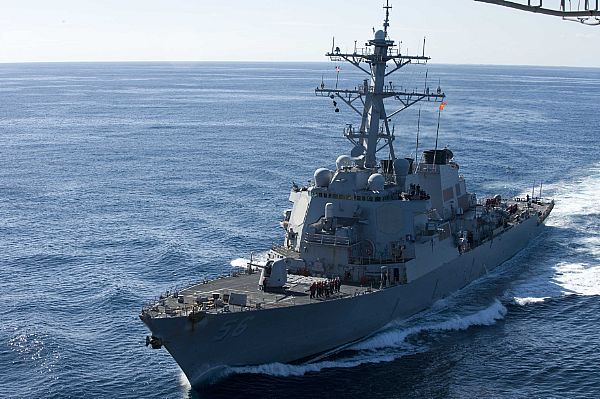
An accident involving a Liberian-registered ship and the USS John S. McCain has resulted in speculation that the Global Positioning System guiding the guided-missile destroyer may have been spoofed.
The accident, the fourth involving a ship from the U.S. Seventh Fleet this year, occurred in the Strait of Malacca, a stretch of water between the Malay Peninsula and the Indonesian island of Sumatra. Ten sailors remaining missing from the vessel, with the Burke-class destroyer having made its way to the Changi Naval Base in Singapore for repairs.
That the USS John S. McCain was the fourth vessel in the Seventh Fleet to have hit another ship or boat this year has led some observers to claim that the GPS signals the ship relies on to navigate accurately — or more specifically, to avoid hitting other vessels — may have been spoofed. A GPS spoofing attack involves someone attempting to trick a GPS receiver by broadcasting incorrect GPS signals, essentially confusing onboard navigation systems by making them believe they are in a different location than they actually are.
Spoofing GPS signals may sound like it’s heading into science fiction territory, but the technology may already exist. In June, 20 ships were reported to have suffered “satellite navigation problems” in the Black Sea, with claims that it was proof that Russia may be testing a new system for spoofing GPS.
However, GPS receivers sound an alarm when they lose their signal due to jamming, meaning that those on the bridge should have had ample warning of any issues with the ships GPS. Popular Mechanics argued that when “there’s a pattern — there’s a conspiracy,” noting that the idea that the USS John S. McCain had an accident due to GPS spoofing was very unlikely.
“Assuming a hostile power wanted to spoof the American destroyer, the signal it would have to broadcast to cause an accident would be wide enough to affect dozens, if not hundreds of ships in the region and someone would have noticed it,” the magazine notes. It added that there were no other reports from ships in the area – one of the most highly trafficked shipping routes in the world – which likely would have been the case if GPS spoofing was being used.
Although all that suggests GPS spoofing likely was not involved in this case, ship hacking is a serious concern. A report in July noted that satellite antenna systems used on ships are highly vulnerable to hacking and in theory could allow a bad actor to hijack a ship. And earlier this month, details of a system that uses World War II-era technology as a backup against GPS spoofing attacks was revealed.
Support our mission to keep content open and free by engaging with theCUBE community. Join theCUBE’s Alumni Trust Network, where technology leaders connect, share intelligence and create opportunities.
Founded by tech visionaries John Furrier and Dave Vellante, SiliconANGLE Media has built a dynamic ecosystem of industry-leading digital media brands that reach 15+ million elite tech professionals. Our new proprietary theCUBE AI Video Cloud is breaking ground in audience interaction, leveraging theCUBEai.com neural network to help technology companies make data-driven decisions and stay at the forefront of industry conversations.





