 BIG DATA
BIG DATA
BIG DATA






BIG DATA

A graph database startup is unveiling its first product today with $31 million in new series A funding in its pocket.
TigerGraph Inc., formerly known as GraphSQL Inc., said it has built the first native parallel graph database-based platform using proprietary technology that the company says juices performance up to 100-fold compared with other graph platforms.
The company uses native graph storage and a parallel computation engine, combined with compression, to yield its claimed performance improvements. The engine can scale to multiple servers, each with multiple cores, enabling support for much larger data sets than competitors can deliver, said Yu Xu, TigerGraph’s chief executive.
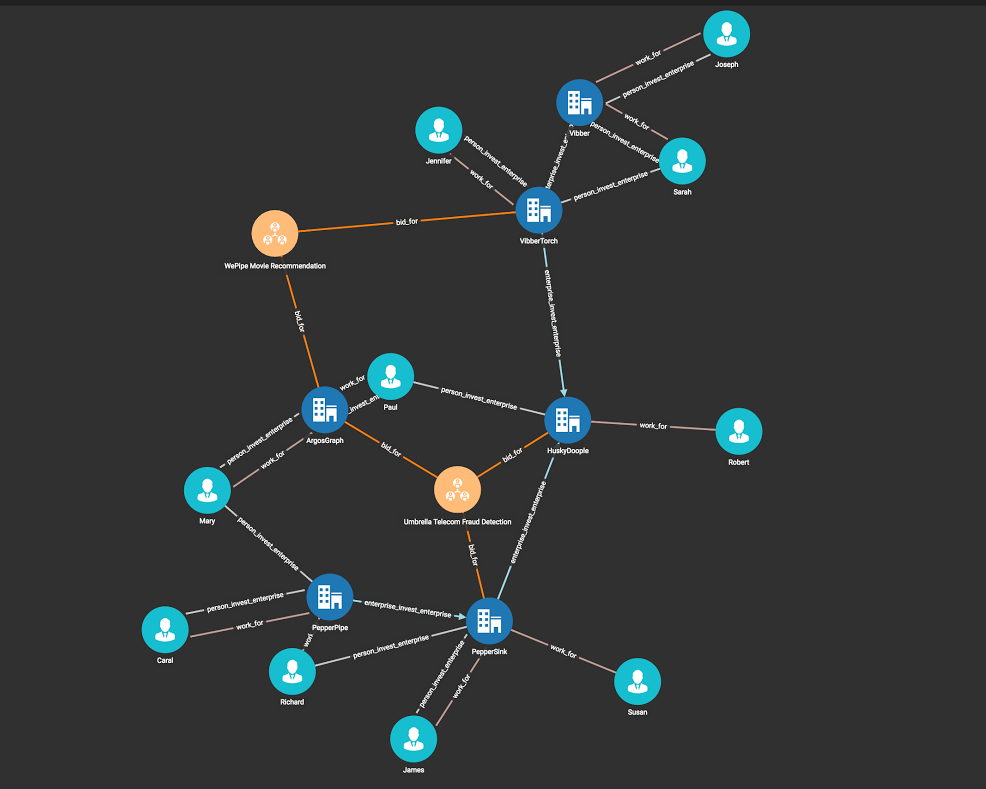
Graph databases are a type of NoSQL database that represents data as objects called nodes, edges and properties. Rather than storing information in rows and columns, graph databases manage unstructured data as connections between objects. While not well-suited for transactional applications, graph databases offer excellent performance in tasks involving large and complex inter-relationships that must be visualized and navigated quickly, such as fraud detection and predictive intelligence. That’s because they have a high tolerance for unstructured data and can instantly navigate connections between nodes that relational databases would take multiple “joins,” which combine data from two data sets, to traverse.
CEO Xu spent five years at Teradata Corp. working on parallel database design, followed by two years building Twitter Inc.’s distributed data infrastructure. The holder of 26 patents in distributed systems and databases, he has assembled a team of more than 30 engineers in Redwood City, California, half of whom hold Ph.D.s. That’s an accomplishment in a market where only two graph engines — Neo Technology Inc.‘s Neo4J and DataStax Inc.’s Titan-based Enterprise Graph — rank among the top 50 most popular databases on the DB-Engine.com list.
Xu called competitor and market leader Neo4j “graph 1.0,” saying it’s storage-focused with no built-in parallel computation model and limited analytics. TigerGraph has leapt ahead two generations by supporting storage and computing across hundreds of billions of nodes with real-time updating, he claimed. Real-time capabilities plug a significant hole in other graph models, which are limited to working with historical data and can’t factor in such things as a customer standing at a checkout register, Xu said. Among the techniques the company used to enable real-time processing are “virtual graph snapshots,” which prevent queries from crashing into each other.
The database uses its own storage engine and offers multiple ways to load data, including RESTful application program interfaces, high-level mapping of comma-separated value and JavaScript Object Notation files to graphic vertices and connectors to popular data sources.
TigerGraph is constructed to provide automatic computational parallelism, scaling across all threads and CPU cores as they become available. “It’s challenging to partition a graph data across multiple machines and support fast graph update and traversal at the same time,” Xu said. “It takes years to make it work.”
Each vertex, or edge, is both a unit of storage and a computational unit. Early customers such as Alipay.com Co. Ltd., the mobile payments arm of Alibaba Group Holding Ltd., are already in production with databases of more than 100 billion vertices and 2 billion daily real-time updates, Xu said. Visa Inc. is using TigerGraph to identify failed virtual machines or microservices and to determine how that failure impacts other operations and services.
The venture funding is provided by Qiming Venture Partners, Baidu Inc., Alibaba’s Ant Financial, AME Cloud Ventures, Morado Venture Partners and others. The company had earlier raised a $2 million seed funding round.
Pricing is based upon the size of the graph database managed, but details were not disclosed.
Support our mission to keep content open and free by engaging with theCUBE community. Join theCUBE’s Alumni Trust Network, where technology leaders connect, share intelligence and create opportunities.
Founded by tech visionaries John Furrier and Dave Vellante, SiliconANGLE Media has built a dynamic ecosystem of industry-leading digital media brands that reach 15+ million elite tech professionals. Our new proprietary theCUBE AI Video Cloud is breaking ground in audience interaction, leveraging theCUBEai.com neural network to help technology companies make data-driven decisions and stay at the forefront of industry conversations.





