



 EMERGING TECH
EMERGING TECH
EMERGING TECH
EMERGING TECH

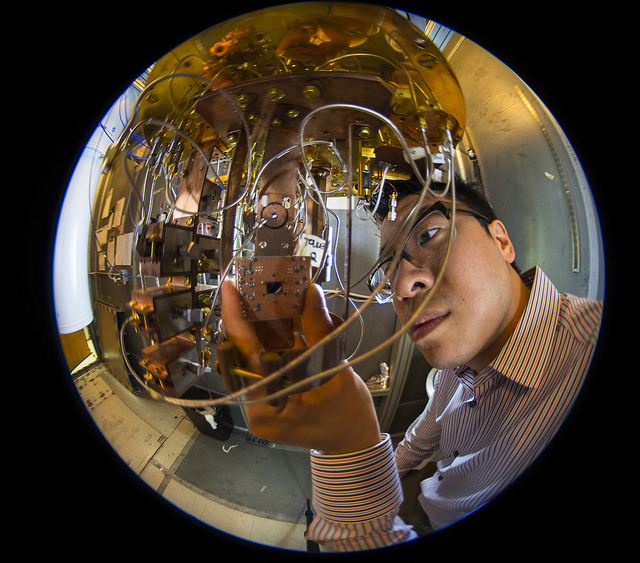
Computer scientists at Microsoft Corp. have designed a computing language for quantum computers, despite the fact that quantum computers don’t actually exist yet.
Microsoft describes the language as assisting it on its “path to building the first topological qubit, a robust type of quantum bit that … will serve as the basis for a scalable, general purpose quantum computer system – and mark a profound breakthrough in the field of quantum physics.”
If that makes no sense to you whatsoever, don’t feel bad because even Microsoft founder Bill Gates can’t explain it either. “I know a lot of physics and a lot of math. But the one place where they put up slides and it is hieroglyphics, it’s quantum,” Gates is quoted as saying in an interview.
Current Microsoft Chief Executive Officer Satya Nadella can’t explain it either, responding to the question of “could you explain quantum computing in one sentence” in the same interview that “I don’t think so. I wish I could.”
Quantum computing remains largely theoretical at this stage and, like the term artificial intelligence, is bandied about by companies that haven’t got the memo that we haven’t hit singularity yet. But generally it’s a computing process that takes advantage of the ability of subatomic particles to exist in more than one state at any time. In quantum computing, binary digits or bits, which even someone with only scant knowledge of computing would recognize as zeros and ones, both exist at the same time as opposed to being processed separately.
The programming language, integrated with Visual Studio and designed to work on both a quantum simulator and a quantum computer, is described by Microsoft as offering a full-stack solution to the theoretical process.
“The same code that you’re running today in simulation you can run tomorrow on our quantum computer,” Microsoft’s Krysta Svore said in a statement. She added that the “new tools are designed for developers who are interested in being on the cutting-edge of computer advances – the same type of people who were early adopters of machine learning and other artificial intelligence advances.”
More details on Microsoft’s quantum computing efforts are available here.
… We’d like to tell you about our mission and how you can help us fulfill it. SiliconANGLE Media Inc.’s business model is based on the intrinsic value of the content, not advertising. Unlike many online publications, we don’t have a paywall or run banner advertising, because we want to keep our journalism open, without influence or the need to chase traffic.The journalism, reporting and commentary on SiliconANGLE — along with live, unscripted video from our Silicon Valley studio and globe-trotting video teams at theCUBE — take a lot of hard work, time and money. Keeping the quality high requires the support of sponsors who are aligned with our vision of ad-free journalism content.
If you like the reporting, video interviews and other ad-free content here, please take a moment to check out a sample of the video content supported by our sponsors, tweet your support, and keep coming back to SiliconANGLE.






