 EMERGING TECH
EMERGING TECH
EMERGING TECH






EMERGING TECH

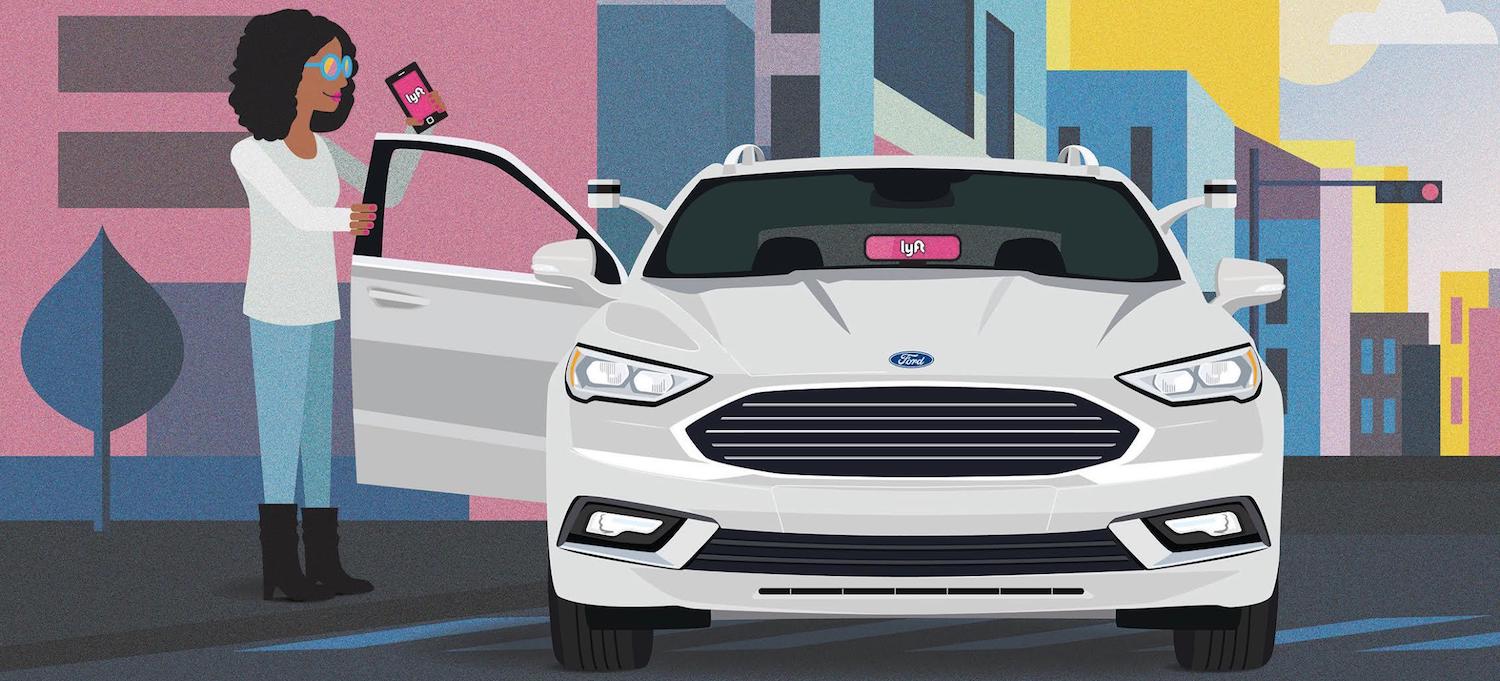
Lyft Inc. has signed a partnership agreement with the Ford Motor Co. that will see the two companies working together to deliver self-driving vehicles to American roads by 2021.
The deal, announced late Tuesday, will involve employees from both companies working together to develop software that will allow Ford’s self-driving vehicles to communicate directly with Lyft’s smartphone apps and what is described as a “variety of opportunities to effect positive change through transportation and mobility.”
“We strongly believe that leaders across industries should work collaboratively to introduce self-driving technology in a way that positively impacts our cities,” Lyft said in a blog post. “Our two companies share a core belief that the future of transportation will meaningfully reshape how cities are designed, and improve the lives of people who live there.”
Ford is well down the path to bringing self-driving vehicles to market. A Fusion autonomous vehicle was unveiled in December, demonstrating advances in technology claimed to show that the technology was getting closer to production.
The company also hasn’t been shy about spending money to improve its technology along the way, acquiring artificial intelligence startup Argo AI, a company founded by veterans of self-driving car projects at Google Inc. and Uber Technologies Inc., for $1 billion in February.
Further underlying its commitment to developing self-driving vehicles, Ford replaced Chief Executive Officer Mark Fields with Jim Hackett, the head of its self-driving car initiative, in May.
For Lyft, the collaboration with Ford is yet another step forward in its efforts to beat Uber Technologies Inc. to market with a fleet of self-driving vehicles. Although Uber has stumbled in efforts to build its own autonomous cars, Lyft has mostly gone down the path of teaming up with other companies, having signed agreements with Waymo Inc. and nuTonomy. As with the Ford deal, the agreement with Waymo, the company formerly known as the Google self-driving car project, also involves the deployment of self-driving vehicles for ride-hailing.
Lyft is primarily partnering with other companies, but it’s also investing in developing self-driving car technology. It announced in July that it had established a research group tasked with turning its platform into a “hybrid system” that will enable users to hail cars driven by both humans and artificial intelligences.
Support our mission to keep content open and free by engaging with theCUBE community. Join theCUBE’s Alumni Trust Network, where technology leaders connect, share intelligence and create opportunities.
Founded by tech visionaries John Furrier and Dave Vellante, SiliconANGLE Media has built a dynamic ecosystem of industry-leading digital media brands that reach 15+ million elite tech professionals. Our new proprietary theCUBE AI Video Cloud is breaking ground in audience interaction, leveraging theCUBEai.com neural network to help technology companies make data-driven decisions and stay at the forefront of industry conversations.





