 BIG DATA
BIG DATA
BIG DATA







BIG DATA

Splunk Inc. made plenty of announcements this week, with a particular focus on adding machine learning, scale and speed for data analytics. But rumblings about the high cost of Splunk’s products and services, coupled with questions about whether the company was positioning itself as a big data platform were top-of-mind for many analysts.
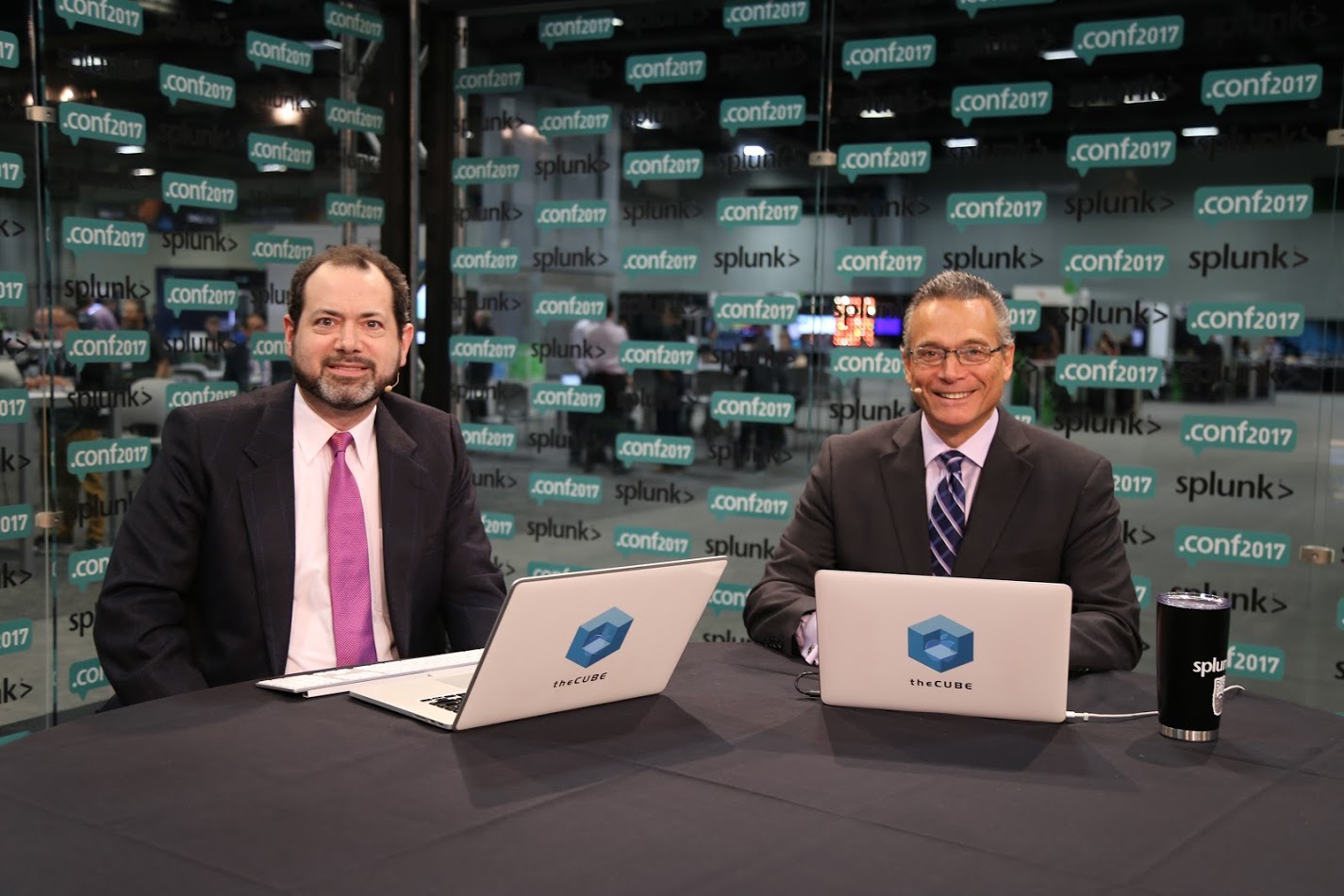
“I presume they’re looking for a TAM [total addressable market] expansion strategy to support a $10-billion valuation,” said Dave Vellante (@dvellante, pictured, right), Wikibon Inc. analyst and co-host of theCUBE, SiliconANGLE Media’s mobile livestreaming studio, during the kickoff segment on the second day of Splunk .conf2017 in Washington, D.C. “Pricing remains a concern for some of the users that I’ve talked to.”
Sitting with fellow Wikibon analyst George Gilbert (@ggilbert41, pictured, left), the two analysts discussed Splunk’s pricing strategy, whether it should position itself as a platform and the role of application developers. (* Disclosure below.)
On Tuesday, the machine data operational intelligence platform company announced flexible pricing programs, with pricing metrics tailored to use-case specific solutions. Is Splunk’s pricing a headwind or tailwind for the company?
“It’s a tailwind in the sense that the deal sizes feed an enterprise salesforce,” Gilbert explained. “There has to be an advisory, consultative approach to working with a customer. Your pricing model if it stays the same will choke you.”
Splunk’s recent announcements involving enterprise security and user behavior analytics appear to be driven by a strategy of offering customers specific tools, rather than positioning itself as a major platform play. “They call these curated experiences,” said Gilbert, who pointed out that in reality, they are actually applications. “They’re not selling the platform because that’s a more time intensive sale.”
The company’s emphasis on data-driven analytic applications raises questions over the role of developers in the Splunk ecosystem. “Splunk is an application development platform on which you can build big data apps,” said Vellante, which offers the possibility that the company could be pursuing a low or high code developer kit strategy.
But such an approach could be counter to Splunk’s approach of not appearing to be a big data platform. “They’re not making a big deal about the development tools because that makes it sound more like a platform, but they could,” Gilbert stated.
Watch the complete video interview below, and be sure to check out more of SiliconANGLE’s and theCUBE’s coverage of Splunk .conf 2017. (* Disclosure: Splunk sponsored this segment of theCUBE. Neither Splunk nor other sponsors have editorial control over content on theCUBE or SiliconANGLE.)
Support our mission to keep content open and free by engaging with theCUBE community. Join theCUBE’s Alumni Trust Network, where technology leaders connect, share intelligence and create opportunities.
Founded by tech visionaries John Furrier and Dave Vellante, SiliconANGLE Media has built a dynamic ecosystem of industry-leading digital media brands that reach 15+ million elite tech professionals. Our new proprietary theCUBE AI Video Cloud is breaking ground in audience interaction, leveraging theCUBEai.com neural network to help technology companies make data-driven decisions and stay at the forefront of industry conversations.





