 BIG DATA
BIG DATA
BIG DATA







BIG DATA

It’s like celebrating a birthday with a huge, nicely decorated cake, but the only view of it is one lonely slice. That’s the feeling that many companies have when trying to visualize and use large data sets in the enterprise. But one four-year-old startup is attracting customers by enabling big-picture views of big data without having to abandon the business intelligence tools it has come to know and love.
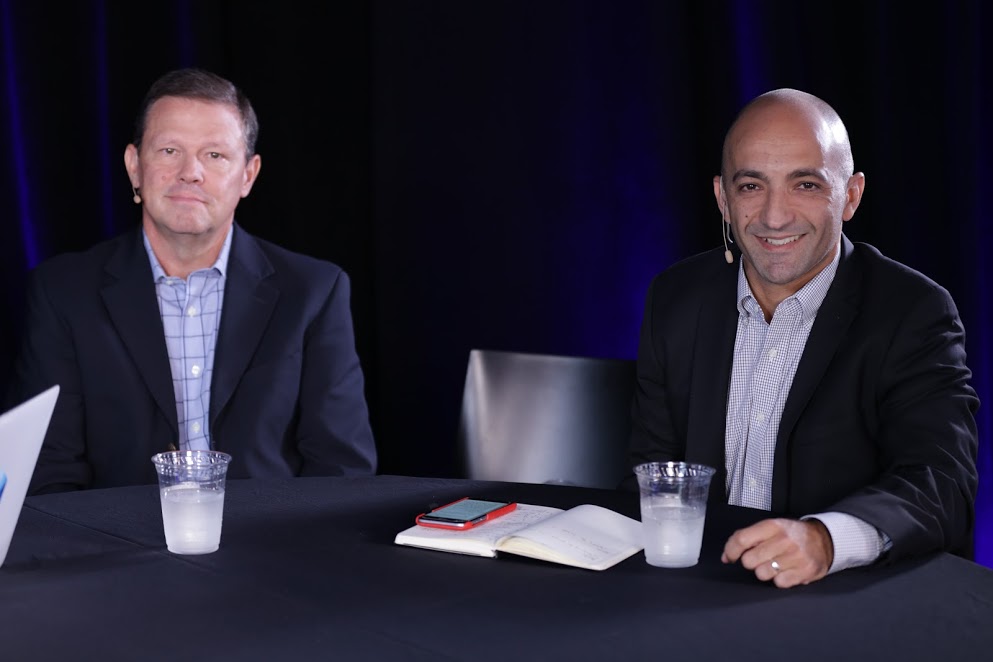
“The whole value proposition is that you don’t want to move your data and you don’t want to move your users away from the tools that they already know. But you do want them to take advantage of the data that you store,” said Bruno Aziza (pictured, right), chief marketing officer of AtScale Inc.
Aziza stopped by theCUBE, SiliconANGLE’s mobile livestreaming studio, and spoke with co-hosts John Furrier (@furrier) and Jim Kobielus (@jameskobielus) during the recent BigData NYC event in New York City. He was joined by Dr. Mark Ramsey (pictured, left), senior vice president of research & development and chief data officer at GlaxoSmithKline plc, or GSK. They discussed how GSK is using AtScale’s technology for drug development and the trend toward using semantic layers for data visualization. (* Disclosure below.)
GSK, a pharmaceutical company widely known for delivering hundreds of millions of vaccines around the globe, is using data analytics in the development of new drugs. It can take from five to 15 years to bring a new drug to market, and GSK is using AtScale’s technology to improve access and use of critical data in that process.
“Our ultimate goal is to transform the way that R&D is done within a pharmaceutical company. It will help patients and gets the medicines to market faster,” Ramsey said.
AtScale places a semantic layer across disparate data platforms so that users can view all of the information using current BI tools. It provides an abstraction layer for backend platforms, like Hadoop, and then connects software management tools such as Tableau or QlikView.
“What we’re riding as a trend is this need for a universal semantic layer,” Azizi explained. “That’s really the trend that’s driving our growth.”
Watch the complete video interview below, and be sure to check out more of SiliconANGLE’s and theCUBE’s coverage of BigData NYC 2017. (* Disclosure: AtScale Inc. sponsored this segment of theCUBE. Neither AtScale nor other sponsors have editorial control over content on theCUBE or SiliconANGLE.)
Support our mission to keep content open and free by engaging with theCUBE community. Join theCUBE’s Alumni Trust Network, where technology leaders connect, share intelligence and create opportunities.
Founded by tech visionaries John Furrier and Dave Vellante, SiliconANGLE Media has built a dynamic ecosystem of industry-leading digital media brands that reach 15+ million elite tech professionals. Our new proprietary theCUBE AI Video Cloud is breaking ground in audience interaction, leveraging theCUBEai.com neural network to help technology companies make data-driven decisions and stay at the forefront of industry conversations.





