 EMERGING TECH
EMERGING TECH
EMERGING TECH







EMERGING TECH

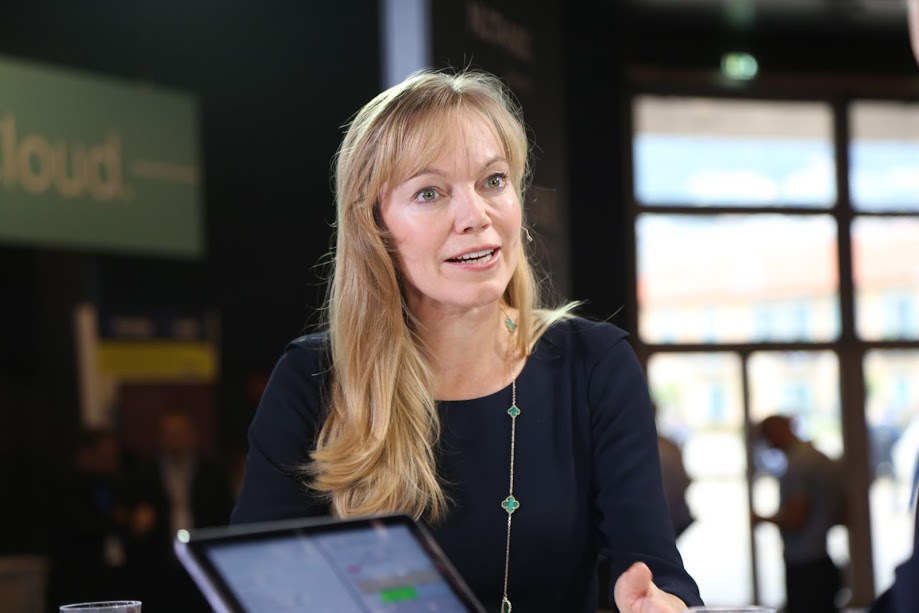
When Anja Manuel (pictured), co-founder and partner at RiceHadleyGates LLC., was in China recently for a conference, she arrived back at her hotel and discovered more than 1,000 people mobbing the lobby, all with their phones out and poised to take pictures. Was it Xi Jinping, China’s president? Or perhaps a major international movie star?
No. In strolled Jack Ma, founder of Alibaba Group. “A huge shout goes out as if it’s The Beatles,” Manuel recalled. “Innovation fever has captured them as well.”
The story reflects the globalization of technology, where products that now impact daily lives combined with unimaginable wealth gained by founders, such as Ma, of very successful firms dominate the world’s attention.
“Globalization is happening, and it’s more pronounced in tech,” Manuel said. “This is the first industry that really shows no sectoral boundaries.”
Manuel stopped by the set of theCUBE, SiliconANGLE’s mobile livestreaming studio, and spoke with host Stu Miniman (@stu) during the Nutanix.NEXT EU event in Nice, France. They discussed recent changes in oversight of the principal internet governing body and the role of women in the global tech community. (* Disclosure below.)
Technology’s worldwide influence has been driven in large part by the evolution of the internet as a truly global, interoperable force. The key governing body for the internet is Internet Corporation for Assigned Names and Numbers, or ICANN, which was formed in the late 1990s as the web was just coming together.
Last year, control of a significant portion of ICANN was quietly transferred from the U.S. Department of Commerce to a private organization independent of national governments. “I’m quite happy that system of internet governance still stands and it hasn’t been taken over by individual governments or by the United Nations,” Manuel said. “Even the new Trump administration didn’t stop that from going through.”
Despite the power of the technology industry throughout the world, there remains a striking imbalance, particularly in the United States, in the role of women. A recent report from PricewaterhouseCoopers showed that, globally, women were 32 percent more successful in crowdfunding campaigns than men. Yet, venture capitalists invested $58.2 billion in companies with all-male founders in 2016 versus $1.4 billion for all-female founders, based on data from PitchBook.
“Women in the workforce are doing better in China for example than in the U.S., Europe, India and other places,” Manuel said. “We really have a problem. We need to do more.”
Watch the complete video interview below, and be sure to check out more of SiliconANGLE’s and theCUBE’s coverage of Nutanix .NEXT EU. (* Disclosure: TheCUBE is a paid media partner for the Nutanix .NEXT EU event. Neither Nutanix Inc., the event sponsor, nor other sponsors have editorial control over content on theCUBE or SiliconANGLE.)
Support our mission to keep content open and free by engaging with theCUBE community. Join theCUBE’s Alumni Trust Network, where technology leaders connect, share intelligence and create opportunities.
Founded by tech visionaries John Furrier and Dave Vellante, SiliconANGLE Media has built a dynamic ecosystem of industry-leading digital media brands that reach 15+ million elite tech professionals. Our new proprietary theCUBE AI Video Cloud is breaking ground in audience interaction, leveraging theCUBEai.com neural network to help technology companies make data-driven decisions and stay at the forefront of industry conversations.





