 APPS
APPS
APPS
APPS






APPS

Google LLC Wednesday announced a slew of new changes for app developers to ensure its digital assistant remains competitive.
The updates for Google Assistant include new push notifications, daily updates and additional language support. As the company aims to attract more developers with new Google Assistant features, the company is also expanding the availability of its digital assistant to tablets. The three-year-old Nexus player has also recently been updated with Google Assistant and smart thermostat maker Ecobee Inc. added Assistant support this week.
The updates for app developers come about a month after Google expanded its smart home speaker lineup with the Mini and Max and announced new Google Assistant features, including the recently launched broadcast feature.
One of the biggest updates for app developers is the support for new languages. Developers will now be able to build apps in Spanish, Italian, Brazilian Portuguese and Indian English.
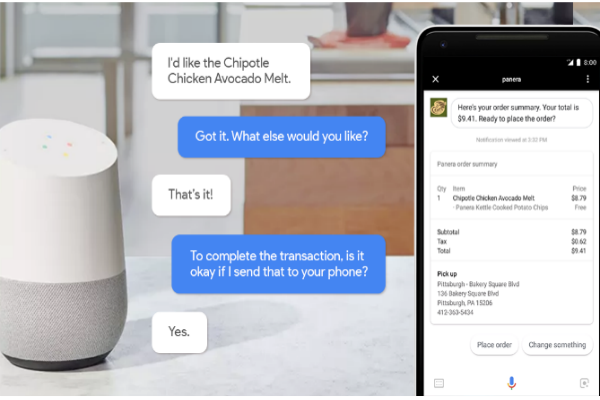
Google has also launched a new application programming interface that allows for speaker-to-phone transfer. This will allow users to start an action on their Google Home and complete it on their smartphone, like the example shown in the image above.
A new push notifications API will allow apps to send important alerts to smartphone users, while the functionality will also be possible at a later date for Google Assistant on Home devices.
Updates to the app directory will now include a “What’s new” and “What’s trending” section so users can easily discover new apps for Assistant and also ensures a developer’s app is discovered. Google is also rolling out a new “For Families” badge on the Google Assistant, so that parents can discover apps that are appropriate for all ages.
The app directory is receiving new subcategories as well, allowing for better discovery of apps. The category “Food & Drink,” for example, will have apps broken into additional subcategories like “Order Food” or “View a Menu.” An app will appear in all relevant subcategories depending on its functionality.
In addition, the update allows apps to recognize implicit requests, which does away with a user having to call out an app by name. This will allow users to say “turn off the lights” rather than “have the Philips Hue app turn off the lights.”
Instead of forcing users to link their account at the beginning of an interaction, the updated AskForSignIn API will allow developers to prompt users to link their accounts at the most appropriate time of the interaction.
Finally, the update will allow developers to build more personalized apps for users that will remember select information and preferences. And a new daily update feature will allow users to be notified of similar content from a developer’s app on a daily basis.
Support our mission to keep content open and free by engaging with theCUBE community. Join theCUBE’s Alumni Trust Network, where technology leaders connect, share intelligence and create opportunities.
Founded by tech visionaries John Furrier and Dave Vellante, SiliconANGLE Media has built a dynamic ecosystem of industry-leading digital media brands that reach 15+ million elite tech professionals. Our new proprietary theCUBE AI Video Cloud is breaking ground in audience interaction, leveraging theCUBEai.com neural network to help technology companies make data-driven decisions and stay at the forefront of industry conversations.





