 EMERGING TECH
EMERGING TECH
EMERGING TECH






EMERGING TECH

The U.S. Supreme Court is considering imposing stricter limits on police to track American citizens’ movements as a landmark case raises concerns over potentially oppressive surveillance.
The high court heard arguments today on the case in question, Carpenter v. The United States, which has provoked doubts regarding the privacy of the American public in the digital age. The issue is FBI requests to cellphone companies that they hand over data pertaining to robbery suspect Timothy Carpenter.
Carpenter was convicted in 2013 for a string of armed robberies at RadioShack and T-Mobile stores in Michigan that occurred in 2011. The FBI had initially been unable to build a case against Carpenter, until it received 127 days of cellphone data from mobile companies that allowed the agency to track the suspect’s location. The privacy concern is that they did this without a court-issued search warrant, thereby posing the question of whether the search was unlawful under the Constitution’s Fourth Amendment.
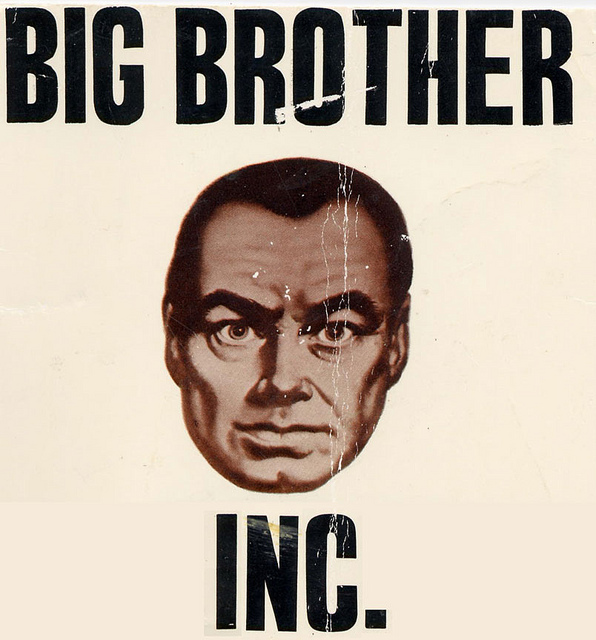
Liberal Justice Sonia Sotomayor said Americans should be concerned about the government’s ability to surveil the public. “Most Americans, I still think, want to avoid big brother,” she said. “They want to avoid the concept that government will be able to see and locate you anywhere you are at any point in time.”
Carpenter, convicted on six counts of robbery, later lost an appeal when a Cincinnati court ruled that no warrant was required. The American Civil Liberties Union argued otherwise, stating that police need “probable cause.”
“It would imperil the privacy of all kinds of data that we really can’t avoid creating in the digital age,” ACLU staff attorney Nathan Freed Wessler told The Verge. “Some are queries we enter into Google, our web browsing history, medical information, fertility tracking data from a smartphone app, [and] new information from ‘internet of things’ devices we put in our homes.”
The government invoked the 1986 Stored Communications Act – updated in 1994 – to defend the seizure. Wessler, who was defending Carpenter, counter-argued that things have changed since 1994. “Three-tenths of 1 percent of Americans had cell phones in 1986; only 9 percent in 1994,” he said. “There were about 18,000 cell towers in 1994; today there are over 300,000.”
His argument is that in the digital age, we are unwittingly signing ourselves over to omnipresent surveillance if we don’t totally opt out of being digitally connected. “Never could police have decided today to track me 24 hours a day, seven days a week, five months ago,” Wessler said. “That is a categorically new power that is made possible by these perfect tracking devices that 95 percent of Americans carry in their pockets.”
Tech companies earlier this year, such as Facebook Inc., Google LLC, Microsoft Corp. and Apple Inc. signed an amicus brief in support of Carpenter. The brief said that the Court should “refine the application of certain Fourth Amendment doctrines to ensure that the law realistically engages with Internet-based technologies and with people’s expectations of privacy in their digital data.”
A decision is expected sometime in June next year.
Support our mission to keep content open and free by engaging with theCUBE community. Join theCUBE’s Alumni Trust Network, where technology leaders connect, share intelligence and create opportunities.
Founded by tech visionaries John Furrier and Dave Vellante, SiliconANGLE Media has built a dynamic ecosystem of industry-leading digital media brands that reach 15+ million elite tech professionals. Our new proprietary theCUBE AI Video Cloud is breaking ground in audience interaction, leveraging theCUBEai.com neural network to help technology companies make data-driven decisions and stay at the forefront of industry conversations.





