 INFRA
INFRA
INFRA
INFRA






INFRA

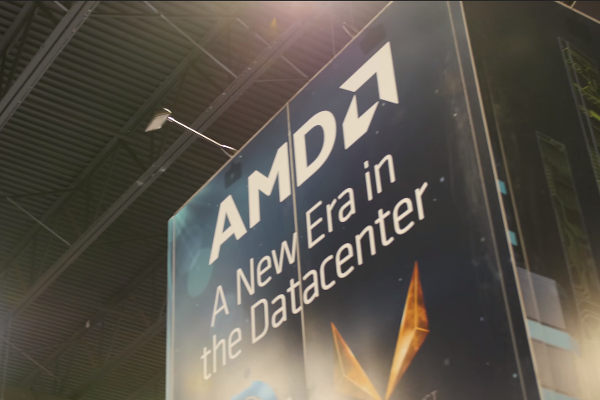
Advanced Micro Devices Inc. is counting on the powerful Epyc server processors that it unveiled in June to challenge Intel Corp.’s long-held dominance of the data center market. Today, the company announced what could prove to be an important milestone toward that goal.
AMD said Microsoft Corp., the second-largest player in the base-level infrastructure-as-a-service segment of the cloud computing market, has deployed the Epyc 7551 processor to power a new generation of Azure cloud instances. The company is the first major cloud provider to adopt the chip series.
The Epyc 7551 packs 32 cores that can run as many as 64 threads and have a base clock speed of 2 gigahertz. According to AMD, the frequency may be increased to up to 3GHz when extra horsepower is required.
Microsoft has incorporated the Epyc 7551 into a version of a homegrown server design dubbed Project Olympus that it had open sourced last year. AMD said a production implementation of the blueprint powers the new Azure instance family, which is an evolution of the existing L-Series lineup.
Like their predecessors, the Lv2-Series machines are geared toward storage-intensive workloads such as databases and Hadoop clusters. These applications process large data datasets and consequently require a significant amount of input/output bandwidth to access the information efficiently. AMD claims that the Epyc series beats out Intel chips in the I/O department, which is presumably how it caught Microsoft’s attention.
The Lv2 instances come in four sizes. The smallest has eight virtual processors and a 1.9-terabit flash storage pool, while the largest offers 64 virtual processors with 15TB of capacity to go along. The memory available with the machines in turn ranges from 64 to 512GB.
AMD told Ars Technica that several other providers besides Microsoft plan to adopt the Epyc series in their platforms. A solid installed base of infrastructure-as-a-service companies could help drive interest in the chips, since the cloud industry tends to be at the forefront of data center innovation. But there is still a long way to go for AMD to become a true challenger to Intel.
In the meantime, the two competitors are collaborating to take on mutual rival Nvidia Corp.’s graphics processing units. In early November, they announced a partnership to develop an ultrathin laptop that combines an Intel processor with a specially designed AMD Radeon GPU.
Support our mission to keep content open and free by engaging with theCUBE community. Join theCUBE’s Alumni Trust Network, where technology leaders connect, share intelligence and create opportunities.
Founded by tech visionaries John Furrier and Dave Vellante, SiliconANGLE Media has built a dynamic ecosystem of industry-leading digital media brands that reach 15+ million elite tech professionals. Our new proprietary theCUBE AI Video Cloud is breaking ground in audience interaction, leveraging theCUBEai.com neural network to help technology companies make data-driven decisions and stay at the forefront of industry conversations.





