 CLOUD
CLOUD
CLOUD
CLOUD







CLOUD

As the de facto standard for container orchestration, Kubernetes is expected to benefit from growing adoption by companies, with the application container market rising to a projected $2.7 billion by 2020. The open-source technology created by Google has become enormously popular, yet there are still important questions surrounding how it will become effectively monetized.
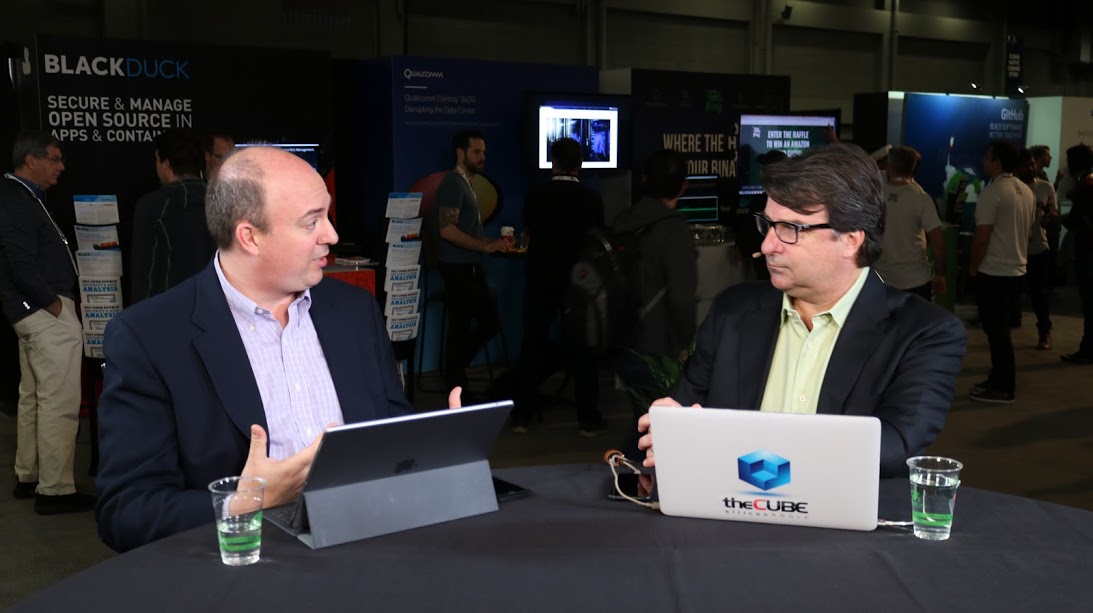
“For the most part, Kubernetes has been commoditized,” said Stu Miniman (@stu, pictured, left), co-host of theCUBE, SiliconANGLE Media’s mobile livestreaming studio. “It doesn’t mean that I’m actually going to make money selling Kubernetes; it’s part of the platform or services that I’m offering. It is an enabler.”
During today’s KubeCon + CloudNativeCon event in Austin, Texas, Miniman and co-host John Furrier (@furrier, pictured, right) discussed opportunities presented by the commoditization of Kubernetes, recent networking initiatives, and a rising tide of developers and their impact on infrastructure design.
The growing importance of container tools in enterprise computing has attracted a mix of large players such as Google, Microsoft Corp. and Amazon Web Services Inc. along with a community of smaller firms that offer Kubernetes services and management. As an open-source technology, Kubernetes has helped cloud providers enable infrastructure as a service.
“The commoditization of Kubernetes is actually a good thing in my mind,” Furrier said. “You’re seeing that Kubernetes is really an opportunity for Google and Microsoft and the rest of the community to run as fast as they can to create services so that customers can have a choice.”
In May, the Cloud Native Computing Foundation voted to accept the Container Networking Interface as its 10th hosted project. The initiative sprang from a need to define a common interface between network plugins and container execution.
“Networking has matured a little bit,” Miniman said. “When we talk about containers, we talk about this whole cloud-native environment — that ‘boring infrastructure’ stuff. It still matters.”
The evolving enterprise information technology infrastructure has been influenced by a growing wave of developers who are playing a major role in adoption of new technologies. Their influence will likely have a significant impact on any monetization strategy.
“There is an onboarding tsunami of new developers coming in,” Furrier said. “These are people who are going to the light, and that light is the monetization and the value creation.”
Watch the complete video interview below, and be sure to check out more of SiliconANGLE’s and theCUBE’s coverage of the KubeCon + CloudNativeCon event.
Support our mission to keep content open and free by engaging with theCUBE community. Join theCUBE’s Alumni Trust Network, where technology leaders connect, share intelligence and create opportunities.
Founded by tech visionaries John Furrier and Dave Vellante, SiliconANGLE Media has built a dynamic ecosystem of industry-leading digital media brands that reach 15+ million elite tech professionals. Our new proprietary theCUBE AI Video Cloud is breaking ground in audience interaction, leveraging theCUBEai.com neural network to help technology companies make data-driven decisions and stay at the forefront of industry conversations.





