 BIG DATA
BIG DATA
BIG DATA







BIG DATA

Faster data ingestion and querying sounds like a fine thing, but does it translate to concrete advances in applications? What about pure business value? Database accelerators let companies plug in real-time speed and see for themselves.
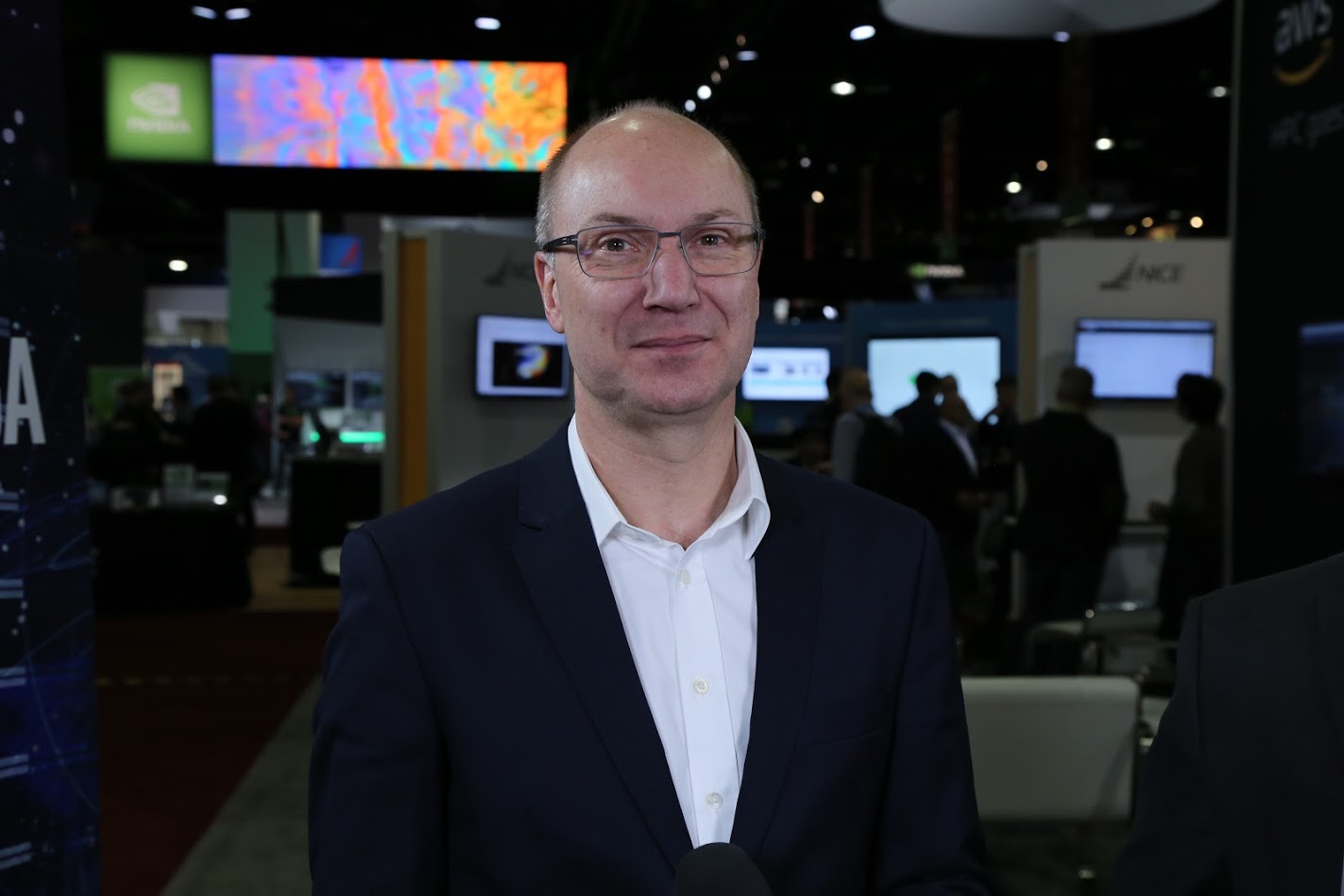
“The applications enable customers to do things they were not capable of doing before,” said Karsten Rönner (pictured), chief executive officer of Swarm64 GmbH.
The Oslo, Norway-based startup amps up relational databases with accelerators that use field programmable gate array, or FPGAs, from Intel. The accelerators can make data ingestion 50 times swifter than that of ordinary relational databases, and queries can complete 10 to 20 times faster, according to Rönner.
Rönner spoke with Jeff Frick (@JeffFrick), host of theCUBE, SiliconANGLE Media’s mobile livestreaming studio, during the Supercomputing event in Denver, Colorado. (* Disclosure below.)
Banks and financial institutions are among those benefiting from accelerators and real-time streaming data. These entities tend to have loads of legacy infrastructure and huge code bases. “It’s also about compliance, so you can’t just rip out your old code base and do something new, because, again, you would have to go through compliance,” Rönner said.
Financial customers are desperate for fuel to speed up their exiting databases. Swarm64 delivers with accelerators that plug into standard database interfaces. “For the application, there’s just a faster database, but we’re invisible, and also the functionality of the database remains what it was,” Rönner said.
Swarm64 can render incoming data available for query in under 10 microseconds. This is a game changer for many applications, according to Rönner. “That allows you to do controlled loop processing of data in machine-to-machine environments,” he said.
Finance is rich with use cases for accelerated data querying. “If you can analyze the market data much quicker, if you can analyze past trades much quicker, then obviously you’re generating value for the firm, because you can react to market trends more accurately,” Rönner explained.
Finance users can mirror of-the-moment trends more sharply, as well. “If you can do that, you can reduce the margin of error with which you’re estimating what’s happening — and all of that is money,” he said.
Autonomous driving applications that require split-second decisions also need lightning-quick data querying. And faster cybersecurity data streams and analysis could help security officers freeze attackers in their tracks, Rönner said.
Watch the complete video interview below, and be sure to check out more of SiliconANGLE’s and theCUBE’s coverage of the Supercomputing 2017 conference. (* Disclosure: TheCUBE is a paid media partner for the Super Computing 2017 conference. Neither Intel, the event sponsor, nor other sponsors have editorial control over content on theCUBE or SiliconANGLE.)
Support our mission to keep content open and free by engaging with theCUBE community. Join theCUBE’s Alumni Trust Network, where technology leaders connect, share intelligence and create opportunities.
Founded by tech visionaries John Furrier and Dave Vellante, SiliconANGLE Media has built a dynamic ecosystem of industry-leading digital media brands that reach 15+ million elite tech professionals. Our new proprietary theCUBE AI Video Cloud is breaking ground in audience interaction, leveraging theCUBEai.com neural network to help technology companies make data-driven decisions and stay at the forefront of industry conversations.





