 EMERGING TECH
EMERGING TECH
EMERGING TECH






EMERGING TECH

The trajectory of the virtual reality industry is changing. The headsets of 2017 were either wired and expensive, relying on expensive VR-ready computers, or wireless and requiring high-priced smartphones in order to provide a high-fidelity VR experience. Now, manufacturers are beginning to launch standalone headsets to deliver similar high performance at less cost.
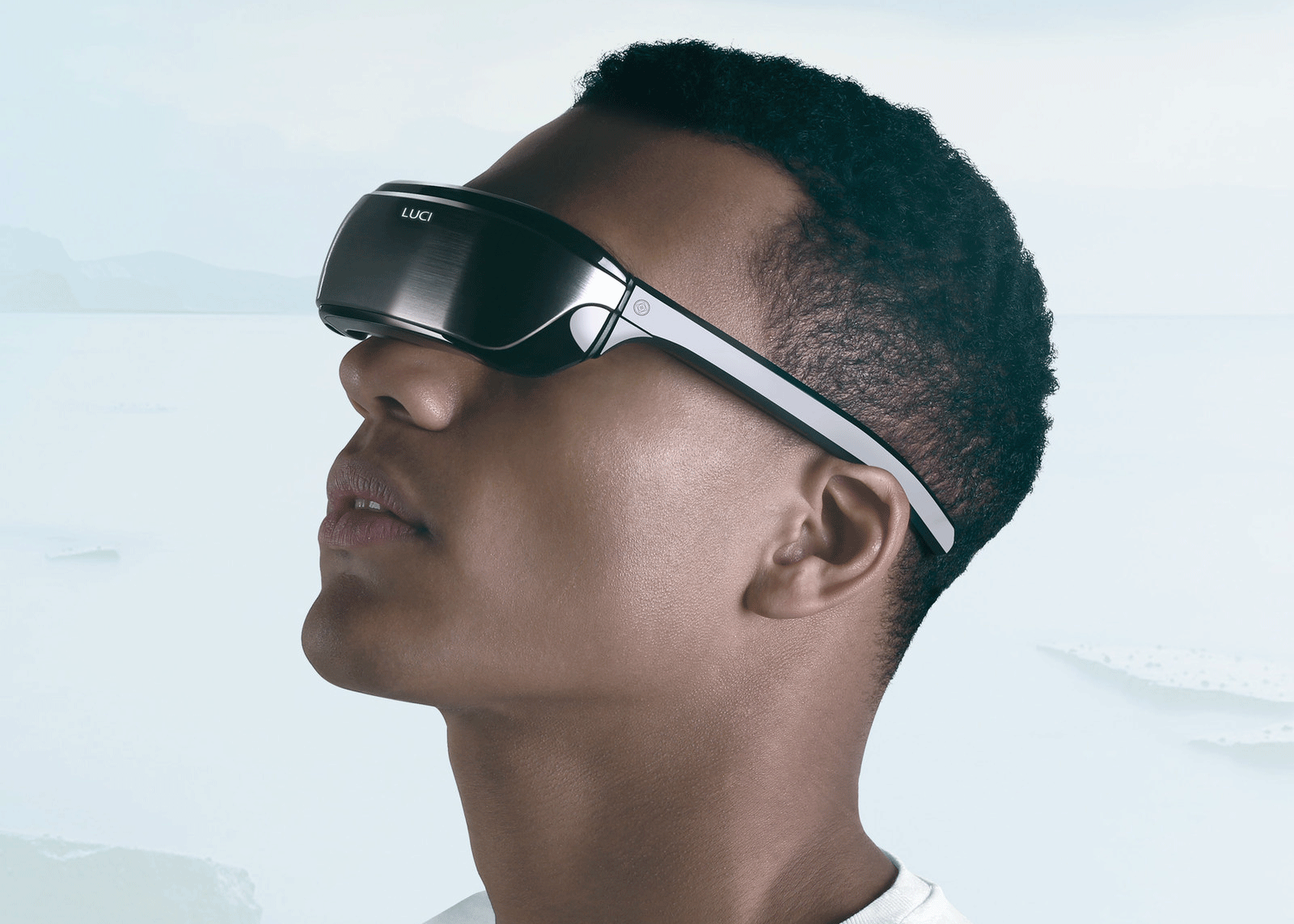
VR hardware developer LUCI announced today that the company will reveal a new line of what it calls “immersion-on-demand” VR products at the 2018 Consumer Electronics Show, which runs in Las Vegas Tuesday through Friday.
LUCI’s technology, which the company calls the LUCI Immers, is designed to be as similar to a pair of glasses as possible, with the exception that as a VR headset it’s opaque. It weighs in around 185 grams, a little heavier than a Samsung Galaxy 8+ smartphone – but designed to be as comfortable on the face as possible and easily donned and removed.
“For users to truly experience powerful, emotionally moving narratives, we must first unbind them from the shackles of the limitations present in hardware today,” said Josh Littlefield, vice president of global sales and marketing for LUCI. The weight and form factor of the Immers is described as encouraging people to make the device “part of your daily carry, as portable and convenient as a pair of sunglasses.”
The company claimed that Immers will be the first in ultrahigh-definition VR displays and can drive more than 3,000 pixels per inch. This means the device is capable of delivering video at 3-D 4K resolution out of the box and thus will keep up with high-resolution VR content for years to come.
“LUCI Immers is the first step in our company’s commitment and passion to reimagine the way in which people come together to enjoy content,” says Jun Zhao, vice president of product operations for LUCI. “The flexible, compact and customizable design of makes it possible to bring the premium movie theater experience on the go, giving you the freedom to engage with content when and where you want.”
Coming into 2018, developers in the VR industry have already begun looking to fill the gap between the expensive wired headsets and smartphone-driven headsets. HTC Vive announced the release of the Vive Focus in November, but the initial launch of the device will only reach audiences in China. In October, Facebook Inc. announced the Oculus Go, a standalone VR headset with a $199 price tag but not expected to ship until 2019. Samsung Electronics Co. Ltd. also reportedly has a standalone VR headset in production.
Many of these devices have an expected price around $200, which could make them much more palatable for the mass market than headsets such as the Oculus Rift (at $400) and the HTC Vive (at $600) – both of which require an expensive computer to drive. Even Google Daydream and Samsung Gear VR require an expensive smartphone to run.
The VR industry received over $2.3 billion in global investment in 2017, the Venture Reality Fund reported. The industry is expected to exceed $60 billion in worldwide revenue by 2020, according to a report from Allied Business Intelligence Research Inc. That report cited a diversity of devices and approaches to market as an industry strength, and the addition of standalone devices in 2018 should only bolster that strength.
The Immers will begin production in the second quarter of 2018, but the company has not yet given details on when it will ship.
Support our mission to keep content open and free by engaging with theCUBE community. Join theCUBE’s Alumni Trust Network, where technology leaders connect, share intelligence and create opportunities.
Founded by tech visionaries John Furrier and Dave Vellante, SiliconANGLE Media has built a dynamic ecosystem of industry-leading digital media brands that reach 15+ million elite tech professionals. Our new proprietary theCUBE AI Video Cloud is breaking ground in audience interaction, leveraging theCUBEai.com neural network to help technology companies make data-driven decisions and stay at the forefront of industry conversations.





