 APPS
APPS
APPS
APPS






APPS

Google LLC has pulled around 60 games from the Play Store after learning that they were infected with malware that displayed pornographic ads.
Cybersecurity company Check Point Software Technologies Ltd. discovered the malware, which it named “AdultSwine,” and informed Google about the infected games, some of which were targeted toward children.
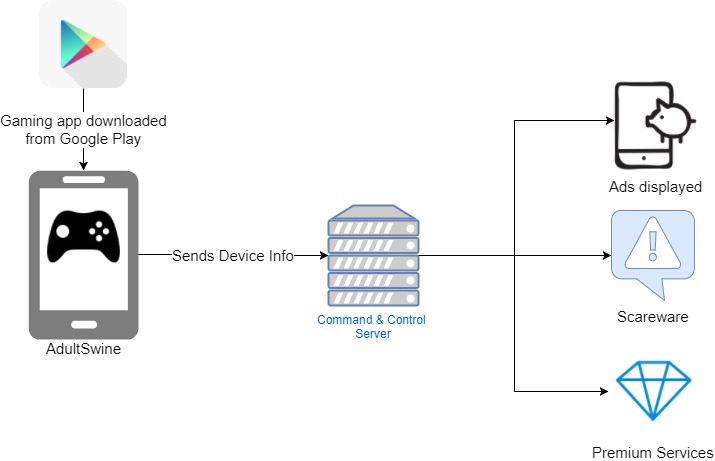
According to Check Point, AdultSwine lays in wait once it has been downloaded until the infected device is rebooted, after which the malware contacts its Command and Control or C&C server to signal that it has been installed and send over data about the infected device. The C&C then sends back instructions telling the malware what to do.
Check Point said AdultSwine can behave in three possible ways, including displaying ads that are “often highly inappropriate and pornographic.” The malware may also attempt to scare users into downloading fake security apps with bogus virus warnings, or it might try to trick users into paying for “premium” services. These services usually take the form of misleading popup ads claiming that the user has won a free iPhone or something similar.
“Although for now this malicious app seems to be a nasty nuisance, and most certainly damaging on both an emotional and financial level, it nevertheless also has a potentially much wider range of malicious activities that it can pursue, all relying on the same common concept,” Check Point said in a blog post. “The malicious code simply receives a target link from its Command and Control server and displays it to the user.”
Although in some cases the link is just an advertisement, Check Point added, “it could also lead to whatever social engineering scheme the hacker has in mind. Indeed, these plots continue to be effective even today, especially when they originate in apps downloaded from trusted sources such as Google Play.”
This is the second time in a week that Check Point has revealed malware hidden in Google Play apps. Last week, the Check Point said that it had uncovered at least 22 flashlight apps that were infected with adware, and it said that the apps had already been downloaded by between 1.5 million to 7.5 million Android users.
Support our mission to keep content open and free by engaging with theCUBE community. Join theCUBE’s Alumni Trust Network, where technology leaders connect, share intelligence and create opportunities.
Founded by tech visionaries John Furrier and Dave Vellante, SiliconANGLE Media has built a dynamic ecosystem of industry-leading digital media brands that reach 15+ million elite tech professionals. Our new proprietary theCUBE AI Video Cloud is breaking ground in audience interaction, leveraging theCUBEai.com neural network to help technology companies make data-driven decisions and stay at the forefront of industry conversations.





