 EMERGING TECH
EMERGING TECH
EMERGING TECH






EMERGING TECH

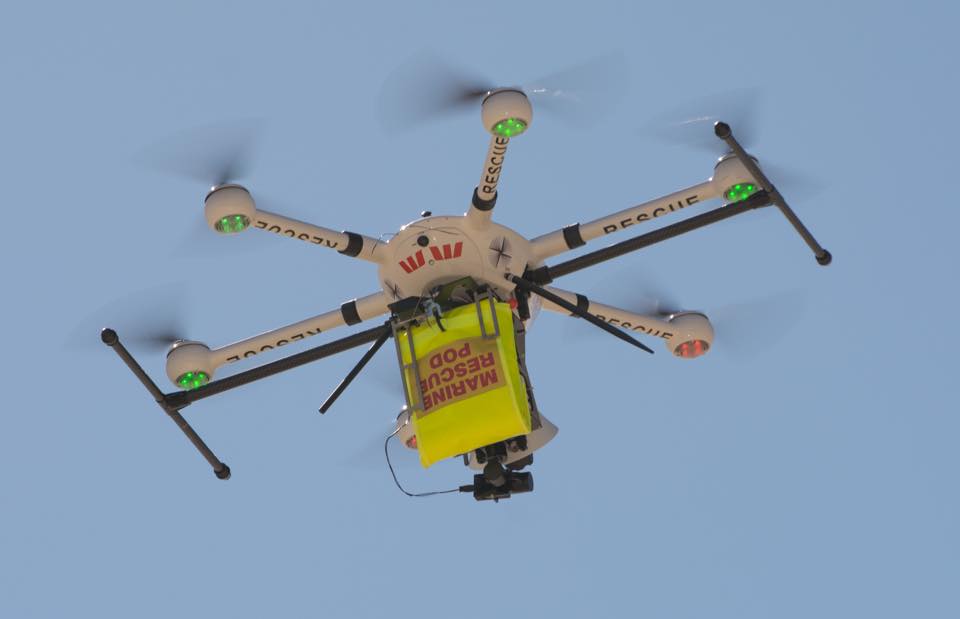
A training session for a new rescue drone turned into a trial by fire at an Australian beach today when it saved a pair of stranded swimmers, a first for drone technology.
Lifeguards were training to fly the “Little Ripper” drone at Lennox Head, a popular surfing area south of Brisbane, when they received a call that a civilian had spotted two teenage boys who were apparently stranded in rough waters nearly a half-mile from the shoreline.
Fortunately, lifeguard supervisor Jai Sheridan happened to be piloting the Little Ripper drone when the call came in, which allowed him to quickly locate the struggling teens and drop a self-inflating flotation device. The teens grabbed onto the device and were able to swim to shore, exhausted but safe.
“The Little Ripper UAV certainly proved itself today, it is an amazingly efficient piece of lifesaving equipment and a delight to fly,” said Sheridan. “I was able to launch it, fly it to the location, and drop the pod all in about one to two minutes. On a normal day that would have taken our lifeguards a few minutes longer to reach the members of the public.”
Developed by Westpac Little Ripper, the drone is part of the New South Wales government’s multimillion-dollar shark mitigation strategy, which aims to reduce the risk of shark attacks along the coast. In addition to deploying flotation devices, the drones also use deep learning algorithms to spot sharks from a distance, allowing them to act as an early warning system. The rescued teens even told 7 News Sydney that when they first saw the drone overhead, they were “more scared that it was going to be a shark alarm” until it dropped the rescue pod.
According to Eddie Bennet, chief executive of Westpac Little Ripper, the drone’s success demonstrates the technology’s value as a search and rescue tool, especially in conditions that might also put first responders at risk. “The Westpac Little Ripper’s rescue today of the two young swimmers, in the three-meter dangerous swell, clearly illustrates the benefit of this cutting edge technology in such a time critical emergency situation,” said Bennet. “It works and Australia is leading the world in this technology.”
Support our mission to keep content open and free by engaging with theCUBE community. Join theCUBE’s Alumni Trust Network, where technology leaders connect, share intelligence and create opportunities.
Founded by tech visionaries John Furrier and Dave Vellante, SiliconANGLE Media has built a dynamic ecosystem of industry-leading digital media brands that reach 15+ million elite tech professionals. Our new proprietary theCUBE AI Video Cloud is breaking ground in audience interaction, leveraging theCUBEai.com neural network to help technology companies make data-driven decisions and stay at the forefront of industry conversations.





