 EMERGING TECH
EMERGING TECH
EMERGING TECH






EMERGING TECH

Bitcoin’s price floated around the $11,000 to $13,000 price range over the weekend while other cryptocurrencies likewise stabilized following a dramatic price correction last week.
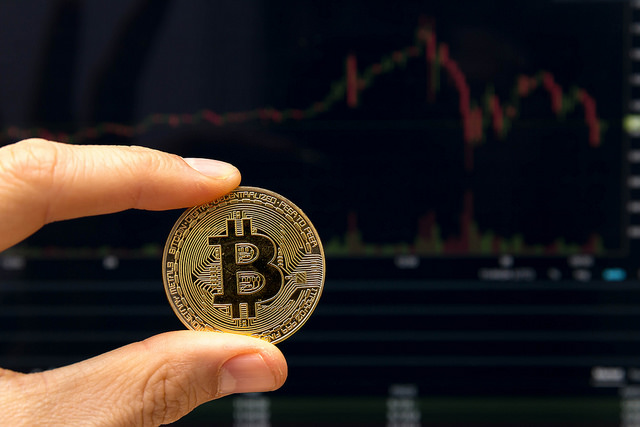
In what is more accurately described as a price correction — not a crash as it was described by some publications — bitcoin dropped from historic highs of around $19,000 to below $10,000 briefly last week. But it recovered on Wednesday as buyers entered the market looking for bargains, rising again to about $14,000 before stabilizing.
Bitcoin first hit $10,000 in late November after starting 2017 at below $1,000. That means that today someone who held bitcoin as of Jan. 1, 2017, is sitting on a 1,070 percent profit versus a 1,800 profit at the height of the market — again, not a crash but a decent correction. Bitcoin has seriously crashed in the past, hitting a high of $1,242 in November 2013 before dropping to below $200 by January 2015. But that’s more than five times less than its value at its peak, whereas bitcoin today hasn’t even dropped by half its value.
The mainstream media, though, late to the bitcoin party as bitcoin mania made headlines in 2017, completely lacked historical perspective, even if you put aside headlines such as the one claiming the moon was behind the so-called crash. If bitcoin had indeed crashed as it had in the past, bitcoin today would be trading at around $3,000, not the $11,655 at which it stands as of 11:50 p.m. EST.
The market fundamentals that caused the last crash in bitcoin are also completely different in 2018 than in the 2013-2015 period. That crash was the result of contagion by the alleged hacking of Mt. Gox, which at its peak accounted for approximately 80 percent of all global bitcoin trading. In 2018, the market is far broader, complete with bitcoin futures contracts, hundreds of global exchanges and far, far more people involved. In short, bitcoin is arguably mainstream, or at least approaching it.
Put simply, there are likely far too many people involved in bitcoin in 2018 to allow it to crash to massive lows. Those people include so-called “bitcoin billionaires” such as the Winklevoss twins. It’s true that bitcoin isn’t yet widely held; 40 percent of all bitcoin is held by fewer than 1,000 people, and the founder of bitcoin, Satoshi Nakamoto, holds 5 percent himself.
But those people have a vested interest in bitcoin not crashing. And although the 60 percent of other bitcoin holders could sell out of the cryptocurrency, thus driving the price down, as long as they hold, bitcoin will never fully crash.
Bitcoin may arguably be a bad investment going forward in terms of growth opportunities, or it may, as some suggest, grow again to hit $100,000. But a little perspective is in order amid the seeming roller coaster ride.
Support our mission to keep content open and free by engaging with theCUBE community. Join theCUBE’s Alumni Trust Network, where technology leaders connect, share intelligence and create opportunities.
Founded by tech visionaries John Furrier and Dave Vellante, SiliconANGLE Media has built a dynamic ecosystem of industry-leading digital media brands that reach 15+ million elite tech professionals. Our new proprietary theCUBE AI Video Cloud is breaking ground in audience interaction, leveraging theCUBEai.com neural network to help technology companies make data-driven decisions and stay at the forefront of industry conversations.





