 EMERGING TECH
EMERGING TECH
EMERGING TECH






EMERGING TECH

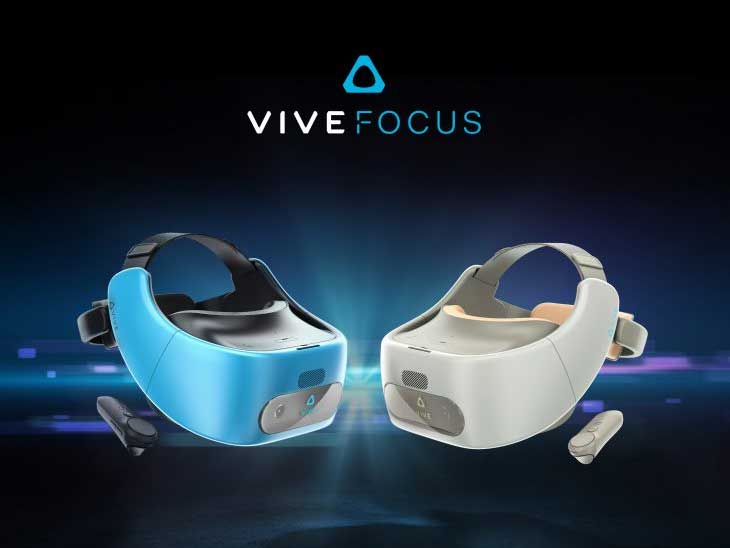
Virtual reality hardware maker HTC Corp. today announced that it will be bringing its standalone VR headset, the Vive Focus, to international markets this year, including the United States.
The VR company made the announcement at this year’s Game Developer Conference in San Francisco. The Vive Focus represents what HTC claims is the first standalone VR headset capable of six-degrees-of-freedom movement that’s commercially available on the market. The Vive Focus was released in the Chinese market during 2017.
Starting today, Vive Focus developers can register for developer kits and access to the software development kit on the Vive developer portal.
The Vive Focus is one of the first entries into the standalone VR head-mounted display market that is designed to be untethered – that is, it does not need to be connected to a powerful PC in order to be used. The device features a 110-degree field of view and world-scale inside-out tracking of head movement in six degrees of freedom using internal nine-axis and proximity sensors.
To keep the experience as crisp and lag-free as possible, the Vive Focus runs on the Qualcomm Snapdragon 835 processors and supports a 3K active-matrix organic light-emitting diode screen. With this screen and processor, the Focus can deliver 2880 by 1600 pixels in resolution.
The Focus will compete on the global market with a number of new upcoming standalone headsets including Facebook Inc.’s Oculus Go, unveiled in October for $199. Although cheap and accessible, the Oculus Go only supports three degrees of freedom and runs on an older Qualcomm chip than the Focus. Also expected to potentially appear this year is the Exynos VR III headset from Samsung Electronics Co. Ltd., from information leaked in July, but no details on this headset have yet surfaced.
HTC built the Focus on an open VR platform called HTC Wave, which is designed to “unify the development experience for standalone and mobile VR device” and also connects into Vive’s existing Viveport content platform.
At launch, the Focus will have access to a vast library of already developed VR content available on Viveport and also will be able to access a multitude of VR games and entertainment accessible through Valve Corp.’s Steam VR.
The price tag of the Focus in China is ¥3,999, which works out to about $630. This puts it slightly pricier than the HTC Vive, which recently reduced price to $599, and the Oculus Rift, which is priced at $399. It’s not yet known what the Western market price for this product will be when it arrives internationally.
“The Focus should help HTC fill out their head-mounted display lineup in the short term, although pricing of its Vive Pro HMD appears less than ideal, but it’s not quite the device the market needs to accelerate traction,” said Michael Inouye, principal analyst at ABI Research. “If pricing falls somewhere between $500 and $600, it will ultimately slot in as a midtier standalone VR product which could make for a difficult value proposition. The Oculus Go, while only offering three-degrees-of-freedom movement, will hit the often-cited key $199 price point and will target more casual users, or enterprise looking for a lower cost solution.”
Inouye added that the addition of six-degrees-of-freedom controllers to the Vive Focus could become a critical asset for developers and the market. The mobile VR industry, he explained, which currently only supports three degrees of freedom, has the largest installed base, while the tethered personal computer/console market supports full six degrees of freedom. Although the latter has a lower installed base than mobile setups, it has a higher revenue potential per user.
“This creates better opportunities for developers to create experiences and games for the premium tethered devices and then more directly port to standalone,” Inouye said. “Developers will support whichever market presents them with the largest audience or greatest opportunity to generate revenue.”
HTC Vive also recently announced the next generation of its tethered VR headsets, the HTC Vive Pro, which will carry a price tag of $799 when it’s released.
Support our mission to keep content open and free by engaging with theCUBE community. Join theCUBE’s Alumni Trust Network, where technology leaders connect, share intelligence and create opportunities.
Founded by tech visionaries John Furrier and Dave Vellante, SiliconANGLE Media has built a dynamic ecosystem of industry-leading digital media brands that reach 15+ million elite tech professionals. Our new proprietary theCUBE AI Video Cloud is breaking ground in audience interaction, leveraging theCUBEai.com neural network to help technology companies make data-driven decisions and stay at the forefront of industry conversations.





