







PEER 1, an IT hosting provider, has produced a visual interpretation of the Internet. It identifies 19,869 autonomous system nodes with 44,344 connections.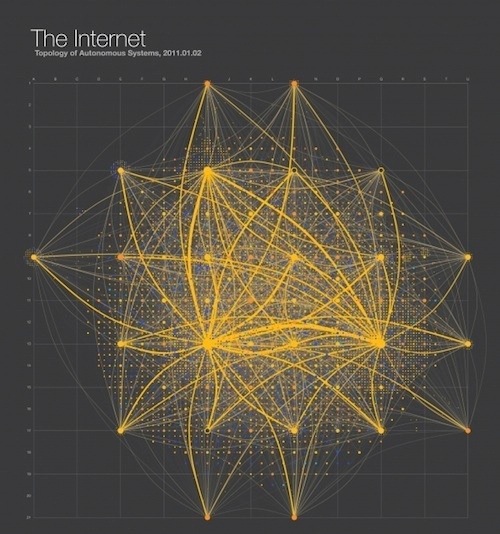
The sizing and layout of the autonomous systems are based on their eigenvector centrality, which is a measure of how central to the network each autonomous system is: an autonomous system is central if it is connected to other autonomous systems that are central. This is the same graph-theoretical concept that forms the basis of Google’s PageRank algorithm.
The Map of the Internet image layout begins with the most central nodes and proceeds to the least, positioning them on a grid that subdivides after each order of magnitude of centrality. Within the constraints of the current subdivision level, nodes are placed as near as possible to previously-placed nodes that they are connected to.
Map of the Internet 2011 | PEER 1 Hosting Blog
[Cross-posted at Silicon Valley Watcher]
Support our mission to keep content open and free by engaging with theCUBE community. Join theCUBE’s Alumni Trust Network, where technology leaders connect, share intelligence and create opportunities.
Founded by tech visionaries John Furrier and Dave Vellante, SiliconANGLE Media has built a dynamic ecosystem of industry-leading digital media brands that reach 15+ million elite tech professionals. Our new proprietary theCUBE AI Video Cloud is breaking ground in audience interaction, leveraging theCUBEai.com neural network to help technology companies make data-driven decisions and stay at the forefront of industry conversations.




