 EMERGING TECH
EMERGING TECH
EMERGING TECH







EMERGING TECH

Watch out Google Maps! The automotive industry has noticed that smartphones have become the ultimate car accessory, and they’re starting to play for the win. Aiding in car-makers’ quest to out-innovate the best is the Autotech Council, a Silicon Valley “club” that brings together representatives of the largest car manufacturers and technology innovators.
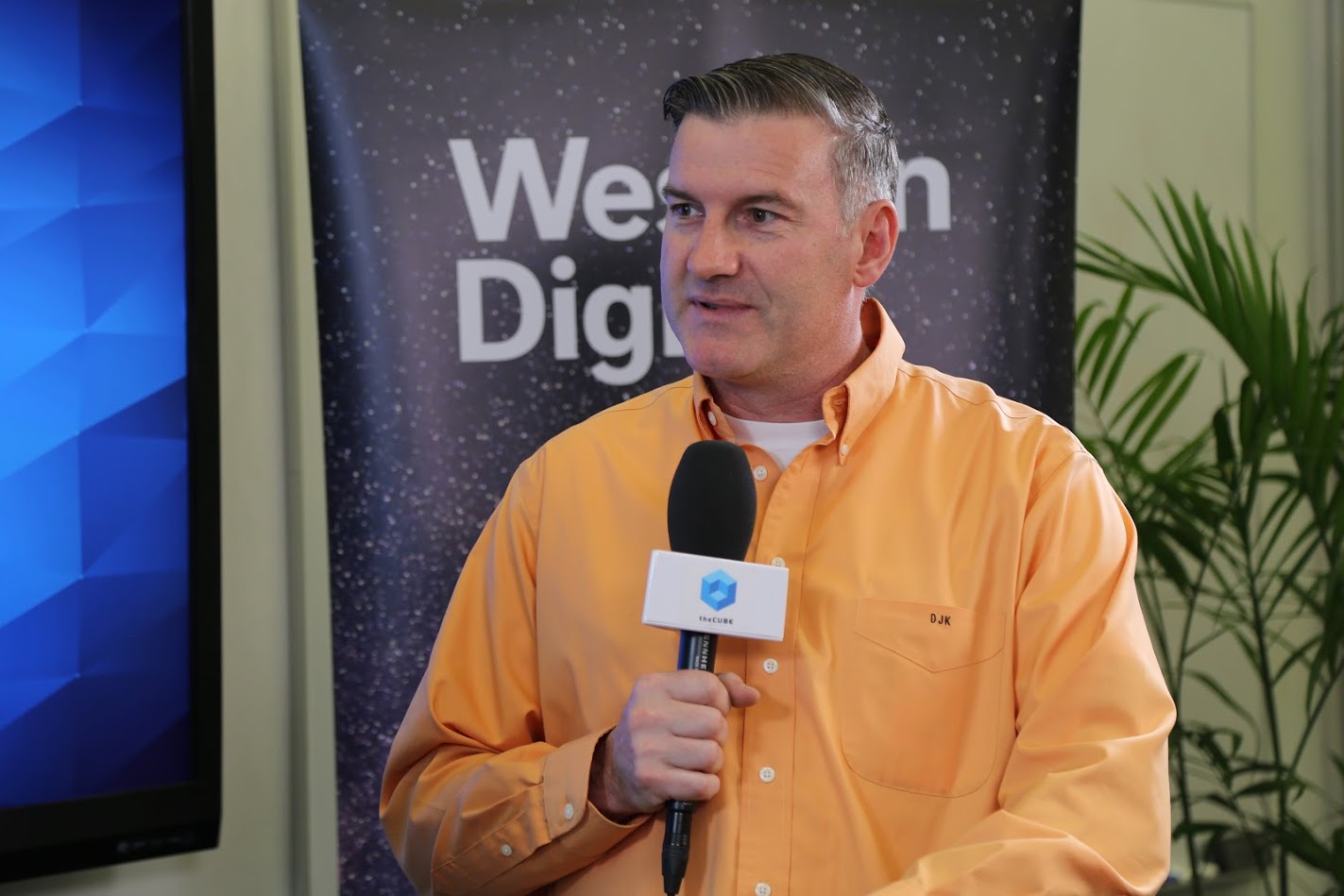
“They’re not coming here to study brake pad material science and things like that. They’re coming to Silicon Valley to find the same stuff the phone company was two years ago,” said Derek Kerton (pictured), founder and chairman of the Autotech Council and managing director and principal analyst of The Kerton Group. Kerton has a background in providing technology consulting services for telecom, and he is applying the same expertise to advance the auto industry.
Kerton spoke with Jeff Frick (@JeffFrick), host of theCUBE, SiliconANGLE Media’s mobile livestreaming studio, at the Autotech Council Autonomous Vehicles event in Milpitas, California. They discussed the raison d’etre of the Autotech Council, current competing technologies for autonomous vehicles, and how traditional computing laws predict the exponential growth of the autonomous car industry. (* Disclosure below.)
Competing map and sensor technologies are fighting for supremacy in the race to create an autonomous car that can navigate accurately and safely. The issue, according to Kerton, is that neither a highly detailed route map nor the ability to sense the real-time environment around the vehicle is able to provide a complete solution. “The answer is sensor fusion,” said Kerton, who described the solution as a mix of high-level maps stored in onboard memory and real-time data from sensors mounted on the vehicle.
But which maps and sensors will be chosen by autonomous car manufacturers? Google has established dominance in the live driver mapping market, but autonomous vehicles require a much higher level of detail and accuracy. “You need to know, turn right in 400.0005 feet and adjust one-quarter inch to the left,” said Kerton, who cited Nokia’s HERE Global B.V. and Sat Nav pioneer TomTom NV as leaders in high-definition mapping.
While LIDAR (light radar) is the most accurate method to capture real-time environment data to build 3D models, costs prohibit using LIDAR sensors in mass-market vehicles. Cheaper alternatives, such as cameras, radar and high-resolution maps, all have their own drawbacks, and Kerton sees a blended solution as the most likely in the short-term. However, an experimental solid-state version of LIDAR is being developed by several start-ups.
“It’s not a spinning thing point; it’s actually a silicon chip with [microelectromechanical systems] and stuff on it,” Kerton said. Costs drop by removing the need for the moving parts required for traditional LIDAR sensing. “[If] we can drop the price down to $200, maybe a hundred dollars in the future and scale, that starts being interesting,” Kerton said.
As cars become computers, laws that traditionally applied to high tech start to come into play in the automotive industry. “This is why I’m bullish and more crazy than anybody else about the self-driving car space,” said Kerton, who explained how he believes that Moore’s law, Kryder’s Law and Metcalfe’s law will drive the exponential growth of autonomous vehicles.
Watch the complete video interview below, and be sure to check out more of SiliconANGLE’s and theCUBE’s coverage of the Autotech Council Autonomous Vehicles event. (* Disclosure: TheCUBE is a paid media partner for the Autotech Council Autonomous Vehicles event. Neither Western Digital Corp., the event sponsor, nor other sponsors have editorial control over content on theCUBE or SiliconANGLE.)
Support our mission to keep content open and free by engaging with theCUBE community. Join theCUBE’s Alumni Trust Network, where technology leaders connect, share intelligence and create opportunities.
Founded by tech visionaries John Furrier and Dave Vellante, SiliconANGLE Media has built a dynamic ecosystem of industry-leading digital media brands that reach 15+ million elite tech professionals. Our new proprietary theCUBE AI Video Cloud is breaking ground in audience interaction, leveraging theCUBEai.com neural network to help technology companies make data-driven decisions and stay at the forefront of industry conversations.





