 EMERGING TECH
EMERGING TECH
EMERGING TECH






EMERGING TECH

University of Washington researchers have developed a method of transmitting video using up to 10,000 times less power than existing techniques that could enable the development of much more capable connected devices.
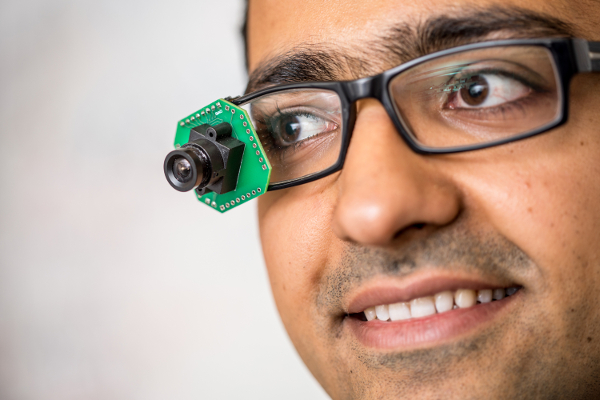
To demonstrate the breakthrough, the team built a prototype implementation (pictured) that was announced on Wednesday. They also shared details about the system’s power savings approach, which is based on a communications method known as backscattering.
Named after the physical phenomenon it’s designed to harness, backscattering involves using transmissions from an external source to send data. One or more antennas on a backscatter device receive the radio waves and reflect them, modifying them in the process to send different information. The fact that the system doesn’t have to generate the signal by itself drastically reduces power requirements.
The only catch is that backscattering often severely limits the amount of information a device can transmit. “The fundamental assumption people have made so far is that backscatter can be used only for low-data-rate sensors such as temperature sensors,” explained UW associate professor Shyam Gollakota, one of the new video streaming technique’s inventors. Gollakota’s and his colleagues’ prototype system has shown that this is not the case.
The device pairs a camera with an antenna that receives external signals and encodes footage into them. The width of each modified radio pulse corresponds to a pixel value, while its brightness is proportional to the desired color level. To save power, the prototype passes on data to the user’s phone, which turns it into a usable video and can then transmit it over Wi-Fi.
The fact that the handset does the heavy lifting allows the backscatter camera to operate with far less power than a traditional device, as well as fewer components. The UW researchers’ prototype doesn’t have a power source and is supported only by a miniature battery that they said requires 1,000 to 10,000 times less energy than those in current cameras. Joshua Smith, another co-inventor, said the next step is to develop a system that doesn’t require a battery at all.
The current prototype is already capable enough to handle not only regular video, but also the high-definition variety. The researchers believe that there are several potential applications for their technology.
One is enabling the development of more sophisticated smart glasses capable of capturing high-definition footage for extended time periods. This has been a major obstacle to the technology’s adoption. Snap Inc.’s Spectacles, for instance, failed to gain traction in part because they could only capture fairly low-quality video. Another application that the UW researchers see is in security cameras, which they said could potentially be made to work without the need for a power cord.
Support our mission to keep content open and free by engaging with theCUBE community. Join theCUBE’s Alumni Trust Network, where technology leaders connect, share intelligence and create opportunities.
Founded by tech visionaries John Furrier and Dave Vellante, SiliconANGLE Media has built a dynamic ecosystem of industry-leading digital media brands that reach 15+ million elite tech professionals. Our new proprietary theCUBE AI Video Cloud is breaking ground in audience interaction, leveraging theCUBEai.com neural network to help technology companies make data-driven decisions and stay at the forefront of industry conversations.





