 EMERGING TECH
EMERGING TECH
EMERGING TECH






EMERGING TECH

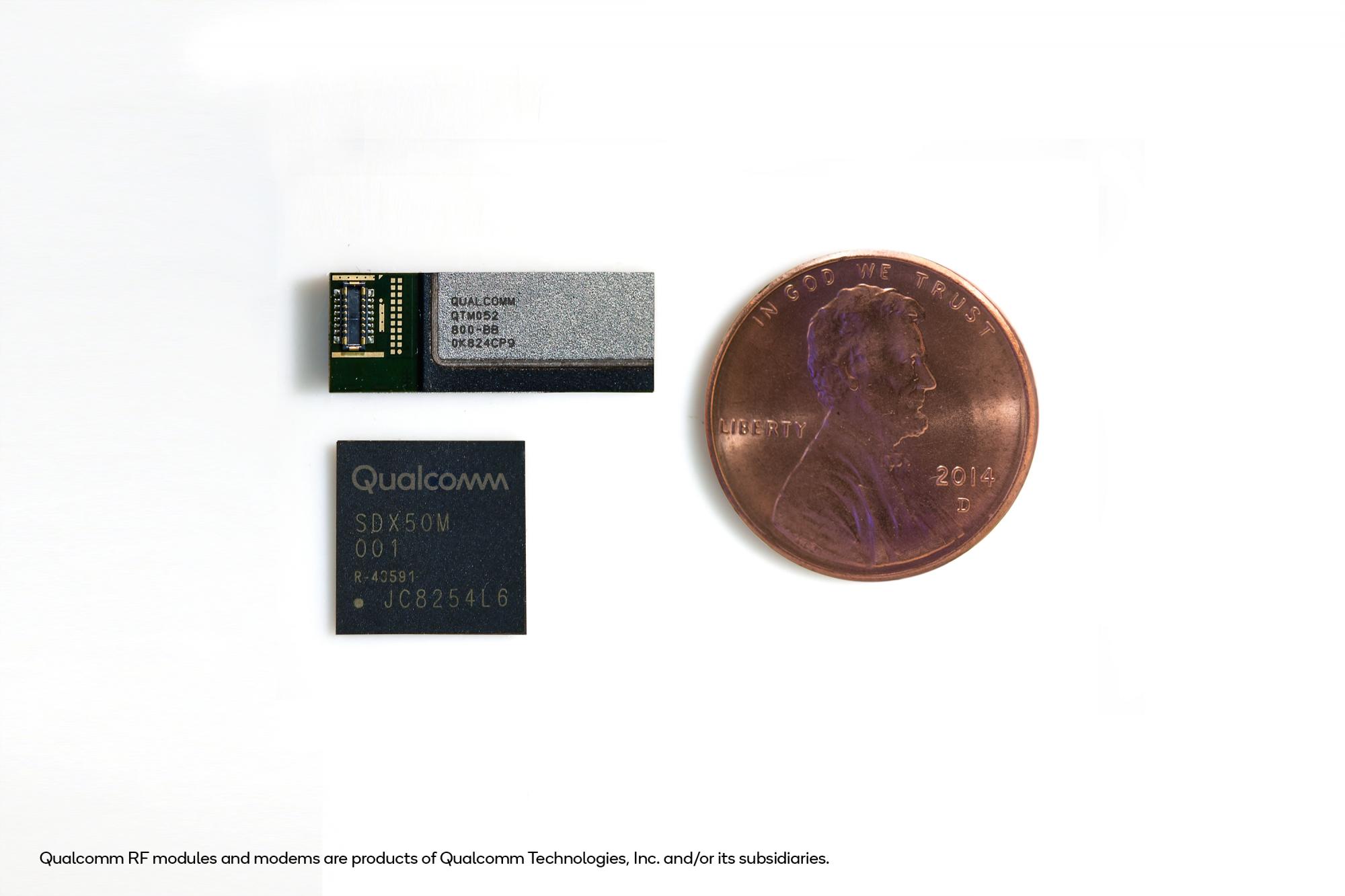
Qualcomm Inc. today debuted two penny-size antenna modules that bring high-speed 5G connectivity a big step closer to reality.
The term 5G covers a set of standards currently being implemented by carriers, handset makers and others to deliver faster wireless internet for consumers. It’s estimated that networks based on the technology will be capable of transmitting data at 10 to 100 times the speed of today’s 4G infrastructure while maintaining lower latency.
Exactly how fast information travels over a 5G connection depends on the frequency at which it’s sent. The QPM56, the first of Qualcomm’s two new antenna modules, uses frequencies under 6 gigahertz like 4G networks. It’s joined by the QTM052, which operates on the far more powerful millimeter spectrum band.
Millimeter connections can theoretically support speeds of up to 5 gigabits per second. Qualcomm told CNET that users should expect to see around 1.4Gbps in practice, which it said is about 20 times faster than the 70 megabits per second provided on average by 4G networks.
The QTM052 is touted as the first antenna module to make these kinds of speeds attainable on mobile devices. Previous 5G millimeter units, such as the prototype Qualcomm demonstrated at last year’s Consumer Electronics Show, were far too large to be practical for use in handsets.
The reason why the semiconductor industry has found it so difficult to shrink the technology to acceptable proportions is that the millimeter spectrum band comes with major tradeoffs. Signals only travel a relatively short distance and, to make matters even more complicated, can’t go through obstacles such as buildings. Overcoming these pitfalls requires sophisticated technology that previously required a lot of space.
Qualcomm hailed the fact that it was able to fit the necessary components into a chip the size of a penny as nothing short of a breakthrough. According to the company, the QTM052 includes four antennas that can curve signals around buildings and even bounce them off certain surfaces when need be.
Qualcomm sees mobile device makers including multiple modules in their devices. If the transmission from one QTM052 unit gets blocked by the user’s hand, say, another can take over.
The QTM052 and the QPM56 are both designed to work with Qualcomm’s X50 5G mobile modem chip. Qualcomm expects the antenna modules will begin shipping with handsets in early 2019.
Support our mission to keep content open and free by engaging with theCUBE community. Join theCUBE’s Alumni Trust Network, where technology leaders connect, share intelligence and create opportunities.
Founded by tech visionaries John Furrier and Dave Vellante, SiliconANGLE Media has built a dynamic ecosystem of industry-leading digital media brands that reach 15+ million elite tech professionals. Our new proprietary theCUBE AI Video Cloud is breaking ground in audience interaction, leveraging theCUBEai.com neural network to help technology companies make data-driven decisions and stay at the forefront of industry conversations.





