 INFRA
INFRA
INFRA
INFRA







INFRA

How does a business secure all of its digital data these days? It might be on-premises, in the cloud, or in containers (a virtualized method for running distributed applications). Is there a peephole through which to see all data assets and detect security vulnerabilities? It might be a tool that skips individual stops and goes straight to the all-encompassing network.
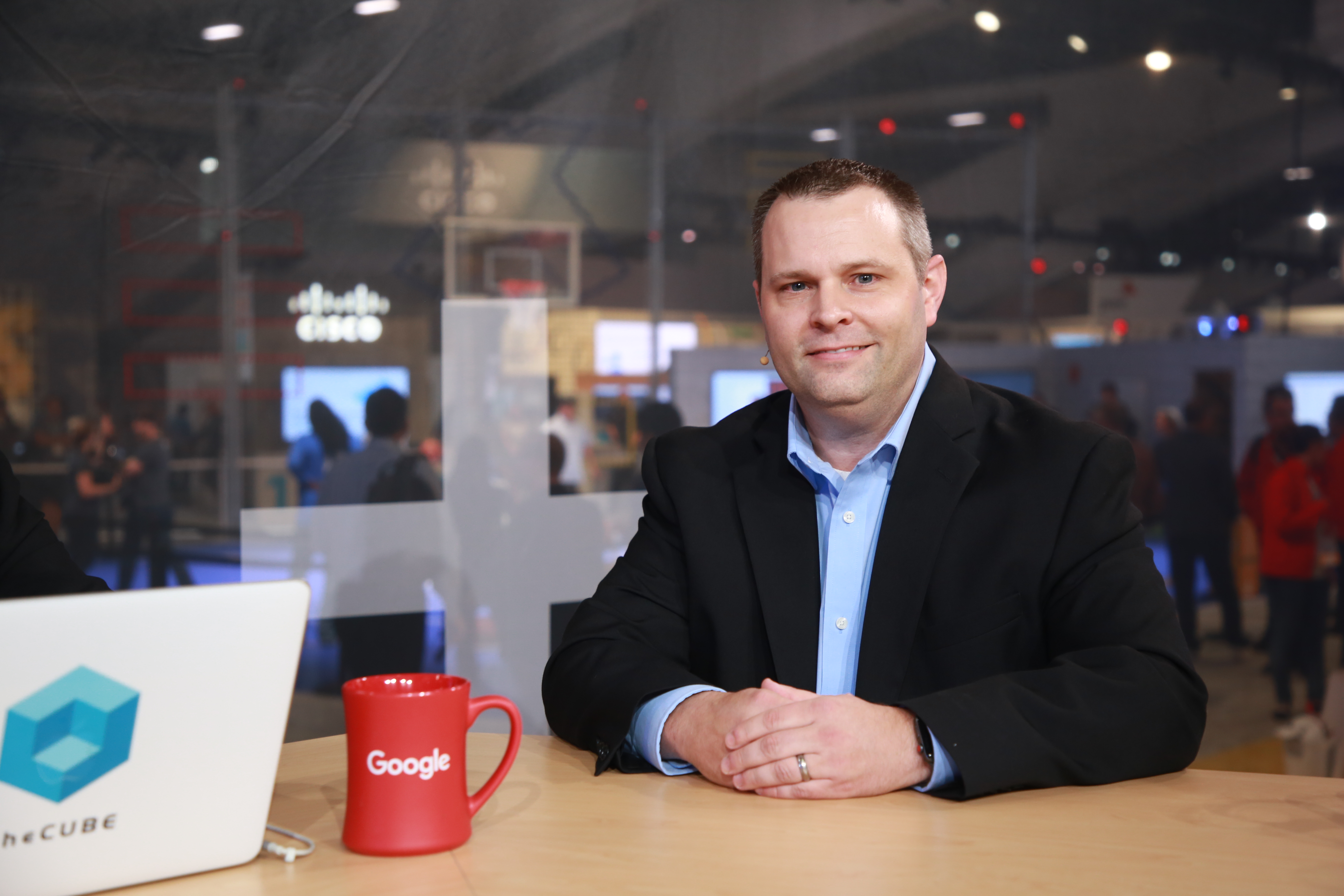
Cisco Systems Inc.’s Stealthwatch Cloud aggregates telemetry data from all environments and endpoints — even ones you may not know about, according to Jeff Moncrief (pictured), consulting systems engineer of cloud security at Cisco. It then normalizes all of that data and detects anomalies.
“It’s essentially a security analytics platform that can also perform network operations, traffic visibility use cases — and there’s a lot that we can do with the telemetry that we’re gathering,” he said. Users are sometimes shocked to find out what is on their network and how vulnerable it is.
Moncrief spoke with John Furrier (@furrier) and Dave Vellante (@dvellante), co-hosts of theCUBE, SiliconANGLE Media’s mobile livestreaming studio, during the Google Cloud Next event in San Francisco. They discussed visibility into hybrid environments and distributed applications and always-on security. (* Disclosure below.)
The definition of security and the list of things that need securing are both expanding. Operating systems and IP addresses are just the tip of the iceberg, according to Moncrief.
“As we move to the public cloud, we have to think beyond that. We have to think about things that are virtual — distributed applications, your virtual database instances, your virtual storage instances — all of these things are containerized,” Moncrief said. “They don’t necessarily have an IP address, but they’re interacting with your VPCs [virtual private clouds].”
For Moncrief, evaluations with Stealthwatch pretty much always dig up skeletons on the network. “We illuminate or turn the floodlights on everything inside their environment, whether it’s in the cloud or on-premise. And inevitably, we’re going to find things that they wish they hadn’t seen,” he said.
One customer, a university, had a cafeteria vending machine that they did not know was on the network. “It had bidirectional communication with pretty much every bad actor country you can imagine,” Moncrief said.
Watch the complete video interview below, and be sure to check out more of SiliconANGLE’s and theCUBE’s coverage of the Google Cloud Next event. (* Disclosure:Google Cloud sponsored this segment of theCUBE. Neither Google nor other sponsors have editorial control over content on theCUBE or SiliconANGLE.)
Support our mission to keep content open and free by engaging with theCUBE community. Join theCUBE’s Alumni Trust Network, where technology leaders connect, share intelligence and create opportunities.
Founded by tech visionaries John Furrier and Dave Vellante, SiliconANGLE Media has built a dynamic ecosystem of industry-leading digital media brands that reach 15+ million elite tech professionals. Our new proprietary theCUBE AI Video Cloud is breaking ground in audience interaction, leveraging theCUBEai.com neural network to help technology companies make data-driven decisions and stay at the forefront of industry conversations.





